Posted tagged ‘japan’

Mt. Shibutsu (至仏山)

May 17, 2008

Mt. Shibutsu is a deceptively rocky peak separating Oze marsh and the rest of Gunma Prefecture. A fair number of hikers also make it the final peak of their Hyakumeizan endeavor, as the Chinese characters translate as “reaching Buddha”.

The hike: You’ve got 2 options for this one. You can either climb/descend to Hatomachi-toge or climb from Yama-no-hana (山ノ鼻) and descend to Hatomachi-toge. The trail from Yama-no-hana to the summit is for climbing only and is “closed” for people descending because of the rocks. I really have no idea why you’re not supposed to descend because it just adds to trail erosion to have so many people going up and down from Hatomachi-toge. Anyway, I strongly encourage breaking the rules and feigning inability to read the signs. Anyway, the trail from Hatomachi is well-marked and oh so trodden. It would be impossible to get lost even in the worst of weather. It’ll take about 90 minutes or so to reach the ridge line. The trail climbs steeply, flattens out a bit with lots of wooden planks to walk on, and then climbs up some more. You’ll pass by a water source at the base of a long set of wooden steps before too long. The map says that this water can become contaminated but I drank it unfiltered in September and lived to tell about it. Just past the water source the trail will flatten out once again and you’ll be faced with more wooden planks. While helping to alleviate trail erosion and protect endangered flora, the wooden planks become absolutely treacherous during wet weather, and I must’ve fallen a half a dozen times on the descent, so please take care. In a few minutes you’ll find a trail branching off on the left towards Mt. Kasa (笠ヶ岳), but just ignore it and continue climbing up. This is where you enter the rocky section, with lots of wooden steps and paint marks to help you find your way. It should take about a half hour to reach Ko-Shibutsu (小至仏山), which has awesome views of Oze and Mt. Hiuchi. Descend to a saddle and continue the steady climb through lots of rocks for about 45 minutes until reaching the summit. Take a break and admire the views, or take a quick photo and get out of there during nasty weather. The top is completely exposed – not the kind of place you want to be in a thunderstorm! From the top, you can either continue down the “closed” trail to Yama-no-hana, or retrace your steps all the way back to Hatomachi-toge, and then take the 1 hour “legal” wooden path down to Oze.

When to go: This hike can be done between mid-April and mid-November, when the road to Hatomachi-toge is open. If you don’t mind snowshoeing/skiing on the forest road from Togura then you can also try a winter ascent. Be prepared for a ton of snow even if you go during Golden Week. Click here to get an idea of how much.

Access: From Numata station (沼田駅) take a bus bound for Hatomachi-toge (鳩待峠). Please note that there are no direct buses, and that you must change to a shuttle bus at Togura (戸倉). The first bus leaves at 8:37am, but buses bound for Oshimizu (大清水) leave at 7:20 and 8:02, but make sure you get off at Togura so you can transfer. Please note that if you’ve got 4 people you can easily hire a taxi for exactly the same price as the bus! The taxi and bus are run by the same company, so you should really consider doing this because it will save you so much time. They may even give you the same price for only 3 people – usually they just turn off the meter when it hits the negotiated price. The bus costs a whopping 3100 yen per person, so you can see why the taxi drivers are eager for the cash. Click here for the schedule. Click on “路線バス” and then select “沼田”. Next, click on the schedule #12 that says “上毛高原”

Level of difficulty: 3 out of 5 (elevation change ~800m).
Mt. Aso (阿蘇山)

May 15, 2008

On October 20, 2021 Mt Aso has once again erupted, so the mountain is currently off limits. Please avoid climbing it until the volcanic alert level is lowered. 

Last updated: September 21, 2020

Mt. Aso is an active volcano located about an hour outside of Kumamoto city in central Kyūshū. The peak is popular with hikers on the rare occasion that the mountain is actually open. Recent eruptions of the Nakadake crater have forced the closure of the hiking trails, but as of September 2020 the main trails have now reopened.

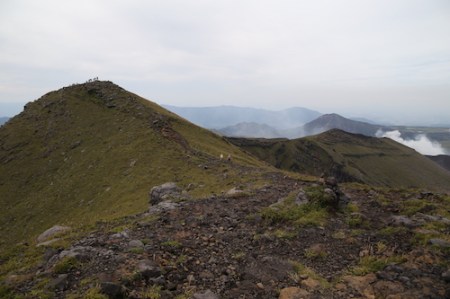
The hike: At Suisenkyo parking lot, you’ll find the abandoned ropeway station, a small visitor’s center and a restroom. You might be tempted to take the trail just to the left of the restrooms but that is the descent trail. Instead, head over to the other side of the parking lot (perpendicular to that trail) to find the Sensuikyo-one route (仙酔峡尾根ルート登山口). The trailhead is marked by a small wooden bridge spanning a ravine, so cross over the bridge and follow the remnants of the old concrete path up towards the spur. After passing by a rest bench, look for the kanji for Takadake (高岳) hand-painted on a rock and follow the trail through a short area of bush to reach the start of the long ridge. The volcanic rock looks as if it’s been cemented to the mountainside but in fact it’s a natural process that allows for good traction for your hiking shoes. The route is well-marked and easy to follow: just look for the generous amount of yellow arrows and circles painted on the rocks. As you climb higher, be sure to look back for the excellent views of the Kujū mountain range rising up across the valley. It will take anywhere from 90 minutes to 2 hours to reach the summit plateau, so take your time and enjoy the excellent scenery. There’s also a fair bit of scrambling in the initial part of the climb, but as the spur steepens you’ll reach an exposed area with a fixed rope. Take care with your footing here. Above this section is a series of switchbacks until you pop out onto the ridge just to the left of the high point of Takadake. In clear weather you can see that you’re standing on the edge of an ancient volcanic crater covered with lush greenery. There used to be a trail that completely circumnavigated this crater but it’s since fallen into disuse and is incredibly overgrown. Look down into the crater and you will see a small stone shelter (called Tsukimi hut). Some hikers head left here on the ridge for the east peak called Takadake Tōhō (高岳東峰). The route to the summit has fallen into disrepair and it’s not recommended unless you want a close-up view of the spires of Mt Neko. Instead, turn right on the crater rim for the short 10-minute climb to the summit of Takadake, the highest point in the Aso mountain range. This is a great place to enjoy lunch before continuing along the ridge. Drop west towards the active crater down a well-used trail for Nakadake. Watch your footing on the loose rocks as you drop for 5 minutes to a junction. Ignore the trail left to Tsukimi shelter and stay on the main ridge. The gradient eases and it’s a fun ridge walk for 15 minutes to the summit of Nakadake (中岳). Just before the summit you will reach a junction. If you came by bus then you probably climbed up here from the touristy side of the mountain. This trail leading left from here follows the crater rim before dropping steeply down into the crater floor and the martian landscape of Sunasenri-ga-hama (砂千里ヶ浜). From there it’s an easy walk out to the bus stop (but watch out for toxic gases blowing over from the active crater). However, ignore this path and head straight to the summit of Nakadake. Continue on the ridge past the summit, taking care to watch your footing on the slope just below the summit, as loose rock makes for poor traction. The terrain abruptly changes, as you traverse through ash deposited in the 2014 eruption. Signposts warn of volcanic gas and you won’t believe your eyes as the trail heads towards the active crater, an area called Kakōhigashi Observatory (火口東展望所). You’ll soon traverse directly below a crumbly headwall on your left – take care of falling rocks on the narrow traverse. Stay on the ridge, following the yellow paint marks in times of poor visibility. The trail drops to a small saddle before climbing up to the remnants of the observatory, which affords spectacular views of the active crater. Just before the top of the viewpoint, a trail heads right towards the ruins of the concrete ropeway building. Ignore this and head to the observatory before retracing your steps to this junction and descending on the east trail past the emergency bunkers to the top of the old ropeway. DO NOT attempt to enter the ruins, as the building is incredibly unstable and was heavily damaged in the eruption. Instead, take the path to the right of the structure along the crumbly asphalt of the disused trail. Despite the poor condition of the trail, it’s an easy descent that will lead you back to the parking lot in about 40 minutes.

When to go: This hike can be done year round, but be prepared for snow during January and February. Click here to see the wonderful snow scenery. The peak is frequently closed due to volcanic activity, so please check here for the latest information (in Japanese).

Access: From Kumamoto (熊本) station, take a train on the JR Hohi Line (包皮線) to Miyaji (宮地) station. From there, either take a taxi (costing around 1500 yen) to Sensuikyo (仙酔峡) or try your luck hitchhiking. If you just want to see the active caldera or approach the peak via Sunasenri-ga-hama, then you can take a bus in front of Aso station (阿蘇駅前) to Asosan Nishi Eki (阿蘇山西駅). The bus takes about 35 minutes and there are 4 buses daily (no booking required). Click here for the schedule.

Live web cam: Click here

Level of difficulty: 3.5 out of 5 (elevation change 692m)

Total Round-trip Distance: 7km (4 to 6 hours)

Soni Kogen (曽爾高原)

May 14, 2008

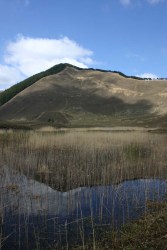
Soni Kogen is a huge, open plateau renowned for its vast swaths of Japanese pampas grass, picturesque marshes, and stellar views.

The hike: From the parking lot, head up the windy, paved path behind the toilets. You’ll notice a metal basket and numbers at each switchback. Believe it or not, you’re actually walking up the middle of a frisbee golf course! Follow the path to the 18th hole and you’ll find the huge parking lot and start of the trail. Soni Kogen looks like someone came in with a pair of hedge clippers and never stopped, but really is a wonderful place if you ignore the fact that it was entirely man-made! Follow the trail that heads up to the ridge line, which should take about 20 minutes to reach. Once you hit the bare ridge, turn left and climb up towards Mt. Kuroso (倶留尊山). The trail will climb all the way to the end of the clear cut portion, with awesome views of Mie and Nara Prefectures. This is really as far as you need to go, because it’ll cost you 500 yen to climb to the top of Mt. Kuroso! I couldn’t believe it, either! Mt. Kuroso is one of the 300 famous mountains of Japan, and I thought it was worth the toll required to access it. If you’re keen on climbing it, then head up the trail past the clearing and keep climbing up. You’ll soon reach a small mountain hut which serves as the ticket gate. Once you pay your money, you’ll come to a huge rock outcrop with vertigo-inducing views of the valley below. You’ll also see a huge peak towering over you to the left. That’s the top of Mt. Kuroso, and you’ll have to drop down to a saddle before heading up to the high point. Take some photos when you get to the summit, and head back the way you came. Once you get back to Soni Kogen, you can either continue on the clear cut ridge line and descend via the marshlands, or make a dash for the hot spring, which is a 30-minute walk from the plateau, past the bus stop you came in on. If you decide to climb Mt. Kuroso and hit the hot spring, then you really need to hike quickly, because the last bus back to Nabari station is at 3:27pm! If you’ve come by car then you can have a more leisurely stroll among the grasses. Hitching from the hot spring is also a possibility.

When to go: This hike can be done year round if you don’t mind walking an extra 4km out of season (as there are no direct buses). The area does get a fair amount of snow in the winter, and serious hikers come to practice their ice climbing and self-arrest skills. Autumn is the most popular time to come (because of the pampas grass), but April can be just as rewarding with far fewer hikers.

Access: From Uehommachi (上本町) station in Osaka, take a train bound for either Aoyamacho or Ise, and get off at Nabari station (名張駅). From there, change to a bus bound for Soni Kogen (曽爾高原) and get off at the last stop. The buses only run from October 1 to November 30, from the west exit of Nabari station. The first one departs at 9:35am and the second at 10:35am on weekends. In order to make the 10:35 bus, you should catch the train from Uehommachi at 8:53am. On weekdays there’s only 1 bus, leaving at 9:35am. If you want to go out of season, then take a bus bound for 山粕西 and get off at Tarouji (太郎路).  The only convenient buses leave at 8am and 10:05am. From Tarouji you’ve got a 4km walk to Soni Kogen.

Level of difficulty: 2 out of 5 (elevation change ~400m).

Mt. Yakushi (薬師岳)

May 13, 2008

This blog post was written back in 2008. For the latest information about this hike (including color photos and maps), please consider purchasing my guidebook to the Japan Alps. 

Mt. Yakushi is situated roughly halfway between Kamikochi and Tateyama on the main trekking route. Its remote location and access makes it nearly impossible to do as a day trip, but the splendid scenery is well worth the effort it takes to get there.

The hike: From the bus stop, take the trail that leads to Tarobei-goya (太郎平小屋). You’ve got a 1000m elevation gain before reaching the hut, so take your time and bring plenty of water, because there’s no place to fill up between here and the hut! The first 2 hours are pretty steep, but the trail is well-marked and easy to follow. The views will start to open up once you hit the spine of the mountain, and you’ll be staring down at lake Arimine (有峰湖) in no time. The map says to allow 5 hours to reach the hut, but if you’re in good shape and carrying a light pack then you can do it in about 3 or so. Once you finally reach the ridge line, you’ve got 2 options. Turn right for about 100m to check into Tarobei hut, or turn left and descend toward the mountain pass, where you’ll find Yakushitoge (薬師峠) campground. There’s a water source at both the campground and hut, so take your pick depending on your budget (500 yen to camp vs. 8500 yen to stay in the hut!). During the climbing season of July and August, there’s also a medical facility in the hut, which is good for those on the long Kamikochi-Tateyama trek. The next day, wake up early and try to catch the sunrise somewhere along the trail. It’ll take anywhere from 2 to 3 hours to reach the summit of Mt. Yakushi, where you’ll have outstanding views toward both Tateyama and Mt. Yari. Unfortunately it was completely foggy and I had no view when I went, but I’ve vowed to get revenge on this monster of a peak. From the summit, you can either retrace your steps all the way back to Oritate, or continue on towards Tateyama, which should take another 2 to 3 days to reach. You could also consider trekking south to Mt. Yari, which will also take another 2 to 3 days.

When to go: This hike can be done from mid-July to early October if you’re relying on the bus, or from Golden Week to early November if you’ve got your own transport. Be prepared for a ton of snow if you’re going before the rainy season. Click here to see the scenery in mid-June!

Access: From Toyama (富山) station, take a bus bound for Oritate (折立) and get off at the last stop. The bus runs every day from July 13th to the end of August, and then on weekends only during September and early October. Click here for the bus schedule.

Level of difficulty: 4 out of 5 (elevation change 1576m).

Mt. Akaishi (赤石岳)

May 12, 2008

This blog post was written back in 2008. For the latest information about this hike (including color photos and maps), please consider purchasing my guidebook to the Japan Alps. 

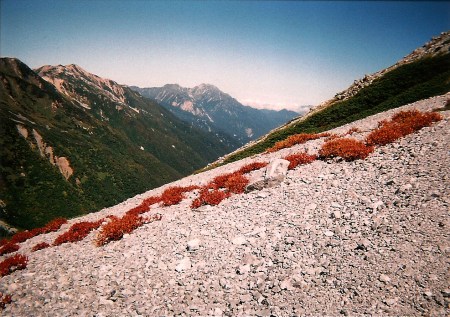
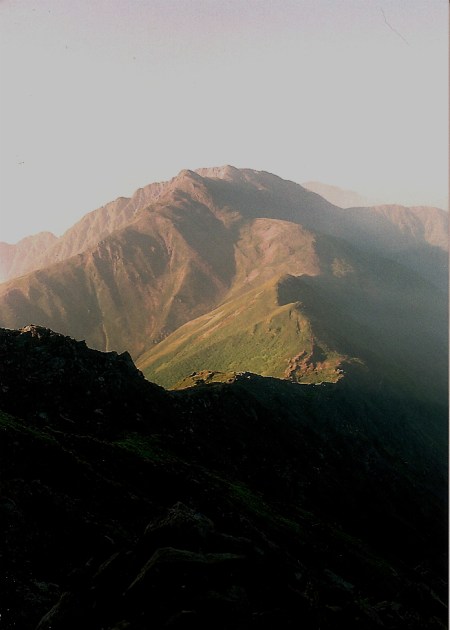
Mt. Akaishi, or ‘red stone peak’, is one of the most sought-after peaks of the southern half of the Minami Alps, and the red glow of the summit around sunrise/sunset makes the long, long slog worth it.

The hike: From the bus stop, hike a short way up the paved forest road (near the camp site) and you’ll find the trailhead. Make sure you take a left and follow the signs towards Akaishi hut (赤石小屋) and not towards Mt. Arakawa (荒川岳). The trails follows an old logging road for the first 2-1/2 hours or so, and then makes its way up the spine of the mountain. It should take about 5 hours or so to reach Akaishi hut, where you can either pitch a tent or stay in the hut. The hut costs 8000 yen with 2 meals or 5000 yen for a futon only, and is open from July 16th to October 13th. If you’ve gotten a super early start and want to make it to the summit, then you’re only 3-1/2 hours away! The hut has a water source, and there’s no water between the start of the hike and here, so bring plenty from the trailhead. If the weather is good, then wake up really early the next morning and time your hike so you can see the sunrise from Fujimidaira (富士見平). It’s on the trail to the summit, so you’ve got to pass by here anyway. It should take about 40 minutes from the hut, and it’s a good place to see the red glow of the signature peak. From Fujimidaira, you’ve got about 2-1/2 hours before reaching the proper ridge line just below the summit. It’s rocky and exposed, so watch your step in wet weather. Shortly after leaving Fujimidaira, you’ll see a signpost on your right marking the winter climbing route (冬山ルート), but ignore this and follow the paint marks on the rocks. Eventually you will reach the ridge and a trail junction, so turn left for the 20-minute climb to the summit. If the weather is good then you’ll have outstanding views of Mt. Fuji and the other huge peaks of the Minami Alps. About 5 meters below the summit there lies a manned emergency hut, which will cost 5000 yen to stay in, despite the fact that there’s no water! The man who runs the hut, however, is incredibly friendly and plied me with free warm tea after climbing during the middle of a typhoon! From the summit, you’ve got 3 options. Option 1 is a traverse over to Mt. Hijiri (聖岳), breaking up the trek by staying at Hyakkanbora Yama-no-ie (百間洞山ノ家) – a glorious hut famous for their tonkatsu. Option 2 is to head in the opposite direction and climb Mt. Arakawa (荒川岳), breaking up the trek at Arakawa hut (荒川小屋), another fantastic hut with great people and awesome views out to Mt. Fuji. The third, less desirable option would be to head all the way back the way you came down to Sawara-jima. Not only would you contribute to trail erosion, but your 2000 vertical meter climb will have gone to waste. When you’ve put in so much time and energy to reach the ridge line, you might as well stay on it for a few more days!

When to go: I used to recommend doing this hike year round, but because of the new bus limitations (see below), those without private transport will be forced to do this hike between mid-July and August. Hitchhiking will be difficult from Shizuoka, because it’s a walloping 3-1/2 bus ride to the dam! Hitching from the dam, however, should be relatively easy on the weekends. If you do this hike in winter, be prepared for lots of snow, so bring winter climbing gear. Click here to see someone who climbed around New Year’s.

Access: From Shizuoka station (静岡駅), take a bus bound for Hatanagi-daiichi Dam (畑薙第一ダム) and get off at the dam. Change to a shuttle bus bound for Sawara-jima Lodge (椹島ロッジ). Please note that the bus to Hatanagi-daiichi has been discontinued as of May 31st, 2008, and has been replaced by a seasonal bus running only from July 19th to August 31st. Click here for the bus schedule. These kind of antics really tick me off, because it is encouraging people to use their own transport to get to the dam and punishing those of us who don’t have cars! Click here for the shuttle bus schedule from the dam to the lodge.

Level of difficulty: 5 out of 5 (elevation change ~2000m).

Mt. Kumotori (雲取山)

May 8, 2008

Last updated: Feb 21, 2025

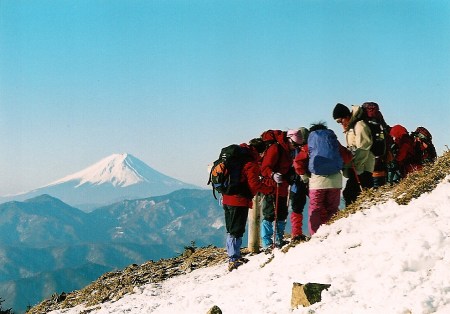
Mt. Kumotori is the highest peak in the Tokyo Metropolitan area, and part of Chichibu-Tama-Kai National Park. The views out to Mt. Fuji aren’t half bad either.

The hike: Mitsumine shrine is one of the most beautiful mountain shrines in Japan, and it also happens to have its own hot spring bath (did anyone mention doing this hike in reverse?!). The trail towards Mt. Kumotori starts from the parking lot, and it’s very clearly marked. You’ll be on the ridge the entire day, so just keep following the signs. Your first target will be Kirimo-ga-mine (霧藻ケ峰), which has fine views out to Mt. Asama. Continue on the ridge, passing up and over Mt. Shiraiwa (白岩山). You’ll pass by Shiraiwa hut (白岩小屋), which makes for a good place to stay if you’ve gotten a late start or if the weather is bad. It should take another 90 minutes or so to reach Mt. Kumotori, passing by the old, rotting Kumotori hut before reaching the newer, luxurious one. If you’re hiking in the winter you’ll appreciate the kotatsu tables in the tatami rooms. It costs 7500 yen with 2 meals or 5000 yen without meals. Click here for the hut web site. If you’re short of money and would like a free place to stay, continue another 10 minutes and stay at the emergency hut on the summit. It’s in good shape, but you’ll need a sleeping bag and food. There’s a water source at Kumotori hut, but nothing between Mitsumine shrine and the hut, so bring plenty of water for the first day. If the weather is good, then you’ll have a stunning view out to Mt. Fuji for most of the hike to Okutama. You’ve actually got 2 options from the summit. You can descend via Mt. Nanatsuishi (七ツ石山) by taking a left at the emergency hut, or take the trail behind the hut to descend to Sanjo-no-yu (三条の湯), a hut with its own hot spring. If you take this alternative route, then you’ll have to walk on a forest road for about 2-1/2 hours before reaching route 411. Either way, you’re in for a 4 to 6 hour hike before making it back to civilization. Okutama has a great hot spring bath called Moeginoyu (もえぎの湯). Click here for the website.

When to go: Because Kumotori Hut (雲取山荘) is open year round, this hike can be done any time of the year. Bring crampons if hiking before April. I did this hike in March and there was about 1 meter of snow on the summit.

Access: From Ikebukuro (池袋) station in Tokyo, take a train on the Seibu line to Seibu-Chichibu station (西武秩父駅). From there, take a bus bound for Mitsumine Shrine (三峯神社) and get off at the terminus. Click here for the bus schedule. Please note that the Mitsumine Ropeway has ceased operation, so you can either get off at the Owa (大輪) bus stop and hike on the seldom-used trail next to the gondola, or start your hike from the shrine. The hike ends at Okutama (奥多摩), where you can easily take a train back to Tokyo.

Level of difficulty: 2 out of 5 (elevation change ~500m). It’s a 4 out of 5 if you do this hike in reverse, as you’ve got a 1400m vertical climb.

Mt. Iwaki (岩木山)

May 8, 2008

Last updated: Feb. 4, 2025

Mt. Iwaki is a pointy peak towering over Hirosaki city in Aomori Prefecture. The summit affords outstanding panoramic views, and sports two free mountain huts.

The hike: From the parking lot, head up the trail to the left of the chairlift station (yes, you can take a ski lift practically to the top!). You should reach the summit ridge in about 40 minutes or so. Turn left and descend through a rocky area to an emergency hut. You can stay here for free, but the hut on the top is more spacious and offers much better views. You’ll see a small lake just below you, as well as a trail descending down off the mountain towards Iwaki shrine (岩木山神社). If you’re staying on the mountain, you’ll need to descend about 20 minutes in order to fill up your water bottles, since there’s no water on the mountain (you could also just bring 3 or 4 liters from the parking lot and save yourself some time/energy). Anyway, it should take about a half an hour to reach the true summit of Mt. Iwaki. There’s an awful lot of boulder scrambling, which feel a bit like climbing in the Alps. If the weather is good, then you’ll have one of the best panoramic views in the Tohoku region. I climbed in August and had the entire summit to myself, so I decided to stay in the hut on top. If the weather is clear then you can see all the way to Hokkaido in the north, the sea of Japan to the west, Hirosaki and Aomori cities to the east, and the endless layering of the Shirakami mountains to the south and southwest. If you’re not staying the night, then head back to the first emergency hut, and consider descending 1500 vertical meters to Iwaki shrine or just head back to the parking lot.

When to go: This hike can be done from Golden Week to early November. A winter ascent is risky due to the avalanche danger near the summit. Be prepared for a lot of snow if you go before the rainy season.

Access: From Hirosaki station (弘前駅), take a bus bound for Iwakisan-hachigome (岩木山八合目) and get off at the last stop. The bus departs from bus stop #6, but I’m not sure of the frequency of the direct buses, so it might be faster to take a bus to Dake-onsen (岳温泉) and change to a shuttle bus. The tourist information center just inside Hirosaki station is excellent, so they’ll be able to give you the exact schedule in English. Click here for the shuttle bus schedule. You can also try your luck at hitching from Dake Onsen. Click here for the bus from Hirosaki station to Dake-Onsen.

Live web cam: Click here

Alternative approach: If you don’t want to take the bus all the way to the top, then there are 4 other routes to choose from to climb the mountain from the bottom. The two most popular are the routes from Dake Onsen and from Iwakisan Jinja. It’s a challenging full-day hike if you start from the bottom so be prepared.  Click here for more information about each route in Japanese.

Level of difficulty: 2 out of 5 (elevation change ~400m)

Aizu-komagatake (会津駒ヶ岳)

May 7, 2008

Last updated: Feb 18, 2025

Aizu-komagatake is a splendid series of rolling green hills and tranquil marshlands, with magnificent panoramic views and an abundance of wildflowers.

The hike: From the bus stop, head up the paved forest road across the street. There’ll be a large white sign indicating 会津駒登山口, as well as a toilet. Hike up the paved road for about 20 minutes until reaching the trailhead proper (you can’t miss the wooden staircase leading into the forest). The trail wastes no time in gaining altitude, and if you’re hiking in April or May then the entire trail will be covered in snow. Even in the snow, the trail is very clearly marked with red ribbons tied to the trees. After about 90 minutes of climbing, you’ll reach a natural mineral spring, which apparently has really great water. It’ll be buried and impossible to find if you’re hiking before the rainy season. Fill up your bottles here, because the hut at the top doesn’t have any water. Keep climbing up and up through the dense forest until it starts to thin out. The summit ridge should start to come into view on your right, as well as nice views out to Mt. Hiuchi toward the left. Eventually you’ll reach the ridgeline, where you’ll find Komanogoya (駒ノ小屋) a small but nice hut. It costs 3000 yen to stay here and it’s run by a lovely husband and wife team who used to work at the Yari-ga-take hut in the Kita Alps. There are no meals served, but they do have futon, so bring your stove and food. There’s no water, but you can melt snow if you’re hiking before July. From the hut, turn right and continue up the path to the true summit, marked by a very tall signpost. It’s hard to believe, but this signpost gets completely buried under snow in the winter! After taking in the views, consider a side trip out to Chūmon-dake (中門岳), where you’ll find a scenic lake and loads of wildflowers. Retrace your steps back to the hut, and either return down the same way you came, or traverse the entire ridge down to Mi-ike (御池), the starting point of the Mt. Hiuchi (燧岳) climb. This traverse should not be attempted before the rainy season due to the snow cornices and the fact that there are no markings to help guide you through the snow.

When to go: This hike can be done from Golden Week to early November. A winter hike is also possible if you’re prepared for the massive amount of snow. I hiked in Golden Week and there was still over 2 meters of snow remaining. There are a few minshuku just a short distance from the trailhead,  so you can get a fresh, early start and can also try out the local delicacy: deep-fried salamander.

Access: From Asakusa station in Tokyo, take the limited express ‘Revaty Aizu’ train on the Tobu Line (東武) bound for Aizu-Tajima  (会津田島) and get off at the final stop. From Aizu-Tajima station, take an Aizu bus bound for either Hinoemata (檜枝岐) or Miike (御池)  and get off at Komagatake-tozanguchi (駒ヶ岳登山口). There are just 2 buses per day, with more during the summer hiking season. The bus takes about an hour and 30 minutes to reach the trailhead and costs around 2200 yen. Click here for the bus schedule.

Level of difficulty: 3 out of 5 (elevation change 1203m).

Mt. Hakkoda (八甲田山)

April 28, 2008

Last updated: Feb. 3, 2025

Mt. Hakkoda is one of the premiere ski resorts in the Tohoku region, with meters upon meters of fresh powder and an endless army of ‘ice monsters’. The rest of the year it’s a hikers dream, with wonderful fertile volcanic cones, spectacular marshlands, and breathtaking panoramic views.

The hike: From the Sukayu onsen bus stop, take the trail at the end of the parking lot (closer to the toilets) towards Sennin-tai (仙人岱). The path initally climbs through a dense forest, and then opens up and turns into a wonderful volcanic valley, with lots of colorful rock formations and pungent sulfur fumes. It should take about 45 minutes to reach the top of the volcanic plateau, where the trail will flatten out significantly. At Sennin-tai, you’ll find an emergency hut and water source, so fill up your bottles. Take the trail to the left towards Odake (大岳). There may still be some remaining snow in this area and lots of wildflowers. You should reach the top of Odake in about an hour, and the views are wonderful. Mt. Iwaki will be staring at you across the valley, and on a clear day you’ll see Aomori city to the north, and the Pacific Ocean to the northeast. Continue on the same trail down to a saddle and emergency hut. From here, you can either climb up to Mt. Akakura (赤倉岳) or turn left to descend back to Sukayu Onsen. I was keen for a bath, so I skipped Akakura and flew down to the hot spring. The path to Sukayu is well-marked, with lots of wooden planks to protect the wild flowers. The marshlands definitely warrant a leisurely stroll, so take your time and enjoy the serenity.

When to go: This hike can be done from Golden Week to early November. A winter ascent is also possible whenever avalanche danger is low and the weather is favorable. In the winter of 2007, 2 people were killed and a dozen injured in an avalanche on Mt. Hakkoda, so please don’t climb without a beacon and proper avalanche training.

Access: From Aomori station (青森駅), take a JR bus bound for Lake Towada (十和田湖) and get off at Sukayu Hot Spring (酸ケ湯温泉). As of 2024, the bus leaves from bus stop #11 at the East Exit of Aomori Station and it runs from August 1 to November 11 with just 3 buses in the morning. The bus takes around an hour. Click here for the bus schedule.

Level of difficulty: 3 out of 5 (elevation change ~694m).

Mt. Kuju (九重山)

April 27, 2008

Mt. Kuju is not only a majestic volcanic wonderland filled with luscious greenery, steaming gas vents, and serene lakes – it’s also the highest peak on the island of Kyushu.

The hike: From the parking lot, take the trail that starts to the left of the souvenir shop. It should take about 20 minutes to reach the Kuju ridge line up the concrete-lined path. If you’ve come in early summer, then you should find a sea of beautiful azalea in bloom and literally hundreds of people. The next 40 minutes to Ogigahana (扇ヶ鼻) is relatively easy going, where you’ll find a 4-way junction. You can either climb to the top of Ogigahana, head left to the summit of Mt. Hosho (星生山) or continue straight towards Mt. Kuju. The steam vents just behind Mt. Hosho are wonderful, and a reminder that you’re on an active volcano! After another half hour or so, you’ll reach the saddle just below the peak of Kuju, where you’ll find a small emergency hut. There are lots of different trails that branch off in all directions, so I recommend climbing over to Naka-dake first (中岳) first, and hitting Mt. Kuju on your way back to Mi-no-koshi. Naka-dake is the tallest peak in Kyushu, and reachable in about 40 minutes. You’ll pass by some fabulous volcanic lakes, which make for a great place to relax and enjoy your lunch (if the weather is nice). After reaching the summit of Naka-dake, you can loop back to the saddle below Kuju. Head up to the peak and then all the way back to the parking lot or continue traversing the ridgeline of Mt. Kuju via Hokke-in hot spring (法華院温泉), which has a nice campground.

When to go: This hike can be done year round if you’ve got some crampons. The peak does get its fair share of winter snow, so make sure the road to the mountain pass is plowed and open before venturing out. The azaleas bloom in early to late May, which brings huge crowds. Autumn is also a great time to visit and winter is seeing increasing crowds as of late, due to the winter hiking boom in Japan. Click here to see the winter scenery and be careful of white-out conditions.

Access: From Hakata station (博多), take a JR “Yufuin no mori” limited express train and get off at Bungonakamura station (豊後中村駅). The train takes about 2 hours and costs 4290 yen. A local train is half the price but takes a whopping 4-1/2 hours. From Nakamura station, take a bus bound for Makinoto-toge (牧ノ戸峠). Buses only run on weekends from late May to late October. Click here to access the schedule. Click on “時刻表”, “ローカル時刻表”, and then “森町〜牧ノ戸線” to download the .pdf file. Another more convenient option might be to take the bus that runs from Beppu to Kumamoto, which stops along the way at Makinoto-toge. For example, if you take the overnight Osaka to Beppu ferry, there’s a direct bus leaving directly from the ferry terminal at 7:07am, arriving at Makinoto at 9:26am. This bus does not run in the winter however, which means between December and March you’ll need to take a bus from Beppu Bus Center (別交通センター) at 8am. Click here for that bus schedule. If coming from Kumamoto, the bus stops at Mt. Aso first before completing the 3-1/2 hour ride to the trailhead. Click here for the bus from the ferry terminal to Makinoto-toge. Sorry if it’s confusing but there are 2 different bus companies that provide bus services.

Level of difficulty: 2 out of 5 (elevation change ~500m).

Distance: 9.6km (3 to 4 hours)