Posted tagged ‘Hyakumeizan (百名山)’

Mt. Chōkai (鳥海山)

March 29, 2008

Last updated: Feb 17, 2025

Mt. Chōkai is a phenomenally beautiful volcanic peak nestled snugly on the border of Akita and Yamagata prefectures. The wildflowers blossom out of control, alpine lakes pop up all around, and the snow sticks around through all seasons, making this one of the best hikes in Japan.

Mt. Chokai

The hike: From the parking lot at Hokodate, drop your pack off at the Hokodate Sanso (鉾立山荘). The owner is really friendly, and it only costs about 1200 yen to stay here. It’s much better than staying in the cramped, expensive hut near the summit. The mountain doesn’t have any water sources, so make sure you bring plenty with you before approaching the hike (there’s a Max Value supermarket about a 10-minute walk north of the station) there aren’t any reliable sources on the mountain. The huts will gladly sell you water for ridiculous prices (500 yen for 500ml). The trail starts off rather gently, with a great view of an amazing gorge adjacent to Hokodate. Just after starting, you’ll see a mountain hut on your left. This is called Shinonome hut (東雲荘) and it’s owned by the TDK corporation. It’s possible to stay here but you’ll want to double check that the hut is actually open before starting your hike.  Anyway, ignore this hut and keep climbing the concrete steps and you’ll reach a lookout platform that has two picnic benches at the top of a series of concrete steps, where you’ll get a view straight down into the gorge.  From here, the concrete turns into a broad rock path that resembles an ancient Roman byway. After about 45 minutes of steady climbing, the angle will ease a bit and you should see your first traces of snow. You’ll also find some running streams to fill up your water, but I’d definitely filter it before drinking because of the popularity of the area. Your first big landmark is the flatlands of Sai no kawara (賽の河原). Here you’ll find a signpost indicating that   Ohama (御浜) is only 1.5km away. If you look up you can pretty much trace the outline of the trail to Ohama hut sitting on the edge of the plateau. There’s a small shrine just before the hut and just behind the hut there’s a scenic crater lake. There’s a toilet here and you can also stay overnight in the hut (advance reservations recommended, as it gets full pretty quickly during the busy season). The summit of Mt. Chokai will come into view just left of the lake, and it still looks so far away. Continue past the hut to the left for another half hour, and you’ll come to a junction. Ignore the spur on the right and continue straight, towards the peak. After another 30 minutes or so you’ll come to another junction, where a choice has to be made. You can either go left or right. The right spur is the ridge trail, with amazing views over to the summit. The left spur is the more direct route. I’ll describe a loop hike, climbing the left and descending via the ridge. Take the left trail, which cuts through a rather long snow field before climbing up the other side. The path becomes quite rocky, so just follow the paint marks and the crowds if you came on the weekend. You should reach the hut just below the summit in around 90 minutes or so. You could stay here, but the lack of water doesn’t make it very inviting. The hut does offer meals though (not sure if water is included in the price though) Continue behind the hut to the top of Mt. Chokai, called Shin-san (新山). There are lots of huge rock formations to traverse through, and chains make the trickier sections more manageable. The true summit only has room for only 3 people at a time, so be prepared to queue up, especially on weekends and during Obon.  Traverse up and over the summit and head down the other side, where you’ll find yet another snow field. Cross this and head up the other ridge over to Mt. Shichikou (七高山). This is the twin peak of Shin-san, which explains Chokai’s double hump appearance from a distance. After taking a quick rest, turn around and follow the signs to Mt. Gyouja (行者岳). Keep following the ridge, and ignore the trail coming in from the left. You should reach the summit of Mt. Monju (文珠岳) in about 20 minutes after the junction. After 20 more minutes, you’ll be back at the trail junction you first encountered, completing the loop hike of the summit. From here, you can retrace your steps all the way back to Hokodate.

When to go: This hike can be done from late April to early November, when the road to the trailhead (Chokai Blue Line) is open. If you go in late April, be prepared for meters upon meters of fresh snow. Click here to get an idea of the climbing conditions during Golden Week. Please note that bus service is extremely limited as of 2025.

Access: Starting in 2014, the bus to Hokodate runs by reservation only. You must make a reservation one day in advance by calling 0184-43-2030  or by filling out the on-line form (in Japanese) here. The bus costs 3000 yen one-way and is nothing more than a small, blue shuttle van when only a few people reserve. 99% of hikers now drive to the trailhead, so there’s a real danger that the bus will be discontinued altogether.  The bus starts from Kisakata station (象潟駅) and heads to Ōbirasansō (大平山荘), stopping at Hokodate (鉾立) along the way.  The bus runs every day from July and August, and then on weekends only throughout September until the end of October. There’s also a direct night bus from Tokyo station to Kisakata. 

Live web cam: Click here

Digital Map in English (Avenza App): Click here

Level of difficulty: 4 out of 5 (elevation change 1146m)
Mt. Kiso-komagatake (木曽駒ヶ岳)

March 29, 2008

This blog post was written back in 2008. For the latest information about this hike (including color photos and maps), please consider purchasing my guidebook to the Japan Alps. 

Clocking in just a few meters under 3000, Mt. Kiso-komagatake is the highest peak in the Central Alps mountain range. The panoramic views are outstanding, and there’s no shortage of accommodation on top.

Mt. Kiso-komagatake

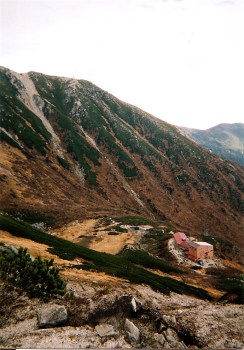
The hike: From the top of the gondola, follow the trail leading off toward the right. You’ll already be above the tree line, so just follow the paint marks up through the rock formations. After about a half an hour of climbing, you’ll reach the ridgeline and a 3-way junction with a mountain hut in front. This is the Hoken-sanso (宝剣山荘), a great place to get a coffee if the cloud is in. Climb up past another hut to the top of Naka-dake (中岳) and then down the other side to a saddle and a blue-roof hut. From there, it’s a short climb to the summit of Komagatake, where the views are incredible. If you’ve got time, then consider staying in one of the huts to catch the sunrise/sunset. Anyway, retrace your steps to Hokensanso, and either take the trail back down to the gondola, or traverse up and over Mt. Hoken (宝剣岳). This trail is marked as an “expert” course, but it’s no more difficult than some of the climbs around Kamikochi. There are plenty of chains, ladders, and paint marks to help you get to the top. Traverse up and over this rocky peak and down the other side, where you’ll find a trail coming in the left. This is the way back down to the gondola. Alternatively, you could keep going straight and make it to Mt. Usugi in about 5 hours or so.

When to go: This hike can be done any time of year, thanks in part to the gondola that runs all year round. Bring crampons and an ice axe in the winter and be careful of white out conditions. The gondola gets extremely crowded when the leaves have changed colors in the autumn, so be prepared for a long wait. Click here to access the gondola website in English.

Access: From Okaya station (岡谷駅) in Nagano Pref. take the JR Iida line (JR飯田線) and get off at Komagane Station (駒ヶ根駅). The local train takes about an hour. From there, take a bus bound for Shirabi-daira (しらび平) and get off at the last stop. Click here for the bus schedule. If you don’t fancy waiting in line for the gondola or would like a more strenuous climb, then get off on stop before at Kitagosho-tozanguchi (北御所登山口). From there, you can climb to the summit in about 6 hours or so. Be careful if approaching this hike from Nagoya, because the JR Iida line from Toyohashi station takes over 5-1/2 hours to get to Komagane! It’s much faster to take the JR Chuo line and change at Shiojiri.

Map:

Live web cam: Click here

Level of difficulty: 1 out of 5 if using the gondola (elevation change ~300m)

Mt. Oku-shirane (奥白根山)

March 27, 2008

Mt. Shirane is the crown jewel of the Nikko area. Situated on the Gunma/Tochigi prefectural border and just north of Lake Shuzenji, the peak offers beautiful volcanic lakes, stunning views all the way out to Mt. Fuji, and eye-catching rock formations.

Mt. Oku-shirane

The hike: From the parking lot at Sugenuma, take the forest road directly in front of you. Fill up on water and use the facilities before departing. The path is relatively flat at first, and then climbs up the spine of the mountain. You’ll reach a small, beautiful lake in about 2 hours. The rocky peak of Oku-shirane will be visible directly above you, and the reflections of the peak in the lake are mesmerizing. At the far end of the lake, the trail will split in two, but take the right path for the steep climb to the summit. It’s pretty steep and rocky, but the path is well-marked and easy to follow. If you’re hiking in the autumn, there might be some ice, especially if it has rained recently, so a light pair of crampons will make things much safer. I was hiking in snow and ice in mid-October! You should reach the summit of Oku-shirane in after about an hour. The views are truly amazing if the weather is co-operating, with a bird’s eye view of Mt. Nantai, Mt. Hiuchi, Mt. Shibutsu, Mt. Sukai, and even out to Mt. Fuji! From the summit, continue on to a small shrine, and then turn left to head down the peak toward Goshikinuma (五色沼). The trail drops steeply at first, before flattening out at an emergency hut. You could consider staying here, but the lack of water and toilets doesn’t make for a comfy stay. Instead, continue for another 10 minutes to the lake. The reflections of Oku-shirane are wonderful, and there are plenty of places to sit, relax, and take in the scenery. From here you have a couple of options. You could head to the left to complete a loop back to the small lake in which you started, or you could traverse over to Yumoto Hot Spring. The traverse will take about 3 or 4 hours, so make the decision based on the time and weather. From lake Goshiki, take the trail leading off to the right. It’ll climb steeply up a spur before reaching the ridge line. There’s a water source about halfway up the climb, so fill up your bottles there. Turn left once you hit the ridge and you’ll be sitting on top of Mt. Maeshirane (前白根山) in about 30 minutes. From this peak, simply follow the signposts to Yumoto Hot Spring. The descent from the ridge line to the hot spring is one of the steepest I’ve ever encountered, so be especially careful in wet weather or anytime there’s snow on the ground.

When to go: This hike can be done between late April and early December. A winter hike is also possible if you approach from the top of the ski lifts at Marunuma Kogen. Click here to see a report of a winter ascent of the peak. Click here for an English account of an ascent in March.

Access: From Nikko station (日光駅), take a bus to Yumoto Hot Spring (湯元温泉). From there, you’ll either have to start your hike from here, or hitch to the trailhead at Sugenuma (菅沼). I stayed at a cheap minshuku in Yumoto, and the owner gave me a free ride early the next day to Sugenuma, so that’s an option as well. Alternatively, you could approach from Marunuma Kogen ski resort (丸沼高原スキー場), where the gondola will whisk you halfway up the mountain in next to no time. Click here for the bus schedule from Nikko station to Yumoto Hot Spring.

Level of difficulty: 3 out of 5 (elevation change 848m)

Mt. Hiuchi (火打山)

March 26, 2008

Mt. Hiuchi is a stunningly beautiful conical peak surrounded by lush greenery and scenic alpine marshlands. The wildflowers in summer bring the crowds and the fall foliage is splendid.

Mt. Hiuchi

The hike: From the bus stop, follow the parked cars to the trailhead, which is marked by a small shelter. The first hour of the hike is relatively flat, following a river. You’ll reach a bridge crossing the “black gully” (黒沢), where the real hike begins. The entire trail is divided into 9 different stages, which you can find signposts conveniently marking the divisions. You’ll gain close to 300 meters of altitude in next to no time, thanks to the “12 turns” (十二曲り). From the top of these switchbacks, it’s another 90 minutes of steep climbing to reach Fujimidaira (富士見平). The trail splits in two at this point. You could take the trail on the right to go to Mt. Myoko, but continue on the left fork for another 45 minutes to reach Kouyaike Hut (高谷池ヒュッテ), an amazing place to stay and contemplate life. Click here for the hut web site. From the hut, it should take about 90 minutes or so to reach the summit of Mt. Hiuchi. You’ll climb through some wonderful marshlands before hitting the steep ridgeline. I’m told the views are outstanding, but it was pouring rain when I went. Click here to see some wonderful pictures of someone who climbed on a perfect day! After taking lots of photos on the summit, either head back the same way you came, or traverse over to Mt. Myoko.

When to go: This hike can be done between late April and mid-November. The peak is popular with skiers during Golden Week, and the snow usually stays around until early August! The road to the trailhead is closed in the winter, but you could try traversing via Mt. Myoko if the weather is good and you’ve got the proper equipment and training.

Access: From Nagano station (長野駅), take a local train on the JR Shinetsu Line (JR信越線) and get off at Myoko-kogen station (妙高高原駅). From there, take a bus to Sasagamine (笹ケ峰). The bus takes about 50 minutes and it not very frequent. You could take a taxi to the trailhead from the station for about 5500 yen.

Live web cam: Click here

Level of difficulty: 3 out of 5 (elevation change ~1100m)

Mt. Bandai (磐梯山)

March 25, 2008

Last updated: Feb 17, 2025

Mt. Bandai is an active volcano located on the shores of Lake Inawashiro in Fukushima Prefecture. The views are splendid, the rock formations colorful, and the volcanic scenery picturesque.

Mt. Bandai

The hike: From the bottom of the lifts, follow the tozan michi (登山道) signs toward Mt. Bandai. Initally, the trail will climb on the left-hand side of the ski resort. There aren’t any switchbacks here. You’ll basically be hiking through the grassy ski fields. After about an hour of steep slogging, you’ll reach the ridge line, which turns to the right. It’s rocky at first, but it will flatten out as you approach the top of Mt. Akahani (赤埴山). There’s a short spur trail to the summit on the right-hand side. Head up here for a break if you’d like, or continue to the majestically splendid Numanotaira (沼ノ平) for a more scenic rest. This flat area features some beautiful marshes, alpine flowers, and stinky sulfurous gases. It should take about a half hour of easy hiking to reach the ridge line of Mt. Bandai. This is where the real hike begins, as the peak becomes very rocky. Follow the paint marks carefully if the cloud is in, because the drops to the right are huge. Eventually you’ll reach a series of 2 mountain huts, 2 water sources, and a trail junction. Take a break here, fill up your bottles, and prepare for the final ascent, which will take about 20 minutes or so. The views from the rocky summit are superb if the weather co-operates. Head back down to the junction and either head back the same way you came, all the way back to Inawashiro station, or take the trail to the left for a shorter, alternative way off the mountain.

When to go: This hike can be done between late April and early November. Although not impossible, a winter ascent is only for the really advanced climbers willing to deal with the frequent avalanches, because this peak gets a fair amount of snow in the winter. Click here for a report of a hiker who scaled during Golden Week to get an idea of the amount of snow.

Access: From Koriyama station (郡山駅), take a train on the JR Banetsu-sai Line (JR磐越西線) to Inawashiro station (猪苗代駅). From there, it’s a 1 hour walk to the trailhead at Inawashiro Ski Resort. (猪苗代スキー場) Alternatively, you can take a taxi for around 2000 yen that takes about 15 minutes.

Live web cam: Click here

Level of difficulty: 3 out of 5 (elevation change ~1200m)

Mt. Kobushi (甲武信岳)

March 24, 2008

Last updated: Feb 20, 2025

Mt. Kobushi is a pointy peak straddling the border of Yamanashi and Saitama prefectures. The views out to Mt. Fuji are superb and the fall colors breathtaking.

Mt. Kobushi

The hike: From the bus stop, hike up the road towards Nishizawa gorge. The trailhead will be on the right side of the road after about 20 minutes or so. You’ve got 2 trail options. One is signposted on the right, while the other is behind the creepy-looking Nishizawa hut (西沢山荘) a little further along the road. Take your pick, as both trails meet up along the way. I’ve been told that the one behind the hut, called “Tokuchan” path (徳ちゃん新道), is more commonly used, and that’s the one I used. The trail wastes no time in climbing through a cedar forest. After about 2-1/2 hours of steep climbing, you’ll come to a trail junction (the meeting of the 2 paths mentioned earlier). Take a break here, and get ready for 600 more meters of vertical altitude gain. It’ll take another 2 hours of tough slogging to reach the saddle and junction just below the summit of Mt. Tokusa (木賊山). The trail to the right will lead to Mt. Hafu (破風山), but ignore this trail and head left to Mt. Kobushi. After reaching the summit of Mt. Tokusa, the trail drops steeply to a saddle between the 2 peaks. There’s a nice hut here awaiting you, with a camping area and water source. Consider staying here to break this hike up into a more leisurely 2-day trek. From the hut, it’s a steep, 20-minute hike to the summit of Kobushi. If the weather is good, you’ll have an awesome view of Mt. Fuji directly in front of you, as well as the Minami, Chuo, and Kita Alps, Yatsu-ga-take, Mt. Asama, and all of the peaks of Chichibu-Tama-Kai National Park. Either retrace your steps back to the hut, or continue on the trail from the summit over to Jumonji-tōge (十文字峠), via Mt Sanpō (三宝山), Saitama’s highest mountain, where you’ll find another hut and an alternative way off the mountain. Nishizawa gorge, at the start of the hike, is worthy of a side trip if you’ve got extra time/energy either before or after the hike.

When to go: This hike can be done year round, but expect a fair amount of snow if you go in the winter. The hut staff recommend that you come during the rainy season, as the rich green foliage glitters when wet and the mountain is empty of hikers! The fall colors are beautiful and bring the crowds to Nishizawa.

Access: From the southern exit of Enzan station (塩山駅), take a bus bound for Nishizawa-keikoku iriguchi (西沢渓谷入口) and get off at the last stop. Click here to access the bus schedule. Alternatively, you can do this hike as a 2 night, 3-day trek from Mt. Mizugaki.

Level of difficulty: 4 out of 5 (elevation change 1415m)

Mt. Azumaya (四阿山)

March 20, 2008

Last updated: Feb 19, 2025

Mt. Azumaya is a dormant volcano overlooking nearby Mt. Asama. It’s one of the few places where you can see cherry blossoms in May, and the panoramic views of the Kita Alps are second to none when the cloud isn’t in.

Mt. Azumaya

The hike: From the bus stop, hike up the road toward Dabosu dairy farm (ダボス牧場). The trail starts from the farm, where you’ll see tons of cows in the summer. There are 2 different ways up the mountain, so I’ll describe a loop hike. Follow the signposts straight ahead to Mt. Neko (根子岳). It should take around 2 hours of moderate hiking to reach the summit. If the weather is clear then you’ll be completely surrounded by the Japan Alps! It really is one of the best views of the Alps anywhere in Japan. From the top of Mt. Neko, you can see the peak of Mt. Azumaya to the east. You’ve got to drop about 200m of altitude, down to a scenic valley that’ll have lingering snow in May. The descent is steep and rocky but gradually flattens out. From the low point, it’s a 300m vertical ascent to the summit. It should take about 90 minutes to traverse between the 2 peaks. Along the way, you’ll reach a trail junction, but head left to reach the top. The summit area is small and rocky, but the views of Mt. Asama are wonderful. Retrace your steps to the junction, but instead of going back to Mt. Neko, continue straight ahead to Mt. Naka-azumaya (中四阿). From here, keep descending for about 90 minutes and you’ll eventually reach the pastures again. Take a right when you hit the road in front of the cows, and you’ll be back at the parking lot. Reward yourself with delicious ice cream made from the milk at the farm!

When to go: This hike can be done year round if you are prepared for snow hiking. Otherwise, aim for an ascent bewteen April and November. I did this hike in May and there was still a little snow in the valley between Mt. Neko and Mt. Azumaya. Click here for a report of a person who skied to the top in March.

Access: From Nagano station, take either a local train or a Shinkansen to Ueda station (上田駅). The local train takes about 40 minutes, while the Shinkansen takes a whopping 10 minutes. Alternatively, you can take the Nagano Shinkansen from Tokyo and get off at Ueda. From Ueda station, take a bus bound for Sugadaira (菅平) and get off at the Sugadaira-kōgen bus stop (菅平高原). Click here for the bus schedule. If you’ve got a car, then you can drive to the actual trailhead, which is a one hour walk from the bus stop.

Level of difficulty: 2 out of 5 (elevation change ~900m)

Mt. Kasa (笠ヶ岳)

March 18, 2008

This blog post was written back in 2008. For the latest information about this hike (including color photos and maps), please consider purchasing my guidebook to the Japan Alps. 

Mt. Kasa is a glorious ‘bamboo-shaped’ peak towering over nearby Shin-hotaka Hot Spring. It’s arguably the toughest day hike in the Kita Alps.

Mt. Kasa

The hike: From the bus stop at Shin-hotaka, cross the bridge and follow the paved road toward the right. It’ll climb past the Hotel New Hotaka (ホテルニューホタカ) before turning into a dirt forest road. The road is really easy hiking, following a river. After hiking about a hour on the road, you’ll see the trailhead on the left-hand side. There’s a water source here, so fill up your bottles and take a long break before starting. This trail is called Kasa Shindou (笠新道) but is better known by its Japanese nickname “Shindo Kasa”. (Shindoi is a Japanese word meaning “tired”). The trail becomes steep almost instantly, and there is an endless array of switchbacks. If the weather is good, then the peaks of Hotaka and Yari will come into view shortly. You’ve got a 4-hour hike before coming to the first real place to take a break. It’s called Shakushidaira (杓子平), which translates as “bamboo ladle plateau”. The views toward Mt. Kasa are exhilarating but depressing, since you’ve still got a long way to go! I thought I’d made it to the top after so much difficult climbing, but realized the climb was just beginning! Anyway, eat some snacks and psyche yourself up and you should be ok. From this plateau, it should take a little over an hour to reach the ridge line of Mt. Kasa, coming in just below the peak of Mt. Nukedo (抜戸岳). When you reach the trail junction on the ridge, turn left to get to the summit. There’s a lot of up & down between here and your destination, but it should take around a hour or so to reach the hut below the peak. There’s a campground and water source here. Consider staying if you’re not confident about making it back before dark. You can either go back the same way you came, or traverse over the peak down to a different park of Shin-hotaka Hot Spring (which should take about 5 hours to reach). I did this hike in September and started at the break of dawn. Not only did I climb Mt. Kasa, but I traversed all the way over to Mt. Sugoroku and stayed there. A 14-hour marathon of a hike, but it set up a leisurely 2nd day scaling Mt. Washiba and Mt. Kuro.

When to go: This hike can be done from late May to early November. Just like the neighboring peaks of the Kita Alps, Mt. Kasa is considered an expert climb in the winter, and tough even during Golden Week because of all the remaining snow.

Access: From Takayama (高山駅) station, take a bus bound for Shin-Hotaka Hot Spring (新穂高温泉) and get off at the last stop. The first bus is at 7am, arriving at the hot spring around 8:30am. Click here for the bus schedule. There are also buses from Matsumoto station (松本駅) in Nagano, and there may even be direct night buses from Tokyo.

Map:

Level of difficulty: 5 out of 5 (elevation change ~1900m)

Mt. Naeba (苗場山)

March 17, 2008

Mt. Naeba is well known as a stellar ski resort and home of the annual Fuji Rock festival (but nowhere close to Mt. Fuji!). The summit features beautiful wildflowers and glorious views of Mt. Tanigawa, the Northern Alps, & the endless flow of peaks of Gunma prefecture to the east.

Mt. Naeba

The hike: From the parking lot at Wada hut, take the trail that cuts across the ski resort in front of you. Fill up your water bottles in front of the hut before setting off. The path parallels the ski slopes for the first hour or so, on a well-marked path that becomes a river during a heavy rain storm! As you climb up towards the ridge, you’ll pass through 3 different “grassy areas”, labeled ‘lower’, ‘middle’, and ‘upper’. These will be signposted at 下ノ芝, 中ノ芝, and 上ノ芝 respectively. There are an awful lot of wooden planks built into the path to keep hikers from trampling wildflowers. These become treacherously slippery when wet, so take extra care during rainy weather. Once you hit the ridge, a trail will come in from the right. This is an alternate approach, but the way to the summit is left, so keep trudging along for about 10 minutes until coming to another junction. This path on the left leads to the top of the Dragon Gondola, but ignore it and head to the top of Mt. Kagura (神楽ケ峰). Tons of skiers traverse up this far to find clean powder runs in winter.  From here, there’s a rocky traverse over to the true peak of Mt. Naeba. You’ll find a water source just before the trail drops to a saddle. Fill up your bottles here and take a break. It should take about an hour to reach the summit of Mt. Naeba. The initial part is quite steep, but once your on top it’s an easy stroll through beautiful marshlands to the high point. There are 2 huts on top, so take your pick if staying the night. Please note that camping is NOT allowed on the summit! Head back down the way you came, or consider descending down to Akayu (赤湯) for a nice soak in a hot spring bath.

When to go: Mt. Naeba gets the greatest amount of snowfall in Japan, as the ski resort usually stays open until late May! That being said, if it’s a crystal clear day with good weather and low avalanche danger, then you can try this one in the winter by starting from the highest lift at Kagura Mitsumata ski resort. Just remember that you’ll be hiking on top of 3+ meters of snow! Otherwise, aim to go between May and early November.

Access: There are 7 different approaches to Mt. Naeba, neither of which are very convenient without a car. If you’re coming by bus, then the handiest approach is to take the trail leading from Akayu (赤湯). Take a bus from Echigo-yuzawa station (越後湯沢駅) toward Mt. Naeba Prince Hotel and get off at Motohashi (本橋). If you choose this approach it’ll take over 8 hours of tough hiking to reach the summit.  Click here for the bus schedule. Another approach would be to take the Dragon Gondola from the Prince Hotel and start your hike from the top of the gondola. If you do this, then it can be done as a day trip (but you have to pay for the gondola!) Alternatively, you could do as I did and take a very expensive taxi from Echigo-yuzawa station to the top of the Kagura gondola at Wada hut (和田小屋). The taxi will fleece you out of 9000 yen or so.  I’ll describe the hike from here, since it’s the shortest and most popular way up the mountain.

Level of difficulty: 3 out of 5 (elevation change ~1000m)

Mt. Hayachine (早池峰山)

March 16, 2008

Last updated: Feb 7, 2025

Mt. Hayachine is a deceptive-looking peak situated almost due east of Morioka city. The wildflowers are beautiful and access is difficult, attracting climbers looking to escape the crowds of nearby Mt. Iwate.

Mt. Hayachine

The hike: From the bus stop at Hiratsuto, walk a short distance back toward the direction you just came from (toward Morioka) and you’ll find a small road and bridge crossing the river on the left-hand side. Take this road and follow it for about 45 minutes or so. At first the road is paved but it gradually turns into a forest road following a beautiful stream. You’ll find several road junctions, but as long as you follow the signs to Hayachine trailhead (早池峰登山口) you’ll be fine. Fill up your water bottles along the way, as there’s no reliable water on the mountain. After about an hour of hiking, the road will split, so go toward the right and you’ll find the trailhead after about 1km or so. Enter the forest and climb. This trail is well-marked but very rarely used, so you should have the entire mountain to yourself. The trail initially runs parallel to the forest road, crossing it once before heading along the spine of the mountain. In about an hour or so, you’ll reach the 6th stage (六合目) and a trail junction. The trail to Kadoma (門馬) leads off to the right. This is an alternative approach up the mountain, shorter than the way you came. It was closed to hikers when I climbed, so I’m not sure of the current status. Anyway, the trail steepens significantly from here, as the forest gradually thins out. The trail becomes rocky, and you’ll find a water source at the 9th stage (九合目). This water source is usually dry in the summer and is unreliable. After about 20 more minutes of climbing, you’ll reach a junction and will probably see your first hikers of the day. Turn right and hike 10 minutes to the top. There’s a free emergency hut and shrine on the summit. The views are amazing out to Mt. Iwate and even over to Mt. Chokai on a clear day. Unfortunately, it was a big, white foggy mess when I climbed. It should have taken you about 5 hours to reach the peak from the bus stop, and if you continue on the same trail you’ll reach another trailhead and parking lot in about an hour. This is the path that most hikers take to the top, and makes for a good traverse. Make some friends on the summit and ask them to give you a lift back to civilization. Alternatively, if you’re a sucker for punishment, then you can descend all the way back down the way you came, which is what I did. Call me foolish, but I was on a tight schedule and needed to get back to Morioka so I could make my train to climb Mt. Chokai the following day. If you’d like to climb 10 of the Hyakumeizan in Tohoku in 10 days without a car, then ask me how to do it.

When to go: This hike can be done from late April to November. A winter hike is a serious undertaking and access is next to impossible without a snowmobile or some cross-country skis.

Access: From Morioka station (盛岡駅), take a JR train on the Yamada line (山田線) bound for Miyako station (宮古駅) and get off at Hiratsuto station (平津戸駅). There are only 1 or 2 trains per day, and there’s a bus that runs the same route as the train, so it’s much better to take the bus. Ask the information counter outside of Morioka station for more details. There’s a much shorter approach up Hayachine via Kawarabou (河原坊) but you really need your own transport to get there. Rumor has it there’s a bus from Shin-hanamaki station (新花巻駅) but I climbed Hayachine after coming off of Mt. Iwate, so it was much more convenient to just jump on a bus at Morioka station.

Digital Map in English (Avenza App): Click here

Level of difficulty: 4 out of 5 (elevation change ~1000m)