Posted tagged ‘Hyakumeizan (百名山)’

Mt. Hotaka (武尊山)

February 29, 2008

Not to be confused with Hotaka-dake in the Japan Alps, Mt. Hotaka is a scenic peak with stunning views of all the mountains in Gunma Prefecture, even out to Mt. Fuji.
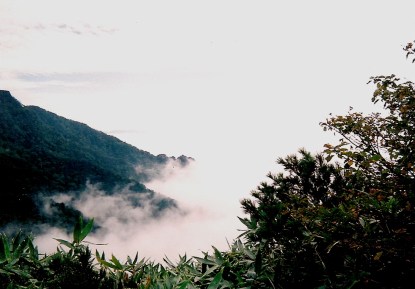
Mt. Hotaka

The hike: The trailhead starts at Hotakajinja (武尊神社), which is at the end of the paved forest road, about 2km from the Houdaigi campground (宝台樹キャンプ場). At first, the trail is just a continuation of the forest road, with “Beware of Bear” signs everywhere. Although I didn’t see any of those nocturnal creatures, I did spot a Japanese mountain goat (Kamoshika). After about 40 minutes of hiking, you’ll come to the end of the forest road, and are faced with 2 options. It’s a loop trail, so take your pick, but I must warn you that the trail to the left has a section with chains and ladders, which are a lot easier to climb than descend. Take the trail to the left, and you’ll come to an emergency “hut” and water source after about an hour of steep climbing. The hut is is nothing more than a huge corrogated metal pipe cut in half with a door attached. It’s not a very attractive place to stay, unless you’re dodging a typhoon! There’s a small stream near the hut where you can fill up your water bottle (you should filter the water just in case). The hut is hidden and off to the left of the main trail. After passing the hut, you’ve got a tough, steep climb with a section of chains and ladders. Be careful if it’s wet, and take it slow. It’s not as bad as some of the stuff I’ve encountered in the Japan Alps, but careless and a broken bone on any mountain is no fun. After you pass this short section, it’s easygoing to the top. Once on the summit, take a lunch break and enjoy the views. The trail splits in 3. You’ve got some options, but the most enticing is to head to the spear-like peak of Kengamine (剣ケ峰山). It’s an hour of up and down traversing before reaching a junction. Take the trail on the right to head down the mountain, but before you do that, climb the rocks in front of you to the top of Kengamine. The views of Mt. Fuji on a clear day are wonderful, and you’ll also have a panoramic view back to Hotaka, Mt. Tanigawa, Mt. Makihata, Mt. Shibutsu, Mt. Sukai, the peaks of Nikko and beyond. After taking some photos, retrace your steps back to the junction and head down off the mountain. You’ll be back at the forest road in about 90 minutes, passing a water source along the way. If you’ve got time, then head to Takaragawa-onsen (宝川温泉) before heading back into town.

When to go: This mountain gets meters and meters of snow in the winter, but the road to the bus stop is open all year round, so if you’ve got the right equipment (and experience), then go for it. Otherwise, aim to go between April and November.

Access: From Minakami station (水上駅), take a bus bound for Takaragawa-onsen (宝川温泉) and get off at Hotakakyou (武尊橋). From there, it’s a 2-hour walk on a paved road to the trailhead, although you should try to hitch. I got a ride with a guy on his way to work at the campground noodle shop. According to the campground web site, there’s a direct shuttle bus from Minakami station in the summer. Check the site here in Japanese for more information.

Level of difficulty: 4 out of 5 (elevation change 1118m)
Mt. Asahi (朝日岳)

February 28, 2008

Last updated: Feb 17, 2025

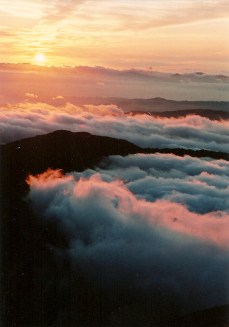
Mt. Asahi, in Yamagata Prefecture, is one of the most inaccessible peaks in Japan, and one of the most breathtakingly beautiful.

Mt. Asahi- Yamagata Pref.

The hike: From the hut at Koderakousen, take the trail heading towards Mt. Kodera (小寺山). The trail wastes no time in gaining elevation, and you’ll be happy for the abundance of fresh water if hiking in the summer. After about 2 hours of climbing, a trail will come in from the right. This leads to Hananukimine (ハナヌキ峰). Ignore this trail and keep climbing on the well maintained path. After another 30 minutes you’ll reach the top of Mt. Kodera. The views will start to open up, but the best is yet to come. Continue for another half hour or so toward Mt. Ko-asahi (小朝日岳). Just before the steep climb to the top, there’s a spur trail off to the right. Take this if you’re feeling lazy, but otherwise head to the top for a sweet view of Mt. Asahi stretching out in front of you. On the peak, the trail from Asahikousen joins this trail, so the number of people should increase somewhat. From here to Mt. Asahi, there’s only one trail and it’s well maintained. Drop steeply off the top of Mt. Ko-asahi, being careful not to slip and fall. After descending to the saddle, the ‘lazy’ spur trail I mentioned earlier will come in on the right. Continue climbing up and up for another 90 minutes or so, enjoying the multitude of alpine flowers along the way. Eventually, you’ll reach Dai-asahikoya (大朝日小屋). This is your home for the rest of the day, as watching the sunrise from “Sunrise Peak” is one of the main reasons for doing this hike. You can camp outside the hut, or stay for the measly sum of 1200 yen. The hut has no food or futons, so bring your own cooking gear and sleeping bag. There’s a water source a short distance away on a side trail. Wander up to the main peak if the weather’s good to watch the sunset. The next morning, wake up early so you don’t miss the action. In the summer, you need to be out of the hut around 3:45am if you want to get a good spot for the sunrise. It’s only a 10-minute hike from the hut to the top, so pack up your gear and take it with you. The sunrise, if the weather is good, will definitely alter your sense of Japanese beauty. The sun comes up behind Mt. Zao, and illuminates the ridge lines of Mt. Iide, Gas-san, Mt. Chokai, Mt. Bandai, and hundreds of other nameless peaks. No utility poles and no concrete anywhere to spoil the view. After taking in the scenery, follow the trail heading to the left, towards Asahikousen (朝日鉱泉). The trail drops quite steeply for the first hour or so, and then enters a beautiful virgin forest, eventually flattening out to follow an amazing river with crystal clear water. Follow the river for about 2 hours or so, and you’ll end up at the Asahikousen, one of the best mountain huts in Japan. Keep your eye out for Japanese mountain goats (Kamoshika), as there are a lot in this area. The owner of the hut is really friendly and makes one of the best bowls of soba in Japan, teeming with fresh organic mushrooms. Oh, and use the hot spring bath while your noodles are being prepared.

When to go: This mountain is completely inaccessible in the winter due to its remote location and the obscene amount of snow it gets. The roads usually open up again in late April, so go between then and early November, but for a snow-free experience, wait until July to complete the hike.

Access: From Yamagata station, take a local train on the JR “Fruits Line Aterazawa” line and get off at Aterazawa (左沢駅), the last stop. Trains are very infrequent, so check the schedule in advance. From the station, take a bus to Asahikousen(朝日鉱泉). The bus only runs from July 23-August 14, leaving Aterazawa station at 1:00pm and reservations are required. You can inquire about bookings when you reserve accommodation at Asahikousen lodge. Click here for the bus schedule. Another option would be to take a taxi to Koderakousen (小寺鉱泉), an alternative starting point for the hike. The taxi is not cheap, though. I did this hike after descending Gas-san, and hitchhiked all the way from there to Koderakousen, so that’s definitely an option for those without a car. The hike described here is a traverse from Koderakousen to Asahikousen, so you can take your pick of trails.

Level of difficulty: 4 out of 5 (elevation change 1320m)

Mt. Amakazari (雨飾山)

February 26, 2008

Last updated: Feb 19, 2025

Mt. Amakazari is a majestically rocky peak located northeast of Hakuba on the Niigata-Nagano border. The mountain is famous for beech trees and fall foliage.

Mt. Amakazari

The hike: From the bus stop, you’ve got a 90-minute hike on a paved road before you reach the trailhead. Head up the road toward Amakazarisō (雨飾荘). This is a nice hut with its own hot spring bath, so consider staying here if you want a more leisurely weekend on the mountains. Continue on the forest road, following the signs to the trailhead. It’s impossible to get lost, and if there are any vehicles on this road, then try to hitch to the trailhead. After about an hour, the forest road will split, but turn right for another 10 minutes and you’ll be in the huge parking lot. There’s another hut here, but if you bring a sleeping bag you can stay in the rest house (休憩場) for free! This is what I did – I took the very last train to Minamiotari, then a taxi, and hiked in the dark along the road. I arrived at the trailhead at 1am and slept on the floor of the building between the toilets. Anyway, the trail starts to the left of the rest house. At first the trail is really flat, and winds its way through a spectacular marshland. Imagine Oze with half the crowds! The Mizubasho plants are stunning in the spring. After passing this wonderful area, the trail starts climbing through virgin beech forest. After about 2 hours of hiking, you’ll reach Arasugesawa (荒菅沢). This is one of the most beautiful cols in Japan (see picture), and you’ll have to descend into the col before climbing up the other side. Be careful in the spring because they’ll be a lot of snow in this area. Cross the small river, and follow the paint marks up the spine of the mountain. The views will start opening up as you get higher. The climb is pretty steep, gaining close to 500m of elevation in less than 1km. Eventually, you’ll reach the summit plateau, where a trail will branch off to the right. Ignore this and continue to the left. You’ll reach Sasadaira (笹平) in about 5 minutes. Another trail leads to the right, which is an alternative way off the mountain. Ignore this for now, and head straight, toward the knobby summit of Amakazari. It should take about 30 minutes or so to reach the rocky top. The views toward Mt. Shirouma are stunning, and you’ll be able to see Mt. Takazuma and Mt. Hiuchi as well. Take a well deserved break and lots of photos. From here retrace your steps back to Sasadaira. Now you’ve got 2 options. Take the same trail all the way back or turn left and head toward Amakazari-onsen (雨飾温泉). There is no public transport from the onsen, so you’ll have to hitch or ask a fellow hiker along the way to give you a lift. Luckily, I met a man on the summit who had a car and offered to give me a lift all the way to Toyama station! The trail descends rather steeply at first, and if you’re hiking before the rainy season then you’ve got a massive snow field awaiting you. After a half hour or so, you’ll reach Nakanoike (中ノ池) a small pond that was buried under snow when I went. From here the snow fields end and your shoes can start to dry out. The trail is easy to follow, and you should arrive at the hot spring in about 2 hours or so. The hut is really nice and a bath costs around 500 yen. There’s both an indoor and outdoor bath, but they’re separated, with the outdoor bath hidden in a garden in the front. You’ll have to walk outside naked, so bring a towel big enough to cover your family jewels.

When to go: This mountain gets a ton of snow in the winter and is heavily prone to avalanches. A spring hike is feasible in April if you’ve got an ice axe and crampons. Otherwise, aim for a hike between late May and November. The fall colors are really famous here, so try to avoid the weekends in October unless you want a human traffic jam.

Access: From Hakuba station, take a local train 4 stops north and get off at MinamiOtari station (南小谷駅). Then, take a bus bound for Amakazari-Kogen (雨飾高原) and get off at the last stop. You can also take a taxi from the station for about 5000 yen or so. Click here for the bus schedule. If you’re looking for a guide in the area, I recommend contacting Paul at Nagano Adventures. He lives in the area and knows Amakazari really well.

Digital Map in English (Avenza App): Click here

Level of difficulty: 3 out of 5 (elevation change 1103m)

Mt. Daibosatsu (大菩薩嶺)

February 26, 2008

Last updated: Feb 20, 2025

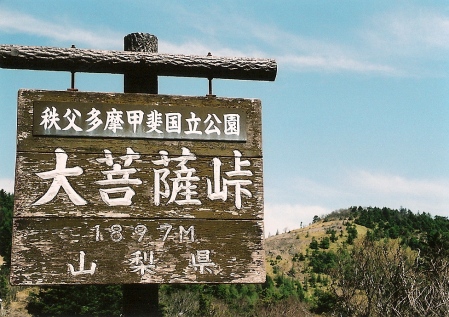
Mt. Daibosatsu is a pleasant day hike through virgin forest, with magnificent views of Mt. Fuji and the Minami Alps. Its easy access from Tokyo makes it quite popular on weekends.

Mt. Daibosatsu (大菩薩岳)

The hike: From the bus stop, start hiking up the paved forest road and you’ll soon reach a trail junction at a place called Marukawatouge Bunki (丸川峠分岐). You can take either trail, as this is a loop hike, but it’s an easier hike if you climb the trail to the right and descend via the left trail. Anyway, the trail to the right basically follows the forest road, but goes through a beautiful beech forest, with nice views of the Minami Alps opening up between the foliage. It should take about 90 minutes or so to reach the first hut at Kamihikawatōge (上日川峠). From here it’s a very gentle hike along a forest road to 2 more huts. If you’ve got a car you can drive all the way to this point, but not during the winter season. Also, I’ve been told that only customers staying in the two huts are allowed vehicle access this far. Anyway, at Fujimisansō (富士見山荘) the trail splits and you’ve got 2 options. The trail on the left climbs directly to the peak, but take the one on the right so you can reach historic Daibosatsutōge (大菩薩峠). This used to be a famous mountain pass on the old Tokaido road, a path leading from Tokyo to Osaka. There’s another hut here. The trail splits in several directions , but stay left and climb toward Daibosatsurei (大菩薩嶺). It should take about an hour to reach the peak. Along the way, enjoy the awesome view of Mt. Fuji stretching out behind you. This place can get jam-packed on weekends, so choose your rock of choice to eat your lunch on. Just before reaching the true high point, the trail enters a forest. There’s no view from the actual peak, so make sure you take a break before getting there. After taking your obligatory photo, continue on the same trail and you’ll pass over to the other side of the mountain and start decending. In about an hour you’ll reach another hut by the name of Marukawasō (丸川荘). This is another good place for a snack break. The trail splits in 3, but head toward the left and in about an hour, you’ll be exactly where you started, at good ole Marukawatōge. When you get back to the bus stop, consider walking down the main road about a half a kilometer and you’ll reach a lovely hot spring appropriately called Daibosatsunoyu (大菩薩の湯). You probably spied it on the bus ride up. The only disadvantage of walking down here is that you’ll probably won’t be able to get a seat on the return bus because everyone got on at the trailhead bus stop!

When to go: The bus runs all year round, and the peak doesn’t get so much snow in the winter, so this one can be done any time of year.

Access: From Shinjuku station, take the JR Limited Express “Kaiji” train and get off at Enzan Station (塩山駅). The train takes about 90 minutes and costs around 3500 yen. There are lots of slower but cheaper options, so choose according to budget/start time. From Enzan Station, take a bus bound for Daibosatsutōge-tozanguchi (大菩薩峠登山口). The bus takes about a half an hour and costs the ridiculously low price of 300 yen, making it the one of the cheapest public bus in all of Japan. Click here for the schedule.  Likewise, Enzan station is only 20 minutes from Kofu station by local train, so Kansai-based hikers can do the hike in a weekend by taking a Kofu-bound overnight bus from Osaka.

Level of difficulty: 3.5 out of 5 (elevation change 1167m)

Mt. Nasu (那須岳)

February 25, 2008

Mt. Nasu is an active volcano located on the border of Tochigi and Fukushima Prefectures. Popular with families and school trips, the mountain features picturesque scenery and a hut with its own hot spring!

Mt Nasu

The hike: From the parking lot you can either shell out your hard-earned money to take the gondola up to the top, or use the very easy, well-maintained path. I knew you’d opt for hiking! Hike up the paved road for a few minutes, and the trail will branch off to the left. The trail is easy to follow, and when I went I passed an entire elementary school class of 80 kids along the way! The trail really is more like a road for the initial climb. After about 40 minutes or so, you’ll hit the ridge line, and an emergency hut will be conveniently awaiting you. The hut is there in case Nasu decides to blow its nose on your journey, and staying in the hut is officially prohibited (you’re better off going to the hot spring hut anyway.) When you get to the hut, hang a left toward Mt. Chausu (茶臼岳). There are plenty of paint marks, so it’s nearly impossible to get lost, and after about 20 minutes the trail will meet up with the one from the gondola. This trail can become extremely crowded during weekends, so take a quick walk around the crater rim before descending back to the emergency hut. Once you’re back here, instead of going back down the mountain, head away from all of the crowds toward Mt. Asahi (朝日岳). It’s quite rocky in this section, so be careful of ice if you’re here in the winter. You should be sitting on top of Mt. Asahi in about 40 minutes or so, with an incredible view overlooking the crater of Mt. Chausu. Mt. Asahi is just a short spur from the main trail, so once on top head back down to the main trail. From this point, head yet further away from Mt. Chausu and the crowds. Your target is the official high point of the mountain, called Mt. Sanbonyari (三本槍岳). It should take about an hour or so from Mt. Asahi to reach the high point. Along the way, you’ll first find a trail branching off to the left, and then another one toward the right. Ignore both of these. As long as you follow the signposts to Sanbonyari then you’ll be ok. About halfway there, you’ll pass through a beautiful marsh area with some small lakes. Once you make it to the high point, break out your lunch an enjoy the scenery. Only the most hardcore hikers make it to this point, and it’ll be a pleasant change from the chaos at Mt. Chausu. From the high point, you have to retrace your footsteps all the way back to the parking lot! So much for a loop trail. However, if you’d like to check out the hot spring hut, then hang a right just before coming back to Mt. Asahi. I’ve never actually done this trail, but my friend insists the detour is worth it. Unfortunately , you’ll have to stay in the hut in order to use the hot spring. Check out this web site (in Japanese) for more info.

When to go: This hike can be done year round, but be prepared for a bit of snow in the winter. The hot spring hut is open from April to December.

Access: From Ueno station in Tokyo, take either a Shinkansen bound for Koriyama or a local train and get off at Kuroiso station (黒磯駅). The local train takes almost 3 hours, but costs less than 3000 yen. If you take the Shinkansen, you’ll need to get off at Nasushiobara (那須塩原駅) and change to a local train to Kuroiso. From Kuroiso, take a bus bound for Nasudake-sanroku (那須岳山麓) and get off there. The bus takes about an hour. Click here for the schedule.

Map: Click here, and here

Level of difficulty: 2 out of 5 (elevation change 537m)

Mt. Ena (恵那山)

February 24, 2008

Last updated: Feb 21, 2025

Mt. Ena is a long, round, hump-shaped peak located on the border of Nagano and Gifu Prefectures. It’s easily accessible from Nagoya city, and the views along the way are outstanding.

The view from Mt. Ena

The hike: From the small parking lot at Misakatōge (神坂峠), there are two trails, but you want to take the one towards Ōbanyama (大判山). It should take you about 90 minutes to reach this peak, which has excellent panoramic views of the Minami and Chuo Alps, as well as Mt. Ondake. You can also see Mt. Ena in front of you. From the peak, the trail curves toward the right and goes down! You’ll lose about 100m of altitude before the trail flattens out and follows the contour of the mountain. The trail will start climbing again, and won’t let up until the summit ridge. It should take about 2 hours or so to reach the Ena ridgeline, as the final climb is quite steep and rough going if there’s any snow or ice. Once you reach the ridge, the trail will veer off to the left and become very flat and easy. In about 20 minutes or so, you’ll come to a mountain hut named Enasan-sanchō-goya (恵那山山頂小屋). The area is heavily wooded, but if you climb the rock behind the hut you’ll be rewarded with terrific views of the Minami Alps and Mt. Fuji. The true summit is another 10 minutes or so past the hut, and there’s a small shrine at the top, but no view. The hut itself is unmanned and free to stay in, but there’s no water source so bring plenty of water with you if you’re planning an overnight stay. In fact, there are no water sources at all on this hike (not even at the trailhead), so stock up at the train station before setting out. After resting at the top, head back the way you came.

When to go: This mountain gets its fair share of snow in the winter, and  the forest road to the trailhead isn’t plowed, which means a winter assault may be difficult. The snow should melt sometime in March though. I did this hike in October and was hiking through fresh snow.

Access: From Nagoya station. Take the JR Limited Express “Shinano” train bound for Nagano and get off at Nakatsugawa station (中津川駅). If you’d like to save money, then take a local train. From the station, there is NO bus service to the trailhead. You’ve either got to take a taxi (that’ll cost around 7000 yen) or try your luck hitching. The trail starts at Misakatōge (神坂峠). I was lucky enough to go with a friend who had a car. If you’ve got a few days off, you could try walking to the trailhead and camping there, before starting your hike the following day.

Digital Map in English (Avenza App): Click here

Level of difficulty: 2 out of 5 (elevation change 622m)

Mt. Asama (浅間山)

February 24, 2008

Last updated: Feb 18, 2025

Special note: As of Feb 2025, the hike to Mt Maekake is currently closed to hikers due to increased volcanic activity. Click here for the latest updates about the volcano. 

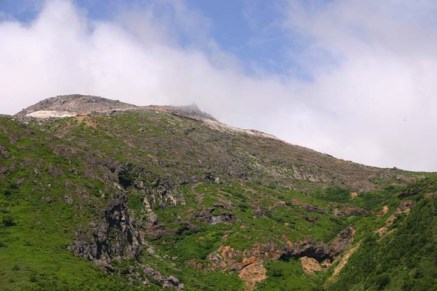
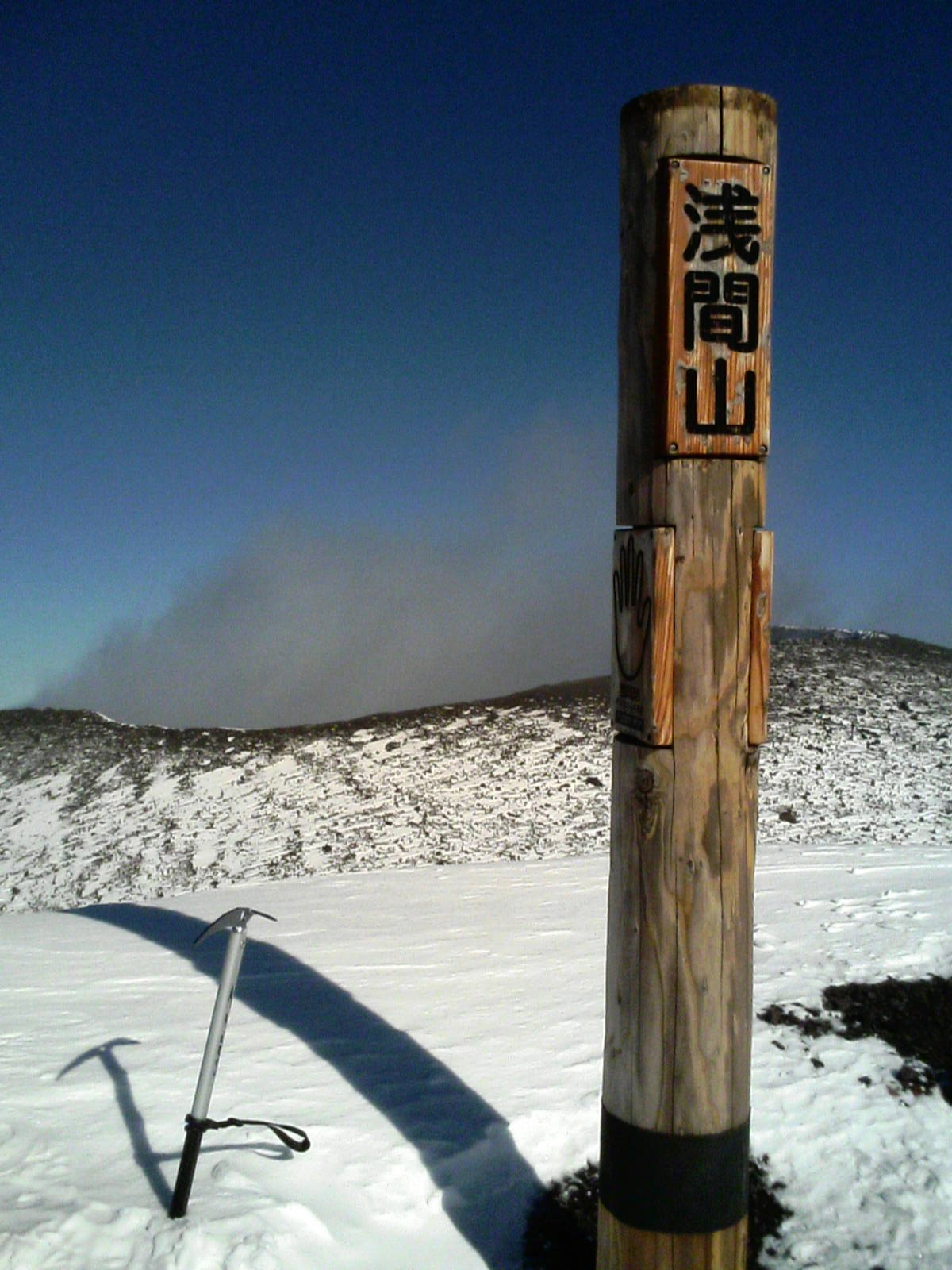
Mt. Asama is an active volcano that last erupted in the fall of 2004. Although the summit is officially closed to hikers, the poisonous gases have subsided enough to allow access to Mt. Maekake (前掛山), a short distance from the crater rim.

The summit of Mt. Maekake

The hike: From the bus stop, head up the hill a little toward Asama-sansō (浅間山荘), a spacious hut with a nice hot spring bath (good for after the hike). Walk past the hut on the forest road, and you’ll come to a giant signpost with a map of Asama. This map will tell you the current volcanic activity of Asama, and how far you can officially go. Initially the trail follows the forest road and you’ll come to your first shrine torii called (一ノ鳥居) after about an hour or so. The trail splits here, and you have 2 options. You can go right and check out a waterfall called Fudōtaki (不動滝), or continue going straight. Both paths meet up a little later in the hike, so take one on the ascent and the other on the way down. I took the waterfall course on the decent, so I’ll describe the other trail here. The trail winds its way through a forest with low lying bamboo grass. The beautiful volcanic rock formations of the surrounding peaks will soon come into view. Continue climbing up and you’ll soon reach another torii (二ノ鳥居). The waterfall trail pops out just before this point. Keep heading up toward the valley between the rocky peaks and you’ll come to a rather interesting place called Kamoshika-daira (カモシカ平), home to numerous kamoshika (Japanese mountain goats). This is probably your best chance in Japan to spot these elusive creatures, but unfortunately I couldn’t find any. Eventually you’ll come to a beautiful mountain hut called Kazankan (火山館). There’s a water source here and the owner lives here all year round. There are some picnic tables out front, so relax here and enjoy the serenity. It should take about 2 hours or so from the bus stop to this hut. After regaining your energy, head up the trail to the right of the hut and you’ll soon enter a vast plateau. The hiking here is really easy, but the big climb is what awaits you. A trail will branch to the left toward Mt. Kurofu (黒斑山) and another one toward J-Band, but ignore them both and continue straight. The huge conical edifice of Asama will soon come into view. It looks deceptively close and short, but in fact the tough slog is seemingly never-ending. The trail is easy to follow if the snow isn’t too deep. After about 90 minutes of uphill climbing, you’ll come to two emergency huts that were badly damaged in the 2004 eruption. They look a bit like bombed out shacks, with twisted metal framework and partially collapsed roofs. The true summit lies directly in front of you, marked with “Do Not Enter” signs. If you’d like to reach the top of the active crater, then good luck. Breathing poisonous gases wasn’t on my ‘to do’ list, so I opted for the much safer peak of Mt. Maekake (前掛山). Walk toward the emergency hut remains, and start climbing the ridge on the right. It’s slow going in the snow, and try not to get blown off the mountain if it’s windy. The summit of Maekake should be reached in about 20 minutes or so. The views are incredible and you can watch the steam rising from Asama from here. Congratulate yourself and pray that Asama doesn’t belch while you’re standing here. Fly down off the mountain the same way you came, or take a detour through J-Band and Kurofu if you’ve got the energy. Remember that a nice bath is awaiting you at the parking lot!

When to go: This hike can be done year round if you’ve got an ice axe and crampons. Asama usually doesn’t get as much snow as the surrounding peaks, melting around the middle of March or so. I did this hike on Christmas day in stunning weather but used crampons and an ice axe. 

Access: From Tokyo station, take the Hokuriku shinkansen to Sakudaira station (佐久平駅) . From there, take a bus bound for Takamine Mountain Resort (高峰マウンテンリゾート) and get off at Asamayama Tozanguchi (浅間山登山口). From there it’s about a 40-minute walk on the road to Asama-sansō (浅間山荘). Click here for the bus schedule. If you stay at Asama-sansō then should be able to  pick you up at Komoro (小諸駅) station (with a reservation in advance). Komoro station requires a change of trains at Karuizawa. 

Live web cam: Click here

Digital Map in English (Avenza App): Click here

Level of difficulty: 3 out of 5 (elevation change 1114m)

Mt. Houou (鳳凰山)

February 23, 2008

This blog post was written back in 2008. For the latest information about this hike (including color photos and maps), please consider purchasing my guidebook to the Japan Alps. 

Mt. Houou is one of the most beautiful yet most overlooked of the Minami Alps peaks. The rock formations are stunning, and the views out to Mt. Fuji are breathtaking to say the least.

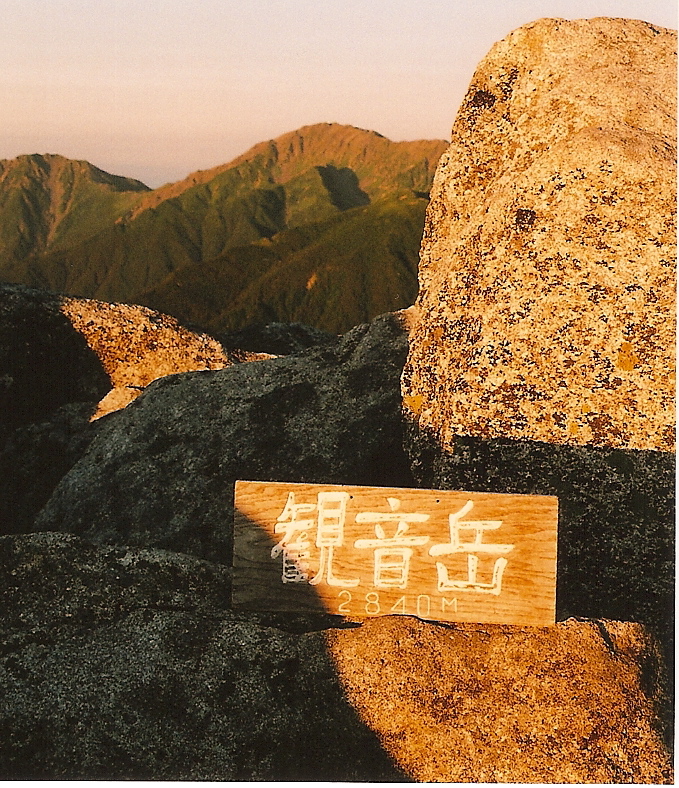
The top of Mt. Kannon

The hike: First of all, this is almost impossible to do as a day hike unless you get a really, really early start, so plan on camping/staying at a hut along the way. From the trailhead, follow the signs to Yashajintouge (夜叉神峠). It should take around 45 minutes to hike up there. The views are great if the weather is good. There’s a hut and campground here, but don’t quit hiking quite so early. There’s a 3-way junction here, so hang a left toward Yakushi-dake (薬師岳). Most Japanese maps list the peak as 6.5 hours away, but if you’re in good shape and carrying light, you can do it in a little as 4 hours. Luckily, there are 2 huts along the way in case you got a late start or are a slow hiker. The first hut you’ll come to is MinamiOmuro-goya (南御室小屋). There’s a campground and water source here. If you continue another 90 minutes or so you’ll reach Yakushidake-goya (薬師岳小屋), just below the peak. This is a fantastic place to stay if you’d like to catch the sunrise. If you’ve made really good time and aren’t too tired, then why not continue another hour or so to Houou-goya (鳳凰小屋). This is where I stayed, but I approached from Hirogawara instead of Yashajintouge. No matter where you end up staying, you’re in for a treat of a sunrise in the morning. Mt. Houou has 3 main peaks – Yakushi, Kannon, and Jizou, all named after Shinto Gods. The highest peak is Kannon (観音岳), while the obelisk shaped Jizou (地蔵岳) is the symbol of the mountain, appearing in most photographs. If you stayed at Yakushi hut, then climb up to the top of Yakushi, ignoring the trail coming in from the right side. The ridge is pretty easy to walk on, and the limestone rock formations look a lot like snow. Mt. Kannon is the highest point. Admire the incredible view of Mt. Fuji directly in front of you, and the panorama of the Minami Alps directly behind. Continue for another hour or so (again, ignore the trail coming off the right) until reaching Jizou, where a choice has to be made. You could go right and exit the mountain in about 4-1/2 to 5 hours, or you could take a left and follow the ridge toward Mt. Kai Koma-ga-dake, which makes for a good traverse. If you head this way, then there’s an escape route off to the left in about an hour or so. This place is called Hakuhoutouge (白鳳峠). Going left here will take you to Hirogawara in about 3 hours or so. There are plenty of buses from Hirogawara back to Kofu.

When to go: If you’re relying on public transport, then do this hike between late April and November. If you’ve got your own car, then you can attempt this hike in the winter (with the proper equipment of course). Mt. Houou doesn’t get as much snow as neighboring Kita-dake, so it should be approachable in March depending on the amount of snowfall. Double check to make sure the road Yashajintouge is open before you drive all the way there.

Access: From Kofu station, take a bus bound for Hirogawara (the trailhead for the Kita-dake hike), but instead of going all the way there, get off at Yashajintouge (夜叉神峠). I think the first bus from Kofu is 9:30am but don’t quote me on that. If you’ve taken a night bus from Osaka or Tokyo, then double check the bus schedule when arriving at Kofu. Click here for bus information in Japanese. If you descend to Hirogawara, then double check the bus schedule, because the buses are limited in number outside of the peak July/August hiking season (the road is closed to regular cars, so it’s impossible to hitchhike).

Level of difficulty: 4 out of 5 (elevation change 1450m)

Mt. Utsukushigahara (美ヶ原)

February 23, 2008

Last updated: Feb 19, 2025

Utsukushigahara is the only Hyakumeizan that you can “climb” in sandals. Though not very exciting in summer, winter transforms the place into a truly beautiful plateau. My friends and I have nicknamed this place Utskushikunaikara (美しくない原), meaning “ugly plain”.

Utsukushihakara

The hike: From either bus stop, follow the sign (and crowds) to the summit area, called Ōgatou (王ケ頭), easily recognizable with all of the radio towers and antennae. The entire path is paved and quite overdeveloped, but if you’re climbing the Hyakumeizan you’ve got to come here to check it off your list. That’s why I recommend coming in the winter. The cows are gone, and the snow piles up over the fences, so you can roam anywhere. Plus, it’s deserted, there’s no avalanche danger, and it’s relatively flat. A good place to have a snowball war, practice making snow caves, and brush up on those snowshoeing skills. There’s a smaller, lesser known peak called Ōgahana (王ケ鼻), which is about 20 minutes west of the high point. Follow the signs. If you go here, you have an outstanding panorama of the Kita Alps, no ugly towers, and much fewer people.

When to go: This hike can be done year round if you’ve got your own transport in the winter. Summer is crowded with tacky tourists, who come to view the cows. Go on a clear day so you can see the panoramic views.

Access: As of 2025, there is no direct bus to the trailhead at Yamamotogoya (山本小屋) so you’ll need your own car if you want to hike through the cow pastures to the summit. However, there is a bus in the summer from Matsumoto station to Utsukushigahara Shizenhogo Center (美ヶ原自然保護センター). From there you can hike in about 30 minutes to the summit. The reservation-only bus runs on weekends from June to September and every day from mid-July to late August. Click here for more information. In winter there’s no public transport unless you stay at the expensive hotel on the summit, which offers shuttle service from Matsumoto station. Click here for the hotel website.

Level of difficulty: 0 out of 5 (elevation change 129m)

Mt. Tateshina (蓼科山)

February 22, 2008

Last updated: Feb 19, 2025

Mt. Tateshina is a knobby, dormant volcano rising northwest of Yatsu-ga-dake and features a bald rocky summit and wonderful panoramic views of the Kita Alps.

the rocky summit of Mt. Tateshina

The hike: From the bus stop, enter the forest from the right side of the road (if looking uphill). The trail starts off flat, and then climbs through a lot of bamboo grass before flattening out after about 20 minutes. This looks like bear country, and I half expected to see a mom and cubs foraging through the snow, but no such luck. The top of Mt. Tateshina should shortly come into view as you approach the climb. The trail is very clearly marked and climbs straight up an old rain gully. If the weather is sunny then the trail should be relatively dry and easy, but I’m sure it becomes a river during a rain storm, so be careful. If you’re hiking before early May there’ll probably be a bit of lingering snow, so bring some light crampons for the decent. If it’s mid winter then you’ve got a tough climb and should consider approaching from the other side of the peak. Anyway, after about 2 hours or climbing, you’ll come to the summit boulders. It looks a lot like alpine territory up here, deplete of trees and lots of paint marks on the rocks. The trail curves around the right side of the summit, and you’ll see a mountain hut in front of you. The summit is off on a spur trail to the left. The entire peak is filled with huge rocks, so it’s a matter of scrambling across boulders once you’re up there. There’s a shrine in the center of the peak, as well as a lookout area behind that. If the weather is good then you’ll have an expansive view of Mt. Yatsu, Mt. Fuji, the Minami Alps, Kita Alps, the peaks of Chichibu-Tama-Kai National Park, and Mt. Asama. You can come back the way you came, or head over to the mountain hut, where you’ll find a connecting trail heading down the other side of the mountain. After about 20 minutes of steep decending, you’ll reach another hut called the Tateshina Sansō (蓼科山荘). This is a relatively nice hut, but was buried under a meter of snow when I went there. The trail splits in 3 from the hut, but you want to go left, taking the trail that leads away from the front door, toward nanagōme-ichinotorii(七合目ーの鳥居). The trail is easy to follow and goes through a lovely forest. After about an hour or so, you’ll come to the parking lot. I’m not sure if there’s bus service from here, but if you keep following the trail down, it will spit you out at the Shirakaba Int’l Ski Resort (白樺国際スキー場). In the winter, this is the best approach for the climb, as you can take the lift up and start your climb from there. This approach is much easier (and safer) than the initial approach described here.

When to go: This hike can be done year round if you’ve got an ice axe and crampons. If not, then shoot for a hike somewhere between April and early December. I’ve done this hike twice – once in May and once in early March.

Access: I’ve described 2 routes here. The first is accessible from Chino (茅野) station by bus….sort of. From Chino, take a bus bound for Kita Yatsugatake Ropeway (北八ヶ岳ロープウェイ) and get off at Alpaca Tateshina Kogen Iriguchi (アルピコ蓼科⾼原別荘⼊⼝). From there it’s a 1-hour walk on the paved Venus Line road to the trailhead. Click here for the schedule.  You could also hike over to Tateshina from the top of Kita Yatsugatake Ropeway in about 7 hours.

Digital Map in English (Avenza App): Click here

Live web cam: Click here

Level of difficulty: 2 out of 5 (elevation change: 890m)