Posted tagged ‘hiking’

Mt. Ryōzen (霊仙山)

March 30, 2009

Last updated: Sept. 07, 2019

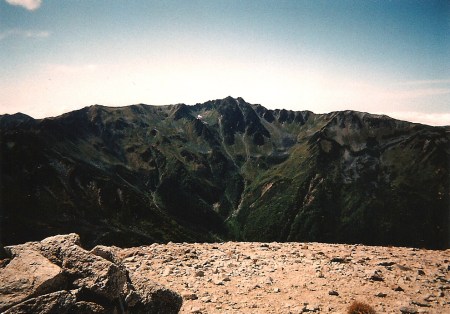
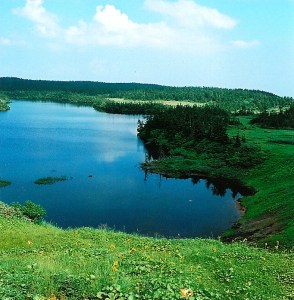
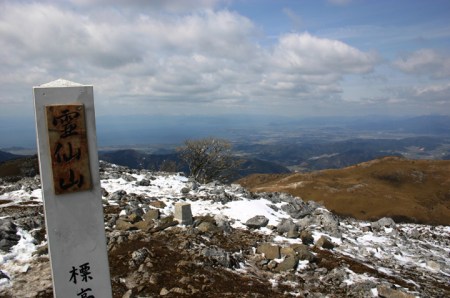
Mt. Ryōzen (pronounced in Japanese as ‘ryouzen zan’), is a spectacular peak located on the eastern shores of Lake Biwa, across the valley from Mt. Ibuki. Despite being only 1000m in height, the mountain is known throughout Japan for its stunning collection of alpine flowers, excellent panoramic views, and broad grasslands reminiscent of the hills of Scotland.
ryouzen1

Warning: The leeches on Ryouzen are brutal, so you should definitely avoid hiking during the rainy season and most of the summer. Perhaps this one is best left for an autumn or spring hike. Also, the waterfall route is currently closed, so use the alternative approach described below.


The hike (waterfall route): (currently closed to hikers)From Samegai station, head out the front door and walk straight for about 20 meters, where a street will branch off diagonally towards the right. You’ll pass a small grocery store on your left side, which is a good place to pick up supplies. Continue walking on the paved road for about 3km or so, following the signs towards the trout farm (養鱒場). It’s an easy, flat walk that should take about 30 minutes or so. Just after passing the bus stop at Kaminyuu (上丹生), the road will curve towards the right, crossing a bridge over the river. Instead of crossing the bridge, turn left and follow a small paved road next to the river, following the sign that says 霊仙登山道. The water is really clean and you’ll find lots of bridges crossing over to houses on your right. Continue walking straight another 1/2 km or so until reaching what appears to be a water treatment plant. Turn right on the forest road just in front of the facility and follow the road to its terminus, where you’ll find the trailhead. The trail starts off gentle, and soon follows a huge dry riverbed. There may be water flowing during the rainy season, but it was bone-dry during my hike in late March. Follow the paint marks on the rocks and the red tape on the trees. After about 20 minutes or so, you’ll see a huge gully coming in from the right, as well as your first signs of running water. This place is called Ichi-no-tani (一の谷). There’s an alternate trail that climbs the gully to the right, but you’ll want to continue hiking straight, along the river. The path will meander through the river, but there’ll be plenty of places to cross if it hasn’t rained lately. Continue past the area marked ni-no-tani (二の谷) and after a short time, the path will start climbing on your right, away from the river. Don’t worry – you haven’t made a wrong turn, as the steep path will rejoin the river a little further along. Soon you’ll reach a trail junction. If the river is swollen, then take the path to the right. Otherwise, take the signpost marked うるしが滝. You’ll immediately pass under a huge boulder, and then follow the river for another 10 minutes or so until arriving at the base of the falls. Drop your pack at the junction, and cross the river towards the left and you can actually go to the base of the falls. This is one of the more impressive waterfalls in the Kansai area, and in old times mountain priests used to pray under its waters. Retrace your steps back to the junction, and take the trail marked 頂上. The path will climb up and over the falls, following the river for a few hundred meters before branching off towards a gully on your right. The trail will become much steeper now, but there are plenty of ropes tied into the mountain to assist you on the ascent. If it’s been raining then the trail will become one ugly, muddy mess, so consider bringing gaiters. There are lots of red tape marks tied to the trees, so it’s easy to find your way. After about 20 minutes, you’ll reach yet another trail junction. Don’t turn right, as it’ll take you back down the mountain. The signpost has 頂上 pointed towards the left, but the actual trail is straight ahead, so don’t get confused. The trail will branch off to the right, following another small gully before popping out on the ridgeline. Turn right once you reach the junction, and you’ll start climbing through bamboo grass. The views will start to open up significantly, as you’ll rise above the tree line. Mt. Ibuki will be on your right, with Hakusan rising just to the right of it. Behind you, you’ll see Ondake, Mt. Norikura, the Chuo Alps, Yatsugatake, and the Minami Alps (if it’s a clear day). Keep climbing straight ahead, where you’ll reach an emergency hut in about 10 minutes. The hut is unstaffed and free to stay in, but there’s no water source or toilets. Continue climbing on the well worn path towards the first rocky peak directly in front of you. At the summit, there’s a trail branching off to your right, but ignore it and continue straight, towards the top. You’ll descent to a huge col and climb up the other side. Once on top, ignore a trail on the left that heads to the high point (最高点) and head to the summit, where the views towards lake Biwa are superb. Retrace your steps back to the junction and turn right to head to the high point. From here, you’ve got a few options, but the best would be to continue on the same trail towards Sasa-tōge (笹峠), which will take about an hour to reach. Another 30 minutes beyond that, you’ll descend to a river and junction. Turn right and make your way along the river to Asefuki-tōge (汗拭峠) and down to the parking lot at Kura-ga-hata (榑ヶ畑). You can try hitchhiking from here, or you can walk down the road for about an hour before reaching the bus stop at the trout farm. All in all, the entire loop should take anywhere from 6 to 8 hours, so be sure to get an early start.

The hike (trout farm route): From Samegai station, take the bus bound for yōsonjō (養鱒場) and get off at the final stop. Follow the paved road that hugs the left bank of the stream, with a large trout farm across the water on your right. It’s a long walk on the paved road for 3.8km to reach the start of the hike. There are a couple of smaller forest roads that branch off the main one, but stay on the main road as it follows the river upstream. After passing by a small parking lot the road turns to gravel and you’ll see a small hand-painted signpost that reads 登山口 just before a bend in the road. Take this route as it leaves the main road and continues following the narrow stream past an area dotted with moss-covered platforms. There used to be a small village here that was abandoned during World War II but now all you’ll find is a small, creepy-looking mountain hut. Pass by the hut and cross the small stream, where you’ll find some cold drinks for sale. There’s an honesty box where you can deposit your money if you’d like to purchase a refreshing (but not necessarily fresh) beverage. The trail climbs steeply from this point, switchbacking a couple of times until reaching Asefuki-tōge (汗拭峠). Turn left here at the signpost marked for summit (山頂). The path continues its steep climb towards the summit ridge, through a magnificent forest that really comes to life in the autumn. The route is very clearly marked and is divided into 7 stagepoints. The views really start to open up when you reach the 5th stagepoint (五合目), and the rock formations here make a great place for a break. If you look above you, you can see the summit ridgeline peeking out above the treeline. Continue straight on and you will soon leave the treeline and switchback through the grasslands to the summit of the first peak on the vast plateau. This is the 7th stagepoint (七合目). The path gradient eases up nicely here, and it’s a wonderful but long stroll through the grasslands to the summit. Keep an eye on time, as the final bus from the trout farm back to Samegai station leaves at 5pm. If you miss this bus, then you need to walk an extra 4km back to the station. Anyway, continue straight on and you will soon pass by a small pond marked by a large wooden shrine gate. From here it’s a steady climb up and towards the right to the crest of the ridge, where the views towards Mt. Ibuki and the Japan Alps really start to open up. Turn right here at this junction for a long drop to a saddle, followed by an even longer climb to the high point (最高点). If you want to save a bit of time on the return, then there’s an unmarked deer trail at the bottom of the saddle. Retrace your steps to the saddle and turn left, continuing left at every unmarked junction. You will eventually reach a small pond, so veer right here and climb back up to the 7th stagepoint (七合目). Retrace your steps back to the trout farm. All in all, it’s a strenuous hike that should take about 6 or 7 hours, depending on your speed.

When to go: This hike can be done year round, but you’ll want to be prepared for winter climbing conditions between December and April. The busiest times are during the summer months when the alpine flowers are in bloom, but you’ll have to fight with the leeches. Autumn and spring offer the most favorable hiking conditions. Be sure to bring a headlamp or flashlight if you happen to get caught out after dark, as the hike is quite long.

Access: From Kyoto (京都) station, take the JR Shin-kaisoku (新快速) on the Tokaido line bound for either Maibara (米原) or Nagahama (長浜) and get off at Maibara. Change to either a local or kaisoku train bound for either Ogaki or Toyohashi and get off at Samegai (醒ケ井) station, which is only one stop from Maibara. It’s a 4km walk to the trailhead, or you can take one of the infrequent buses, which now require advanced booking. Click here for more information.

Level of difficulty: 4 out of 5 (elevation change ~900m)

Total round-trip distance: 15km (6 to 8 hours)
This slideshow requires JavaScript.

Guidebook update

March 22, 2009

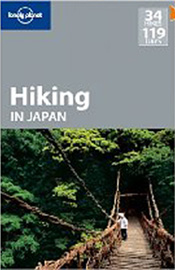
Yes, the rumors are true. Lonely Planet is finally updating their Hiking in Japan guidebook.

lp-guide

This time around, Craig McLachlan has teamed up with Richard Ryall and David Joll for a comprehensive overhaul of the 1st edition. Unfortunately, there are no new hikes in the updated 2nd edition, but I still think it’s worth adding to your collection. Also, if you’re thinking about buying the 1st edition, you might want to wait a month and buy the new one. The release date will be July 2009 (pushed back from an original release date in May). Although Lonely Planet has not officially announced the update, the information gathered here comes from two reliable sources: 1) Amazon.com (do a search for Hiking in Japan 2nd edition) 2) Personal communication with the lead author. (By the way, I don’t work for Lonely Planet and I’m not receiving any royalties from the sales of this guidebook).

Mt. Warusawa (悪沢岳)

March 22, 2009

This blog post was written back in 2009. For the latest information about this hike (including color photos and maps), please consider purchasing my guidebook to the Japan Alps. 

Mt. Warusawa is the 6th tallest peak in Japan and the gateway to the southern portion of the Minami Alps. Its remote location and huge elevation gain make it a must-climb for burgeoning alpinists. The peak is also goes by the name of Mt. Arakawa (荒川岳) so don’t be confused – they are the same mountain.

warusawa1

The hike: Most people start and finish this hike at Sawara-jima, knocking off both Mt. Warusawa and Mt. Akaishi in the process. Allow 3 days to complete this tough but scenic route. From the bus stop at Sawara-jima, continue hiking north along the paved forest road for about 10 minutes until reaching a large, green, steel bridge. The trailhead is on the left, just before you cross the bridge. The path is relatively flat for the first few minutes or so, until crossing a large suspension bridge over the river. The bridge is really narrow and not for those with acrophobia. After crossing the river, the trail winds its way through a scenic forest for about an hour and a half or so, before meeting up with a gravel forest road. Cross this road and head up a metal staircase built into the hillside, marked with a 千枚小屋 signpost. This is where the true climb begins, as you’ll start climbing making some significant gains in altitude on a well-worn trail through a beautiful virgin forest. Unfortunately, you’ll cross the forest road again after about 45 minutes and will actually be running parallel to the road for most of the way (though it is out of sight). Keep climbing steadily another hour or so and you’ll reach a flat area called Shimizu-daira (清水平), which has a water source. Fill up on water here, as you’ve still got a few hours of hiking left before reaching your home for the night. There’s only one way to go, which is up, up and then up again. About a half hour after leaving the water source, you’ll pass through another marshland, where the views will start to open up. If the weather is clear then you can see both Mt. Akaishi and Mt. Warusawa rising high across the vast valley to your left. You’ll be about 2100m above sea level, but you’ve still got another 500m or so before reaching the hut. Your next landmark will be a small pond on your right, and you’ll soon cross over a set of cables running overhead, which are used to haul supplies to the nearby mountain hut. Continue hiking through the primeval silver fir forest and eventually you’ll arrive at Senmai hut (千枚小屋) and campsite. The hut is open from mid-July to mid-October and costs 8000 yen with 2 meals or 5000 yen without. Camping runs 600 yen per person. Additionally, the 2nd floor of the hut is open out of season and won’t cost you a thing (but you’ll need your own sleeping gear and food). According to the map, it should take about 7 hours for the 10km, 1500m vertical ascent from Sawara-jima to the hut, but you can do it in less time if you’re fit and traveling light. The next day continue on the same trail to the top of Mt. Senmai (千枚岳). Soon after leaving the hut, you’ll pop out of the tree line, and will be there the rest of the day. The trail will become quite rocky, and the views are nothing short of spectacular. From this vantage point, you’ve got an unobstructed view of the entire Minami Alps, which is rare since the towering peaks usually conceal the larger ones behind. Anyway, stay on the ride line for about 45 minutes, and you’ll reach your first 3000m peak of the day, called Mt. Maru (丸山). A short up-and-down traverse later, and you’ll be sitting on top of Mt. Warusawa, the target peak. From here, you can retrace your steps back to Sawara-jima, but I really recommend staying on the ridge line a few more days. Get ready for a huge drop down to a saddle on the other side of Warusawa and a strenuous climb up to Nakadake (中岳), where you’ll find an emergency hut. There are a lot of ptarmigan in the saddle between the two peaks – I was luck enough to see a family with recently hatched chicks. The emergency hut at Nakadake is another possible place to stay, but be warned that it’ll cost you a jaw-dropping 4500 yen to stay in a place with no water or food! This hut is shut tight in the off season, and camping is prohibited in the vicinity. The astronomical costs are due to a monopoly by the Tokai Forest corporation, which owns every single hut on the route. Just behind the hut, you’ll find the summit of Mae-dake (前岳), where you’ll have to make a decision. Turn left to descend to Arakawa hut (荒川小屋) and the gargantuan climb up to Mt. Akaishi. Turn right if you’d like to head towards Mt. Shiomi, which will take another 2 days to reach. Click here for some great photos of the entire Warusawa/Akaishi loop.

When to go: This hike can be done from mid-July to the end of August, when the bus to Hatanagi dam is running. If you’ve got your own transport then you can attempt much earlier or later in the season. A winter ascent may able be possible with the right equipment and experience.

Access: From Shizuoka station (静岡駅), take a bus bound for Hatanagi-daiichi Dam (畑薙第一ダム) and get off at the dam. Change to a shuttle bus bound for Sawara-jima Lodge (椹島ロッジ). Please note that the bus to Hatanagi-daiichi has been discontinued as of May 31st, 2008, and has been replaced by a seasonal bus running only from July 19th to August 31st. Click here for the bus schedule for the bus from Shizuoka to the dam and here for the shuttle bus schedule from the dam to the lodge.

Level of difficulty: 5 out of 5 (elevation change ~2000m)

Mt. Tomuraushi (トムラウシ)

March 9, 2009

Home of the endangered Japanese pika, Mt. Tomuraushi is a wonderful rocky peak located at roughly the halfway point on the Daisetsuzan trekking route. The scenery and views will certainly make you believe you’ve left Japan.

tomuraushi1

The hike: First of all, I would like to thank Julian for this hike description, as I climbed this peak while doing the full Asahi-dake to Tokachi-dake traverse. From the bus stop, head to the end of the road and the trailhead. After about 5 minutes of hiking, you’ll cross a forest road, where you’ll find the lovely Higashi Daisetsu hut, which looks like a great place to stay. Click here for the website in Japanese. Continue hiking on the trail for about 90 minutes or so, until reaching a trail junction marked 温泉コース分岐 (Onsen kousu bunki). This is where foot traffic will increase signficantly, as the trail to the right leads down to a parking lot. Most people with cars just drive up here rather than hiking from the hot spring, so if you’ve got your own wheels you might consider doing the same (especially if doing this hike as a day trip, which I don’t recommend). Turn left at the junction for a moderate climb up a well-worn path. If it’s raining then the path will become a nasty mixture of water and mud, so bring gaiters if you’ve got them. After about 45 minutes or so, you’ll reach an unmarked junction, which is where the old path joins the new. The old path is closed, so stay towards the left and climb through an area of thick bamboo grass. This grass is trimmed during the summer hiking season, but may not be maintained out of season, so exercise caution. The next hour or so is relatively gentle until dropping steeply to a the ‘Robin’ stream (こまどり沢). Be sure to boil and filter any water from the stream, because it could be contaminated with the echinococcus parasite. Cross the stream and stay on the right bank (following the paint marks on the rocks if the weather is bad). If hiking before August then you’ll have to cross a rather large snowfield before reaching 前トム平 (Mae-tomu-dai), a great place for a break. The trail will start to become quite rocky now, passing through areas of wildflowers before reaching a small pond at トムラウシ公園 (Tomuraushi-koen). Be sure to follow the paint marks, since it’s easy to get lost if the cloud is in. The scenery is spectacular, and you’ll reach a junction in about an hour or so. To the left there is a small campsite with a water source (again, be sure to boil) but no toilet. Turn right for the steep, 20-minute climb to the summit. It should have taken anywhere from 6 to 8 hours to reach the summit, so be sure to bring plenty of supplies and consider breaking this up into a 2-day hike. You can either retrace your steps to the campsite, or consider traversing over to Hisago-numa hut (ヒサゴ沼小屋), which will take another 2 or 3 hours of ridge hiking. Alternatively, you could consider heading all the way back to Tomuraushi Onsen, but that’d be over 30km of hiking in one day! Click here for some nice photos of the route.

When to go: This hike can only been done in the summer, when the bus to the trailhead is running. If you’ve got your own transport, however, you can go a little earlier or later in the season. Alternatively, the peak is on the main Daisetsuzan trekking route, and can be approached from the north via Chuubetsu-dake. Be prepared for a lot of snow if attempting before July.

Access: From Obihiro (帯広) station, take a local train on the JR Nemuro line and get off at Shintoku (新得) station. You can also take a limited express train, but it’ll cost twice the amount. From Shintoku, take a bus bound for Tomuraushi Onsen (トムラウシ温泉) and get off at the final stop. As of 2011, the bus is by reservation only and runs between July 16th and August 14th. Click here for the schedule.

Level of difficulty: 4 out of 5 (elevation change 1176m)

Mt. Shirouma (白馬岳)

February 17, 2009

This blog post was written back in 2009. For the latest information about this hike (including color photos and maps), please consider purchasing my guidebook to the Japan Alps. 

Mt. Shirouma is the highest peak in the Hakuba section of the Kita Alps and on the top of most Japanese hikers ‘to climb’ list. It also happens to be one of the few peaks in Japan with year-round snow fields.

shirouma1

The hike: From the bus stop, the trail starts between the large mountain hut and the toilet. If you don’t have crampons then you can usually buy simple 2-pointers from the hut which should be sufficient (unless climbing early in the season). The trail initially follows a gravel forest road, passing by a gargantuan concrete waterfall – easily the tallest artificial fall in Japan. The road eventually turns into a hiking trail proper, and you’ll reach a pair of huts and campground, just below the start of the Daisekkei (great snow field). Take a break and inquire at the hut about current snow conditions/avalanche risk. The Daisekkei is not to be taken lightly, as a landslide in July 2008 killed two people and rockfalls are very common. Bring a helmet just in case if you’ve got one. Put on your crampons before stepping out into the snowfield and please wear some eye protection if the sun is out. You’ll be hiking in the snow for most of the way, so just follow the crowds/footprints. Overall it’s not too bad of a slog, and you should reach the ridge line in anywhere from 2-1/2 to 4 hours, depending on conditions. There’s a huge hut staring at you at the junction, as well as a modest campground. Turn right and pass another hut, and you’ll be on the summit of Mt. Shirouma in another 10 minutes or so. The views are outstanding if the weather is good (consider yourself very lucky if it is – Hakuba is notorious for cloudy weather in the Alpine backcountry). From the summit, you’ve got 4 options. You can either retrace your steps all the way back to Sarukura, or continue on the same ridge line over to Mt. Yukigura (雪倉岳) or down to Mt. Norikura (乗鞍岳). Alternatively, you can head down the back side of the mountain towards Keyaki-daira (欅平). This trail is not used very much, so I can’t attest for the condition. A better option might be to stay on top overnight, catch the sunrise, and then hike along the ridge over to Mt. Yari (鎗ヶ岳) and down to Yari Hot Spring (鎗温泉). Take a left at the first junction on the other side of Mt. Yari, and you’ll arrive at the hot spring in another hour. This trail actually ends up back at Sarukura, making a great 3-day loop hike.

When to go: This hike can be done from early June to early October, when the buses to Sarukura are running. You could also go earlier if you’ve got crampons and an ice axe. Avalanches are common in the Daisekkei until the end of May, so be careful if hiking in the spring. Click here if you don’t believe me.

Access: From Matsumoto (松本) station, take the JR Ooito line to Hakuba (白馬) station. From there, take a bus bound for Sarukura (猿倉) and get off at the final stop. Click here for the bus schedule. There are also overnight Alpico Group buses from Shinjuku station in Tokyo directly to Hakuba

Live web cam: Click here

Level of difficulty: 5 out of 5 (elevation change 1702m)

Mt. Ainodake (間ノ岳)

January 27, 2009

This blog post was written back in 2009. For the latest information about this hike (including color photos and maps), please consider purchasing my guidebook to the Japan Alps. 

Ainodake is the center peak of the Shirane-sanzan trio of summits in the Minami Alps, and is best climbed in combination with adjacent Kitadake, Japan’s 2nd tallest mountain.

ainodake1

The hike: Follow the description outlined in the Kitadake hike, but instead of turning left at the first junction after reaching the top of Kitadake, continue descending on the rocky ridgeline to Kitadake-sansou (北岳山荘). The hut, located at 2,900m above sea level, is open from the middle of June to early November, and has room for 150 people. There’s also a large, exposed campground just behind the hut. Click here for the website. From the hut, it’s another 90 minutes or so of traversing above 3000m to the summit of Ainodake, the 4th highest peak in Japan. The views of Mt. Fuji are just as stunning as they were from Kitadake, as long as the weather is good. If not, then you’re in “no-man’s land” as far as sheltered comfort goes. You’ve got 3 options from the summit. You can either take the right fork and continue along the ridge to the top of Mitsumine-dake (三峰岳) before dropping to the hut and campground at Kuma-no-daira (熊の平), or take the left fork to the summit of Mt. Noutori (農鳥岳), the 3rd and final peak of Shirane-sanzan. Allow around an hour or so to reach Noutori hut (農鳥小屋), which offers similar accomodation to the other huts in the vicinity. Click here for the website. The final option is to retrace your steps back to Kitadake-sansou, following the trail on the right to the Happonba col (八本歯ノコル). It’s an extremely narrow and tight squeeze on a trail reinforced with wooden stairs and ladders. Click here to get an idea of what you’re in store for. At the top of the col, hang a left for the roughly 3 hour ascent back to Hirogawara (and watch out for lingering snowfields).

When to go: This hike can be done from early June to early November. The road to Hirogawara is closed in the winter, so it’ll be pretty difficult to get here unless you snowshoe or ski a long way to the trailhead! You could go a little earlier if you’ve got an ice axe and crampons.

Access: From Kofu station (甲府駅), take a bus bound for Hirogawara (広河原). Click here for the bus schedule in Japanese.

Level of difficulty: 4 out of 5 (elevation change 1670m)

Mt. Meakan (雌阿寒岳)

January 14, 2009

Mt. Meakan is an active volcano located around 20km southwest of Lake Akan in Central Hokkaido. Its current status as an active volcano offers a unique opportunity to stare into the mouth of a hissing volcanic crater.

meakan1

The hike: From the bus stop, backtrack down the main road for about 100m and you’ll see the hiking trail on your right. The trail starts off in a forested area, where you’ll clamber over exposed tree roots on the heavily traveled path. After about 40 minutes or so, the views will start to open up, and you’ll see the huge, smoldering peak directly in front of you. It looks very close, and indeed it is, but it’ll still take the better part of an hour to reach the crater rim. The vegetation thins out the higher you go, and the summit is not the place you want to be in a thunderstorm, so use common sense if the weather is bad. Once you reach the crater rim, turn left for the short climb to the high point. Marked by a rectangular stone pedestal, the summit offers wonderful views down to Lake Akan, as well as a bird’s eye view of the stinky, hissing, hell-like crater directly below. The conical peak of Akan-fuji towers just to the left of the crater, and on a clear day the peaks of the Hidaka mountains can be seen way off in the distance. From the summit, continue along the rim of the crater towards Onetto (オンネトー). The trail will quickly drop to a saddle at the foot of Akan-fuji. Climb the conical peak if you’ve still got energy and if it’s still relatively early in the day. Otherwise,keep descending on the path towards lake Onetto. You’ll soon enter a forest which becomes quite dense as you approach the lake. Just before reaching the end of the trail, you’ll find a flat, swampy area that looks like a stomping ground for bears, so make sure you have your bear bell with you. The trail ends at a gravel road. Turn right to reach the campground. You could turn left if you want to do the side trip to Yu-no-taki (湯の滝), a hot spring waterfall, but be warned – the free open-air bath has been dismantled in the name of environmental protection, so if you’re expecting a hot bath then you’ll be sorely disappointed. I wouldn’t recommend this side trip as the waterfall isn’t really that big and isn’t gushing out hot water either! Anyway, the campground charges for camping space and the water must be boiled before drinking, so make sure you’ve brought plenty of water with you from Akan-kohan. Walk through the campground and follow the trail that goes around the lake. Lake Onetto is phenomenally beautiful – the emerald green colors put the beaches of Okinawa to shame! About halfway around the lake you’ll find a trail junction on your left. This is the trail back to Meakan-onsen and it’s also an area with a fair number of bears. A late afternoon stroll through here without your bear bell is definitely an accident waiting to happen. It should take about 30 minutes or so to complete the loop back to the hot spring. There are two places to stay at Nonaka-Onsen. The youth hostel is looking a little worse for wear, and was completely booked when I visited, so I opted for the adjacent Kokumin-shukusha, which charges 7000 yen for 2 meals and has one of the best baths in all of Hokkaido. Click here for the website.

Special Note: As of August 2011, the trail to Me-akan is open. If any further volcanic activity becomes apparent, I will update this status. There’s still a lot of steam billowing out of a side vent near Akan-Fuji, so take care if the winds are blowing from across the crater.

When to go: This hike can be done from Golden Week to early October, when most of the snow is gone. The road to the trailhead is open all winter, so those with the right experience, equipment, and their own transport could also attempt this in the winter, but I would be very cautious on days with poor visibility and high winds. The road between Meakan hot spring and Onneto is popular with cross-country skiers and snowshoers.

Access: Please note that the bus from Akan-kohan to the trailhead has been abolished. The only way to get to the trailhead is by car, taxi, or hitching.  From Kushiro (釧路) station, take a bus for Akan-kohan (阿寒湖畔) and get off at the last stop, which is a large bus terminal. Click here for the bus schedule. You can also take a bus from Mashu Station, but there are only 2 buses a day and they only run from July to October. Click here for that schedule.

Live web cam: Click here

Level of difficulty: 4 out of 5 (elevation change 789m).

Mt. Hijiri (聖岳)

December 1, 2008

This blog post was written back in 2008. For the latest information about this hike (including color photos and maps), please consider purchasing my guidebook to the Japan Alps. 

Mt. Hijiri, situated on the border of Nagano and Shizuoka Prefectures, is the southernmost 3000m peak in Japan and home to one of the best panoramic vistas around.

hijiridake1

The hike: Although there are several approaches to the peak, I will describe one of the more popular routes via Tayori-ga-shima (便ヶ島). Fill up your water bottles at the picnic area across the road from the mountain hut near the toilets. There’s no water from here until reaching the hut at Hijiri-daira, so take plenty with you. The trail passes over a short hill before reaching a tunnel, where the trail flattens out for a 4km hike on an old boxcar route (the tracks have been pulled up). This area is absolutely stunning when the autumn leaves have changed color. After about an hour of hiking, you’ll reach the end of the road and find a metal box suspended on a pulley system over the river. This interesting contraption has been built to assist hikers in crossing the river, as it’s nearly impossible to cross without wading through frigid water. Use the ropes to pull the carriage towards you, and hop in. It works much better if you’ve got someone else with you to help with all of the pulling. After crossing the river, the trail makes its way through a series of steep switchbacks until reaching an abandoned mountain hut. This would make a really good place to film a horror movie, so I don’t recommend staying in this place unless you’d like to have some nightmares. Continue climbing past the hut, through a small cedar forest and a never-ending series of switchbacks. There are some steep places, but plenty of ropes tied into the hillside to keep you from falling. After about an hour you’ll see a small clearing to your left, which has fantastic views down to the valley below. The path keeps climbing up and up, through a wonder virgin forest filled with beautiful flora. One thing you’ll notice, however, is that a large percentage of the older trees have fallen, which leads me to believe that a massive typhoon must’ve come through here a few decades ago. Because of the dense foliage, you won’t have much of a view of the peaks until just below the main trail junction, so keep a nice steady pace and your fluid intake up. It should take anywhere from 5 to 7 hours to reach aforementioned junction, which sits on the main Minami Alps traverse route. Take your pack off and enjoy the outstanding scenery. From here, you can either turn left for the 3 hour slog to the summit, or save it for the following morning. I would base your decision on the weather and on your physical condition. If you’re going to the hut, then turn right and head downhill past the fences built to keep the deer from trampling the wildflowers. You’ll reach a junction in about 20 minutes, so turn left and follow the wooden planks to the hut. Check into the hut or pitch your tent in anywhere out front. During the ‘off season’, you can stay in the adjacent emergency hut for free. Just bring a warm sleeping bag and plenty of food. The next day, retrace your steps back up to the junction you came from the previous day. From here, the trail climbs up through a wonderful forest towards the summit of Ko-hijiri (小聖岳). You’ll pop out of the tree line just below the summit of this 2600m peak, and you’ll be rewarded with spectacular views of Mt Hijiri, Mt. Kamikouchi, Mt. Usagi, and Mt. Fuji. From here, you’ve got a fairly straightforward, switchback laden climb to the summit of Hijiri. It looks close but it’ll take around an hour to reach the top. Take a break and congratulate yourself for climbing the southernmost 3000m peak in Japan! On a clear day you’ll have views of the Chuo and Kita Alps, as well as most of the Minami Alps, Mt. Ena, the peaks of Chichibu-Kai-Tama National Park, Mt. Fuji and Mt. Tanzawa. After a well-deserved break, you can either retrace your steps all the way back to Tayori-ga-shima, or continue on the main trekking route towards Mt. Akaishi.

When to go: This hike can be done from early June to early November, when most of the snow is gone. If you’ve got the right equipment and experience, then you can also do this in the winter, since the hut at Hijiri-daira is converted into an emergency hut from September to June.

Access: This is one hike where you’ll need your own car, unless you come from Sawara-jima or Kita-dake. Alternatively, you could take a taxi from Hiraoka (平岡) station on the JR Iida Line, but it’ll cost you close to 20,000 yen! If you’re rich and want to shell out the money, then tell the taxi driver you want to go to Tayori-ga-shima (便ヶ島) and Hijiri-tozanguchi (聖登山口).

Level of difficulty: 5 out of 5 (elevation change ~2100m).

Mt. Suisho (水晶岳)

November 9, 2008

Mt. Suisho, also known as Mt. Kuro, is a spectacular alpine peak located a stone’s throw from Mt. Washiba in the Kita Alps. In fact, most people climb these 2 peaks in succession as a side trip from the main Kamikochi-Tateyama trekking route.

kuro1

The hike: Follow the same instructions for the Mt. Washiba hike. From the top of Mt. Washiba, continue hiking north on the ridge line (up and over Mt. Warimo) until reaching a junction called Iwakoke-norikoshi (岩苔乗越). If you turn left then you’ll soon reach a 3 way junction down to Kumo-no-taira (雲ノ平), but ignore this and continue on the trail in front of you. In about 30 minutes or so you’ll reach the Suisho hut (水晶小屋). Open from mid-July to mid-September, it’s a very small hut with room for only 30 people. Click here for the website. There’s no reliable water source, so make sure you’ve filled up your bottles at the Mitsumata hut before the climb up to Washiba. Leave your pack in front of the Suisho hut and prepare yourself for the short, adrenalin-inducing climb to the summit. Unlike its close neighbor Washiba, Mt. Suisho is a steep, rocky peak with plenty of chains bolted to make things easier. The views from the peak are stunning to say the least. Retrace your steps back to the hut and make a decision about where to go next. You have 3 options. The first option is to retrace your steps all the way back to Mitsumata and the main trekking route. Option 2 is to retreat back to the junction and descending down to Kumo-no-daira. I must admit that it’s one area of the Northern Alps I have yet to explore, but the area looks spectacular and there’s a hidden hot spring at the end of a long valley. The third option would be to take the only trail you haven’t been on, which will take you across a long saddle and over to an adjacent ridge line. This is the route I took and it should take you about 90 minutes or so to reach Mt. Masago (真砂岳). Just before the summit you’ll find a trail junction that leads down to Yumata Hot Spring (湯俣温泉). This is another of Japan’s hidden hot springs, and there are a couple of huts you can stay at. It really is in the middle of nowhere, and it’ll take a few hours to get there from the junction. Unless you’re anxious to get out of the mountains, I’d recommend staying on the ridge for the time being and climb up and over Mt. Masago. 20 minutes past this peak, you’ll be sitting on top of Mt. Noguchigoro (野口五郎岳), which has incredible views back across the valley to Mt. Suisho. It’s from this vantage point that you can see how Suisho also goes by the name of Mt. Kuro. There’s a hut and plenty of fresh water here. If you’ve still got the energy, then I’d recommend continuing along the ridge to Eboshi hut, which is about 2-1/2 hours further north. Click here for the hut website. I made it all the way from Sugoroku hut to this point in one day, but I was carrying a fairly light pack and was acclimatized to the altitude. There’s plenty of room to camp around the hut and the sunsets are magical. The next day, wake up early and traverse about 40 minutes further north to the summit of Mt. Eboshi (烏帽子岳), one of the 200 famous mountains. The final rock climb to the summit is pretty challenging, but fun. You can continue climbing on the ridge line all the way to Hakuba if you’d like, but please make sure you take a right when descending to the river and not a left, or you’ll end up at Kurobe lake and not at the top of Mt. Harinoki. If you’d like to get out of the mountains, then it’s a 4-hour hike from Eboshi hut to Takase dam (高瀬ダム), which is an 8000 yen taxi ride out to Shinani-Omachi (信濃大町) station. You could also try your luck hitching.

When to go: This hike can be done from late May to early November. Just like the neighboring peaks of the Kita Alps, Mt. Suisho is considered an expert climb in the winter, and challenging even during Golden Week because of all the remaining snow.

Access: From Takayama (高山駅) station, take a bus bound for Shin-Hotaka Hot Spring (新穂高温泉) and get off at the last stop. Click here for the bus schedule. There are also buses from Matsumoto station (松本駅) in Nagano, and there may even be direct night buses from Tokyo.

Level of difficulty: 5 out of 5 (elevation change 1896m).

Hachimantai (八幡平)

October 18, 2008

Last updated: August  11, 2025

Rather than viewing Hachimantai as a mountain, think of it as a series of rolling marshlands, with excellent views out to its volcanic neighbor, Mt. Iwate. Avoid the weekends if you want to escape the crowds.

The hike: From the bus stop, follow the trail up to the summit of Mt. Chausu, which has excellent views across the valley to Mt. Iwate and over to Mt. Chokai on a clear day. The 200m vertical ascent should take about 20 minutes or so. There’s a hut near the summit which I think is free to stay in. Continue on the main trail towards Kuroyachi Shitsugen (黒谷地湿原), a wonderful marshland area. The trail is relatively flat and very easy to follow. You’ll reach a trail junction, with a trail branching off to the left. Ignore this trail because it leads back down to the road. If you’re in need of drinking water however, walk a short distance on this trail and you’ll find 熊の泉, the bear’s spring. Anyway, keep traversing west towards the summit of Hachimantai, and you’ll reach another trail junction marked 安比岳分岐 (Appidake-bunki). The trail to the right leads to the summit of Mt. Appi, which will take about a half an hour to reach. You can actually take this trail, soak at Appi hot spring, and return to Mt. Chausu by turning right at the only trail junction you find. This would make for an interesting detour if you’re staying at Chausu hut. Otherwise, just ignore this trail and head towards 源太森 (Genta-mori), which has nice views over the marshlands. Stay on the same path, and a little further along you’ll come across yet another trail junction. You can actually go either way. but I recommend staying straight, on the northern edge of the lake until reaching Ryoun Hut (陵雲荘). This is another mountain hut which I also think is free to stay in (most people just use Hachimantai as a day hike area except in the winter when they stay in the huts). Soon after passing the hut you’ll find yet another trail junction (Hachimantai does not have a lack of hiking options!) Stay to the right for the easy stroll up to the summit. This is the only mountain in Japan that has a wooden viewing platform built right on top of the summit – otherwise you’d have no views! From the top, turn left and follow the paved path past a couple of small lakes until reaching the massive parking lot. Enjoy some curry and rice in the huge rest house while waiting for the bus back to Morioka. Alternatively, you can easily hitchhike back to the city on the road.

When to go: This hike can be done from Golden Week to early November, when the road to the summit is open. Alternatively, a winter snowshoe trek is also possible via Hachimantai Ski Resort. A trail leads off towards Mt. Chausu from the top of the final chairlift.

Access: From either bus stop #4 of Morioka Bus Center or from bus stop #3 of the east exit of Morioka (盛岡) station (take your pick), take a bus bound for Hachimantai (八幡平) and get off at Chausuguchi (茶臼口). As of 2025, there is just 1 bus a day, running from Golden Week until the beginning of November. Click here for the schedule. If you miss the bus then you could arrange for a rather expensive taxi.

Map: Click here

Level of difficulty: 1 out of 5 (elevation change ~250m).