Posted tagged ‘japan’

Mt. Sobo (祖母山)

March 5, 2008

Last updated: March 3, 2025

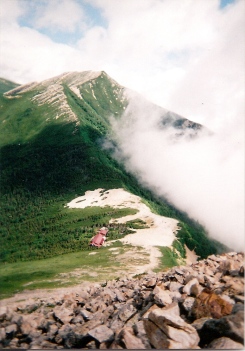
Mt. Sobo translates as “grandmother mountain”, but it’s no walk in the park with an 1100m vertical ascent and an annoyingly large number of horseflies. The views are worth the work, though.

Mt. Sobo

The hike: From the bus stop, head up the forest road on your left. The first 3km or so is easy going, but you’ll soon find the trail proper and climb up, up, and up. There’s an unmanned hut at the 5th stage-point (五合目), which is a good place to fill up on water and take a break. If you’re hiking in summer, then this may be your last chance for a break, as the next section of the hike I’ve nicknamed ‘horsefly ridge’. The climb is not only steep, but if you stop to catch your break for more than a second, then you’ll be surrounded by hoards of horseflies! Once you hit Kunimitōge (国観峠) though, the pesky creatures will have vanished and you can take a much needed respite. There used to be some sort of hut here a long time ago, and the area is perfect for camping (except for the lack of water). If you’re keen to camp here, then drop off your stuff and head up to the hut to fill up on water. Otherwise, continue climbing up toward the peak. The aforementioned hut will come into view in around a half hour or so, and it’s a nice place to stay if you can forget about the musty smelling carpet. The trail to the peak of Mt. Sobo is directly in front of the hut, and it should take around 10 minutes or so to reach the bald, rocky top. The views toward Mt. Aso and Mt. Kuju are fantastic. Take the necessary photos, pat yourself on the back for a job well done, and head back to the hut. If you’re staying for the night, relax and write in the hut logbook. If you haven’t had enough punishment, then take the trail branching off to the left toward Miyahara (宮原). The trail loses altitude rather quickly, and flattens out once you come to Uma-no-kata (馬の肩). In another 15 minutes or so, you’ll come to a trail junction. My map had this marked as a campground, but there’s only room for one tent and no water source. However, it didn’t stop me from setting up camp to escape an oncoming thunderstorm! At this junction, take the trail going right toward Obira (尾平). It should take about 90 minutes to reach the flat area of the trailhead, and you’ll cross a beautiful river with crystal clear water. There’s a shared taxi (reservation only) from Obira to Ogata station (緒方駅) and onward to Oita station.

When to go: This hike can be done year round, but you’re in for a heck of a climb in the winter, so plan accordingly. The Azalia flowers bloom in early May, making this a popular destination during Golden Week. Beware of horseflies in the summer.

Access: From Oita station (大分駅), take a local train on the JR Hohi Line (豊肥本線) and get off at Bunko-Taketa station (豊後竹田駅). The train takes about an hour & 20 minutes. A limited express train, while costing more, will get you there in about an hour. From there, take a bus (reservation only) bound for Kamihara (神原).  A taxi will run you about 5750 yen. From Obira, you can take a taxi to Ogata station and onward to Oita station. Click here for more information about the taxi.

Digital Map in English (Avenza App): Click here

Level of difficulty: 3 out of 5 (elevation change ~1100m)

Mt. Akagi (赤城山)

March 4, 2008

Mt. Akagi is a gentle, docile peak surrounding a scenic lake. Its easy access from Tokyo brings the car-driving crowds in the summer.

Mt. Akagi

The hike: From the bus stop, check the bus timetable so you can plan your hiking times accordingly. Follow the road downhill toward the lake. You’ll pass a campground on the left, and the trailhead will appear quickly on the right side. The trailhead will be marked Komagadaketozanguchi (駒ヶ岳登山口). The path is well-maintained and you’ll spend the first 20 minutes or so climbing iron stairs. Eventually the trail will flatten out as it reaches the ridgeline, and you’ll be sitting on top of Komagadake in next to no time (about an hour from the bus stop). The views toward Lake Ono (大沼) are beautiful, and the summit of Mt. Akagi will be right in front of you. Continue on the same trail, dropping down to a saddle, where the real climb begins. It should take another45 minutes of sweating before reaching the summit plateau. You’ll first come to a stone marker on the right side, with a trail branching off to Hanami-ga-hara (花見ヶ原). Ignore this trail and head to the high point of Mt. Kurobi (黒檜山). Along the way, you’ll find another trail branching off to the left. This is your return trail to the lake, but for now ignore it and go to the top. The views toward the Nikko mountains are fantastic, and you’ll see the peaks of Oze as well and Mt. Fuji if the weather is clear. After a well deserved lunch break, retrace your steps to the junction and turn right. This trail descends very steeply, with big drops off the left side of the ridge. You definitely don’t want to fall here, and a hiking stick will save your knees. It should take about an hour to reach the lake shore. After reaching the lake, turn left and hike along the road for 20 minutes or so and you’ll reach the Visitor’s Center where you started. It’s perfectly feasible to do this hike in reverse, especially for people who’ve got bad knees.

When to go: This hike can be done year round, but bring some crampons and an ice axe for a winter ascent. Please note that there are no buses in winter.

Access: From Ueno station in Tokyo, take either a limited express train or local train and get off at Maebashi station (前橋駅). The local train takes about 2 hours, with a change of trains at Takasaki (高崎駅), , while the limited express train will save you about a half an hour, with a change of trains at Shinmaebashi (新前橋駅). The cost difference is 1890 yen versus 3700 yen, so take your pick according to budget. From Maebashi station, take a bus bound for Mt. Akagi Visitor’s Center (赤城山ビジターセンター) and get off at the Visitor’s Center. You might have to change buses at Fujimi-onsen (富士見温泉) depending on the season. The bus takes around an hour, but if you’re short of time a taxi will get you there in about 45 minutes, but will set you back about 8000 yen or so. Click here for the bus schedule.

Level of difficulty: 2 out of 5 (elevation change 468m)

Mt. Jonen (常念岳)

March 3, 2008

This blog post was written back in 2008. For the latest information about this hike (including color photos and maps), please consider purchasing my guidebook to the Japan Alps. 

Mt. Jonen is a wonderful alpine peak located just across the valley from Hotaka mountain range and Kamikochi. Sunrise and sunset are magical.

Mt. Jonen

The hike: From the parking lot, walk 4 km on a heavily damaged forest road until reaching the trailhead at Hiedaira (ヒエ平). The road was completely washed out in flooding a few years ago, and if they’ve re-opened it then you can save 8km of easy round-trip hiking. The trail starts off quite flat, following the Ichinosawa (一ノ沢) river upstream to its source. You’ll cross a few tributaries coming off the right side before the real climb begins. It should take about 3 or 3-1/2 hours of hiking along the river before reaching the final steep climb to the ridge line. You’ll know you’ve reached the point when the trail crosses a tributary and starts switching back quite rapidly. Make sure you fill your water bottle at the stream. It should take about an hour of steep climbing before reaching the ridge. Ther’ll be a massive hut greeting you, with the trail to the top of Mt. Jonen branching off to the left. The hut is called Jonengoya (常念小屋) and it’s a good place for a snack break. There’s a descent sized campground here, as well as some toilets. The views toward Mt. Yari and Hotaka are stunning. From the hut, the trail zigzags for about an hour before reaching the summit. The views are incredible if the weather is clear. For some reason, the fog seems to come in very quickly on this shy peak. There are 2 trails branching off from the top, but head back to the hut unless you’d like to traverse onward to Kamikochi. You can either head back down the way you came, stay at the hut, or continue on the ridge line to either Mt. Tsubakuro or Mt. Yari. The extensive network of ridge trails make for an interesting couple of days exploring the beauty of the Kita Alps.

When to go: This hike is popular from Golden Week to early November. Although not impossible, a winter hike requires experience and equipment, but neighboring Mt. Tsubakuro (燕岳) is popular for winter climbing, so a ridge traverse is quite feasible.

Access: While there are a number of approaches to this peak (including from Kamikochi), the hike described here is only accessible by car or taxi, and the forest road may still be closed to vehicular traffic. The nearest station is Toyoshina (豊科駅), on the JR Ooito Line (大糸線) conecting Matsumoto to Hakuba stations. The forest road to the trailhead at Hiedaira (ヒエ平) was closed at the time of writing, which means you’ve got an extra 4km of hiking from the parking lot to the trailhead, so get an early start.

Level of difficulty: 4 out of 5 (elevation change ~1500m)

Mt. Kirigamine (霧ヶ峰)

March 2, 2008

Last updated: Feb 19, 2025

Mt. Kirigamine is the only Hyakumeizan that can be combined with a day on the slopes, as the top of the mountain is a 30 second walk from the top of the ski lifts!

Mt. Kurumayama

Winter hike: From the parking lot, head up to the ski resort. Follow the lift going up the left side of the mountain. Unfortunately, you’ll have to climb on the groomed runs, as the ski patrol don’t like you climbing off piste. Once you get to the top of this lift, cut over to the right and follow the other lift going higher up the mountain. Watch out for skiers and boarders as you cut across and also when you’re climbing through the resort. The top is at the top of this next lift. If the weather is good it’ll be impossible to miss, but because this mountains is called “fog peak” be prepared to ask someone if you can’t figure out where to go. Just behind the top of the highest lift is a meteorological observatory and a signpost marking the top of Kurumayama (車山). Isn’t is fitting that the top of “car mountain” should be accessible by car in the summer! If the weather is good, you’ll have outstanding views of Mt. Fuji, Mt. Tateshina, Yatsu-ga-dake, the Minami Alps, and Utsukushigahara. If the weather is foggy like it was when I climbed, then you’ll enjoy getting off this mountain as quickly as possible! I’ve heard there are some nice wildflowers and side trails to take a date on in the summer, but it’s also when this mountain is the most crowded. Take my advice and enjoy this peak in the winter, when few venture past the top of the lifts.

Summer hike: In the summer, take a bus to Kuramayama bus stop and embark on a lovely 2 hour, 4km loop through the marshlands, enjoying the plethora of alpine flowers in bloom. Take a bus from Chino station (茅野駅) and get off at Kurumayama kata (車山肩)bus stop. The summer 2025 schedule hasn’t been released yet, but check with the Alpico Group website here if planning a hike this year.

When to go: This hike can be done year round, but bring crampons during the winter so you can easily navigate through the ski resort. In the summer be aware of afternoon thunderstorms.

Access: During the winter, there are direct night buses from Tokyo to Kuramayam-kougen ski resort (車山スキー場). You can also catch a bus from Chino station (茅野駅). Click here for the bus schedule.

Live web cam: Click here

Map: Click here

Level of difficulty: 1 out of 5 (elevation change 365m) This hike is a 0 out of 5 if you take the ski lift.

Mt. Hotaka (武尊山)

February 29, 2008

Not to be confused with Hotaka-dake in the Japan Alps, Mt. Hotaka is a scenic peak with stunning views of all the mountains in Gunma Prefecture, even out to Mt. Fuji.

Mt. Hotaka

The hike: The trailhead starts at Hotakajinja (武尊神社), which is at the end of the paved forest road, about 2km from the Houdaigi campground (宝台樹キャンプ場). At first, the trail is just a continuation of the forest road, with “Beware of Bear” signs everywhere. Although I didn’t see any of those nocturnal creatures, I did spot a Japanese mountain goat (Kamoshika). After about 40 minutes of hiking, you’ll come to the end of the forest road, and are faced with 2 options. It’s a loop trail, so take your pick, but I must warn you that the trail to the left has a section with chains and ladders, which are a lot easier to climb than descend. Take the trail to the left, and you’ll come to an emergency “hut” and water source after about an hour of steep climbing. The hut is is nothing more than a huge corrogated metal pipe cut in half with a door attached. It’s not a very attractive place to stay, unless you’re dodging a typhoon! There’s a small stream near the hut where you can fill up your water bottle (you should filter the water just in case). The hut is hidden and off to the left of the main trail. After passing the hut, you’ve got a tough, steep climb with a section of chains and ladders. Be careful if it’s wet, and take it slow. It’s not as bad as some of the stuff I’ve encountered in the Japan Alps, but careless and a broken bone on any mountain is no fun. After you pass this short section, it’s easygoing to the top. Once on the summit, take a lunch break and enjoy the views. The trail splits in 3. You’ve got some options, but the most enticing is to head to the spear-like peak of Kengamine (剣ケ峰山). It’s an hour of up and down traversing before reaching a junction. Take the trail on the right to head down the mountain, but before you do that, climb the rocks in front of you to the top of Kengamine. The views of Mt. Fuji on a clear day are wonderful, and you’ll also have a panoramic view back to Hotaka, Mt. Tanigawa, Mt. Makihata, Mt. Shibutsu, Mt. Sukai, the peaks of Nikko and beyond. After taking some photos, retrace your steps back to the junction and head down off the mountain. You’ll be back at the forest road in about 90 minutes, passing a water source along the way. If you’ve got time, then head to Takaragawa-onsen (宝川温泉) before heading back into town.

When to go: This mountain gets meters and meters of snow in the winter, but the road to the bus stop is open all year round, so if you’ve got the right equipment (and experience), then go for it. Otherwise, aim to go between April and November.

Access: From Minakami station (水上駅), take a bus bound for Takaragawa-onsen (宝川温泉) and get off at Hotakakyou (武尊橋). From there, it’s a 2-hour walk on a paved road to the trailhead, although you should try to hitch. I got a ride with a guy on his way to work at the campground noodle shop. According to the campground web site, there’s a direct shuttle bus from Minakami station in the summer. Check the site here in Japanese for more information.

Level of difficulty: 4 out of 5 (elevation change 1118m)

Mt. Asahi (朝日岳)

February 28, 2008

Last updated: Feb 17, 2025

Mt. Asahi, in Yamagata Prefecture, is one of the most inaccessible peaks in Japan, and one of the most breathtakingly beautiful.

Mt. Asahi- Yamagata Pref.

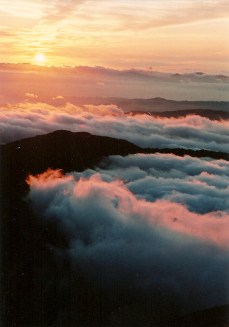
The hike: From the hut at Koderakousen, take the trail heading towards Mt. Kodera (小寺山). The trail wastes no time in gaining elevation, and you’ll be happy for the abundance of fresh water if hiking in the summer. After about 2 hours of climbing, a trail will come in from the right. This leads to Hananukimine (ハナヌキ峰). Ignore this trail and keep climbing on the well maintained path. After another 30 minutes you’ll reach the top of Mt. Kodera. The views will start to open up, but the best is yet to come. Continue for another half hour or so toward Mt. Ko-asahi (小朝日岳). Just before the steep climb to the top, there’s a spur trail off to the right. Take this if you’re feeling lazy, but otherwise head to the top for a sweet view of Mt. Asahi stretching out in front of you. On the peak, the trail from Asahikousen joins this trail, so the number of people should increase somewhat. From here to Mt. Asahi, there’s only one trail and it’s well maintained. Drop steeply off the top of Mt. Ko-asahi, being careful not to slip and fall. After descending to the saddle, the ‘lazy’ spur trail I mentioned earlier will come in on the right. Continue climbing up and up for another 90 minutes or so, enjoying the multitude of alpine flowers along the way. Eventually, you’ll reach Dai-asahikoya (大朝日小屋). This is your home for the rest of the day, as watching the sunrise from “Sunrise Peak” is one of the main reasons for doing this hike. You can camp outside the hut, or stay for the measly sum of 1200 yen. The hut has no food or futons, so bring your own cooking gear and sleeping bag. There’s a water source a short distance away on a side trail. Wander up to the main peak if the weather’s good to watch the sunset. The next morning, wake up early so you don’t miss the action. In the summer, you need to be out of the hut around 3:45am if you want to get a good spot for the sunrise. It’s only a 10-minute hike from the hut to the top, so pack up your gear and take it with you. The sunrise, if the weather is good, will definitely alter your sense of Japanese beauty. The sun comes up behind Mt. Zao, and illuminates the ridge lines of Mt. Iide, Gas-san, Mt. Chokai, Mt. Bandai, and hundreds of other nameless peaks. No utility poles and no concrete anywhere to spoil the view. After taking in the scenery, follow the trail heading to the left, towards Asahikousen (朝日鉱泉). The trail drops quite steeply for the first hour or so, and then enters a beautiful virgin forest, eventually flattening out to follow an amazing river with crystal clear water. Follow the river for about 2 hours or so, and you’ll end up at the Asahikousen, one of the best mountain huts in Japan. Keep your eye out for Japanese mountain goats (Kamoshika), as there are a lot in this area. The owner of the hut is really friendly and makes one of the best bowls of soba in Japan, teeming with fresh organic mushrooms. Oh, and use the hot spring bath while your noodles are being prepared.

When to go: This mountain is completely inaccessible in the winter due to its remote location and the obscene amount of snow it gets. The roads usually open up again in late April, so go between then and early November, but for a snow-free experience, wait until July to complete the hike.

Access: From Yamagata station, take a local train on the JR “Fruits Line Aterazawa” line and get off at Aterazawa (左沢駅), the last stop. Trains are very infrequent, so check the schedule in advance. From the station, take a bus to Asahikousen(朝日鉱泉). The bus only runs from July 23-August 14, leaving Aterazawa station at 1:00pm and reservations are required. You can inquire about bookings when you reserve accommodation at Asahikousen lodge. Click here for the bus schedule. Another option would be to take a taxi to Koderakousen (小寺鉱泉), an alternative starting point for the hike. The taxi is not cheap, though. I did this hike after descending Gas-san, and hitchhiked all the way from there to Koderakousen, so that’s definitely an option for those without a car. The hike described here is a traverse from Koderakousen to Asahikousen, so you can take your pick of trails.

Level of difficulty: 4 out of 5 (elevation change 1320m)

Mt. Ena (恵那山)

February 24, 2008

Last updated: Feb 21, 2025

Mt. Ena is a long, round, hump-shaped peak located on the border of Nagano and Gifu Prefectures. It’s easily accessible from Nagoya city, and the views along the way are outstanding.

The view from Mt. Ena

The hike: From the small parking lot at Misakatōge (神坂峠), there are two trails, but you want to take the one towards Ōbanyama (大判山). It should take you about 90 minutes to reach this peak, which has excellent panoramic views of the Minami and Chuo Alps, as well as Mt. Ondake. You can also see Mt. Ena in front of you. From the peak, the trail curves toward the right and goes down! You’ll lose about 100m of altitude before the trail flattens out and follows the contour of the mountain. The trail will start climbing again, and won’t let up until the summit ridge. It should take about 2 hours or so to reach the Ena ridgeline, as the final climb is quite steep and rough going if there’s any snow or ice. Once you reach the ridge, the trail will veer off to the left and become very flat and easy. In about 20 minutes or so, you’ll come to a mountain hut named Enasan-sanchō-goya (恵那山山頂小屋). The area is heavily wooded, but if you climb the rock behind the hut you’ll be rewarded with terrific views of the Minami Alps and Mt. Fuji. The true summit is another 10 minutes or so past the hut, and there’s a small shrine at the top, but no view. The hut itself is unmanned and free to stay in, but there’s no water source so bring plenty of water with you if you’re planning an overnight stay. In fact, there are no water sources at all on this hike (not even at the trailhead), so stock up at the train station before setting out. After resting at the top, head back the way you came.

When to go: This mountain gets its fair share of snow in the winter, and  the forest road to the trailhead isn’t plowed, which means a winter assault may be difficult. The snow should melt sometime in March though. I did this hike in October and was hiking through fresh snow.

Access: From Nagoya station. Take the JR Limited Express “Shinano” train bound for Nagano and get off at Nakatsugawa station (中津川駅). If you’d like to save money, then take a local train. From the station, there is NO bus service to the trailhead. You’ve either got to take a taxi (that’ll cost around 7000 yen) or try your luck hitching. The trail starts at Misakatōge (神坂峠). I was lucky enough to go with a friend who had a car. If you’ve got a few days off, you could try walking to the trailhead and camping there, before starting your hike the following day.

Digital Map in English (Avenza App): Click here

Level of difficulty: 2 out of 5 (elevation change 622m)

Mt. Tateshina (蓼科山)

February 22, 2008

Last updated: Feb 19, 2025

Mt. Tateshina is a knobby, dormant volcano rising northwest of Yatsu-ga-dake and features a bald rocky summit and wonderful panoramic views of the Kita Alps.

the rocky summit of Mt. Tateshina

The hike: From the bus stop, enter the forest from the right side of the road (if looking uphill). The trail starts off flat, and then climbs through a lot of bamboo grass before flattening out after about 20 minutes. This looks like bear country, and I half expected to see a mom and cubs foraging through the snow, but no such luck. The top of Mt. Tateshina should shortly come into view as you approach the climb. The trail is very clearly marked and climbs straight up an old rain gully. If the weather is sunny then the trail should be relatively dry and easy, but I’m sure it becomes a river during a rain storm, so be careful. If you’re hiking before early May there’ll probably be a bit of lingering snow, so bring some light crampons for the decent. If it’s mid winter then you’ve got a tough climb and should consider approaching from the other side of the peak. Anyway, after about 2 hours or climbing, you’ll come to the summit boulders. It looks a lot like alpine territory up here, deplete of trees and lots of paint marks on the rocks. The trail curves around the right side of the summit, and you’ll see a mountain hut in front of you. The summit is off on a spur trail to the left. The entire peak is filled with huge rocks, so it’s a matter of scrambling across boulders once you’re up there. There’s a shrine in the center of the peak, as well as a lookout area behind that. If the weather is good then you’ll have an expansive view of Mt. Yatsu, Mt. Fuji, the Minami Alps, Kita Alps, the peaks of Chichibu-Tama-Kai National Park, and Mt. Asama. You can come back the way you came, or head over to the mountain hut, where you’ll find a connecting trail heading down the other side of the mountain. After about 20 minutes of steep decending, you’ll reach another hut called the Tateshina Sansō (蓼科山荘). This is a relatively nice hut, but was buried under a meter of snow when I went there. The trail splits in 3 from the hut, but you want to go left, taking the trail that leads away from the front door, toward nanagōme-ichinotorii(七合目ーの鳥居). The trail is easy to follow and goes through a lovely forest. After about an hour or so, you’ll come to the parking lot. I’m not sure if there’s bus service from here, but if you keep following the trail down, it will spit you out at the Shirakaba Int’l Ski Resort (白樺国際スキー場). In the winter, this is the best approach for the climb, as you can take the lift up and start your climb from there. This approach is much easier (and safer) than the initial approach described here.

When to go: This hike can be done year round if you’ve got an ice axe and crampons. If not, then shoot for a hike somewhere between April and early December. I’ve done this hike twice – once in May and once in early March.

Access: I’ve described 2 routes here. The first is accessible from Chino (茅野) station by bus….sort of. From Chino, take a bus bound for Kita Yatsugatake Ropeway (北八ヶ岳ロープウェイ) and get off at Alpaca Tateshina Kogen Iriguchi (アルピコ蓼科⾼原別荘⼊⼝). From there it’s a 1-hour walk on the paved Venus Line road to the trailhead. Click here for the schedule.  You could also hike over to Tateshina from the top of Kita Yatsugatake Ropeway in about 7 hours.

Digital Map in English (Avenza App): Click here

Live web cam: Click here

Level of difficulty: 2 out of 5 (elevation change: 890m)

Mt. Iwate (岩手山)

February 21, 2008

Last updated: Feb 6, 2025

Special note: Iwate is currently experiencing increased volcanic activity and is currently closed to hikers. Click here for more information. 

Mt. Iwate is a conically shaped active volcano, towering over Morioka city and offers one of the best panoramic views in the entire Tohoku area.

the view from Mt. Iwate

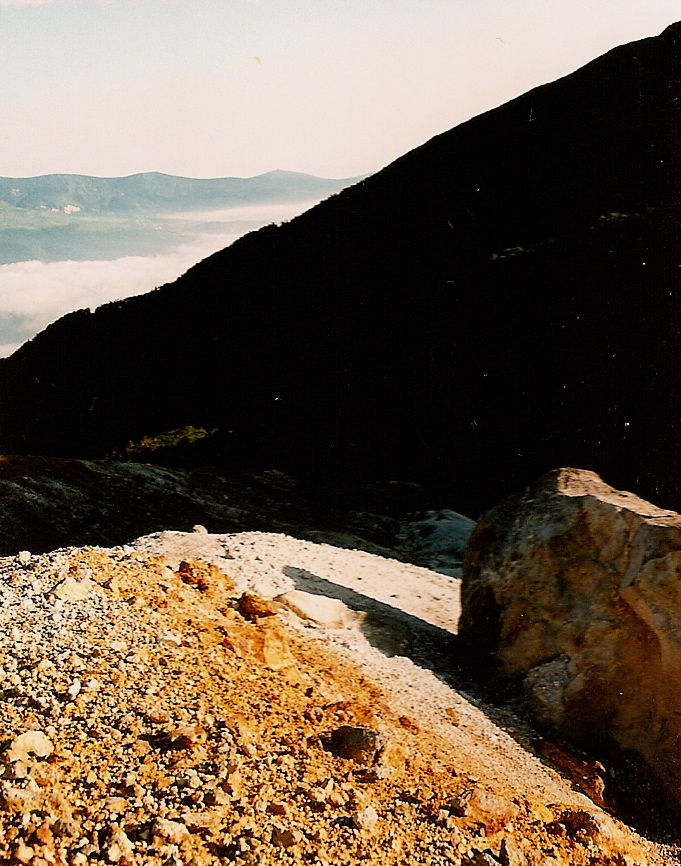
The hike: This is a long, long hike (about 21km round trip) so it’s imperative that you get an early start. Luckily there’s a incredible park near the trailhead at Kenmin no mori (県民の森). Officially camping is prohibited in the lush park but it’s much more inviting than the nearby campground, so just put up your tent behind the bushes or set up/break down at night. Anyway, the trailhead is NOT behind the park, so do not follow the dirt forest road toward Mt. Iwate or you’ll lose precious time like I did. Instead, walk down the hill a little to the right of the park (if facing the mountain) and walk up a paved road that leads to the trailhead. You should find it on your right-hand side after about 15 minutes or so. The maps in town are so confusing, so be careful. Anyway, this trail is called the nanataki course (七滝コース), and you’ll find the waterfall of the same name in about an hour. Now, this trail was officially closed to hikers in the summer of 2006 due to volcanic activity, but the trail is very clearly marked, so it looks like a lot of people ignore the signs and climb. After about 1-1/2 to 2 hours of hiking through the forest, the vegetation will start to thin out and you will find the first signs of volcanic activity. The ground will start to turn a lime green and you’ll notice a small, hot stream flowing down the mountain. Unfortunately the stream is too small to bath in, but you can soak your feet if you like. Follow this stream toward the right side and you’ll soon encounter steam vents puffing out volcanic gases. Make sure you stay on the trail and beware of loose rocks. Climbing is not much of a problem, but if you come back down this way be very careful on the decent. Anyway, as you climb higher, you’ll reach a junction where this trail meets the Matsukawa trail. You have two options. You can go right to take a ridge trail, or head left and follow a beautiful river. Take the left course and work your way toward the Mt. Iwate crater. The vegetation can be quite thick here, and if there’s any morning dew then you’ll get completely soaked from head to toe. After about 90 minutes of slogging, you’ll come to an emergency hut and a set of benches. This is at the base of the crater. Take a break and prepare yourself for the final ascent. If you’re running short of water then head down the trail away from the crater and there’s a second hut and water source there. The final climb is tough. You’ve just spent the last 4 or 5 hours climbing about 1400 vertical meters, and now the final 100m or so is on loose scree. For every step you take, you’ll lose about 2 or 3. Don’t give up yet though, because once you make it to the crater rim things become much easier. The high point is to your left, but consider walking all the way around the rim if the weather is good. The crater itself has stopped hissing and steaming, but the rock formations and gradation are wonderful. Take plenty of pictures and if you’re lucky, take in the panorama. On a clear day you can see Mt. Hayachine, Mt. Chokai, Gassan, Mt. Hachimantai, and Mt. Akita Koma ga Take. If you’re feeling exhausted, then you have two free emergency huts to choose from, as well as two alternate ways off the mountain. I went back exactly the way I came, because I left my huge backpack at the trailhead and carried only a small bum bag, water, and a camera on the hike.

When to go: This hike can be done from late April to early November, but the earlier you go, the more snow you’ll encounter. Because of the distance involved, summer is probably the best season because you’ll be blessed with plenty of daylight hours.

Access: There are only 2 trails accessible by public transport. If you’ve got a car, then you can consider approaching from the other, more popular side of the mountain. I hitchhiked from neighboring Mt. Hachimantai and ended up at Hachimantai Onsen (八幡平温泉郷). The Matsukawa trail from Matsukawa Onsen also looks promising. Both hot springs are accessible by bus from Morioka station. The most popular trail is called the Yakebashiri (焼走り) trail, reachable by taxi from Oobuke (大更) station near Morioka. Click here for the bus schedule to Matsukawa Onsen.

Map: Click here

Live web camera: Click here

Level of difficulty: 5 out of 5 (elevation change: ~1500m)

Mt. Adatara (安達太良山)

February 14, 2008

Last updated: Feb 17, 2025

Mt. Adatara is an active volcano located across the valley from Mt. Bandai and is just a stone’s throw from Fukushima city. Beautiful rock formations and a lovely hut to boot.

adatop

The hike: From the ski resort parking lot, head toward the right hand group of buildings and start walking up the far right ski slope. The trail will branch off to the right and follow the ski resort for a short time before reaching a forest road. The trail crosses the road several times before heading up to a ridge and flattening out somewhat. All of this should take about 45 minutes or so. Continue following the gentle trail for another 15 or 20 minutes until you come to a junction. If you head left you follow a different ridge, but instead continue straight ahead for another half hour and you’ll come to the Kurogane Hut (くろがね小屋)This hut is open all year round and is an amazing place to stay in the winter. Plus, it has a hot spring bath! If you’re only coming for a day trip then take a quick break at the hut before starting the real climb to the summit. From the hut, the trail starts climbing rather steeply through rugged volcanic tundra. It should take anywhere from 45 minutes to an hour to reach the summit. If the fog is in then keep an eye out for all of the paint marks on the rocks. Whiteout conditions in winter can be quite dangerous, so go with a group and bring bamboo poles to mark your path. The rocky summit offers spectacular views of the surrounding scenery: Mt. Bandai directly in front of you, Mt. Iide to the northeast, and Mt. Azuma, which is connected to this mountain by a long trail. (It could make for an interesting trek). Anyway, enjoy your lunch with hoards of other hikers who probably came up from the ski gondola on the other side of the mountain. If the weather is good and you’ve got time, you can hike to Mt. Tetsuzan, the true high point of the volcano, and there is a free emergency hut just beyond the summit of Tetsuzan. From the summit, follow the signs to Mt. Yakushi (薬師岳)and the ski resort. This side of the mountain is much easier (and more popular) than the route mentioned here, but makes for a nice look hike. You should reach the top of the ski resort in about 45 minutes from the top. If you’re too tired, then take the gondola down, but otherwise follow the path down back to the parking lot. In winter, you can glissade down the slopes in record time. This hike can also be done in reverse, and you could also use the gondola to cut out 400m of elevation gain.

When to go: This hike can be done year round, but be prepared for meters of snow in the winter (bring snowshoes or crampons). The fall colors in mid to late September bring the crowds.

Access: From Fukushima station, take a local JR train and get off at Nihonmatsu (二本松) station. From there take a bus to Adatara Kogen Ski Resort. Be sure to check the bus schedule (call 0243-23-0123 in Japanese), as some buses only go part of the way to Dake Onsen. It’s a quick 20 minute taxi ride or possible hitch from the Onsen, or you could shell out about 5000 yen for a taxi ride from Nihonmatsu all the way to the trailhead.  Click here for more information about the bus. In the summer of 2024, there was one bus a day to the trailhead, leaving from Nihonmatsu at 8:15am. Here is a flyer from last summer. The 2025 schedule hasn’t been released yet, so contact the bus company directly to inquire.

Map: Click here

Level of difficulty: 2 out of 5 (elevation change: 760m)