Posted tagged ‘blogsherpa’

Mt. Tarumae (樽前山)

October 28, 2009

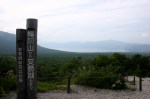
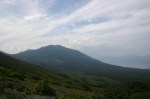
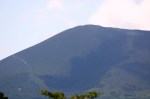
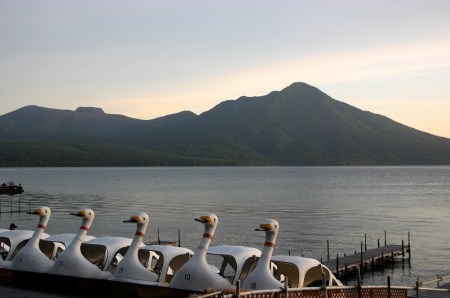
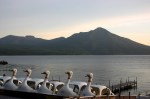
Mt. Tarumae is an active volcano located on the shores of Lake Shikotsu in Western Hokkaido. In addition to the outstanding views of the lake below, the mountain offers a rare chance to view an unstable lava dome.
tarumae1

The hike: There’s a toilet and a small hut at the trailhead, but no water to speak of, so make sure you fill up before leaving Lake Shikotsu. The trail immediately starts gaining altitude, but the going is made easier with an endless array of wooden steps. You’ll reach a small clearing after 10 minutes or so, where the views will start to open up. You’ll see Lake Shikotsu directly behind you and Mt. Fuppushi rising steeply on your right. Directly in front of you lies the conical peak of Mt. Tarumae. The trail cuts a beeline directly across the eastern flank of the volcano, similar to what occurs on the trail up Mt. Asama in Nagano Prefecture. The trail is well-maintained and is suffering a bit from overuse, so it’s almost impossible to get lost. You’ll reach the crater rim in about a half an hour or so, where you’ll find a junction. Turn right for Higashi-dake (東岳), the high point of the crater. The views towards the lake below are spectacular, and on a clear day you can see Mt. Yotei rising gracefully in the distance. If you’ve got time, then you can circumnavigate the entire crater rim in about 2 hours or so. Just follow the trail around towards Nishi-dake (西岳). Whatever you do, don’t enter the caldera to get a look at the gigantic smoldering lava dome, as the gases will likely kill you. The lava dome has been growing steadily since 1909 and is now taller than the crater itself. This is an extremely active volcano with a long history of powerful eruptions and is currently under 24 hour surveillance by the Japan Meteorological Agency. When you’ve seen enough then you can simply retrace your steps back to the parking lot. If you’re looking for a more challenging hike away from the crowds, then you can consider climbing neighboring Mt. Fuppushi. There’s a trail to the summit on the other side of the parking lot. It should take about 3 to 4 hours to reach the top, where the views are outstanding. Make sure you bring a bear bell and/or bear repellent as the col between Tarumae and Fuppushi is a popular hangout for brown bears.

When to go: This hike can be done from mid April to late November, when most of the snow is gone. A mid-winter ascent is also possible for those with winter mountaineering experience and equipment, but you’ve got a much longer approach since the road to the trailhead will be closed.

Access: The start of the hike is only accessible by private transport. You can get as far as Shikotsu-kohan by bus, from where you can hire a taxi for the 3000 yen journey to the trailhead. Click here for the bus schedule from Sapporo to Lake Shikotsu. The number for the taxi company is 0123-25-2111. Just tell them you want to go to Tarumae-tozanguchi. You can also try your luck hitching by walking out to the main road just above the parking lot at Shikotsu-kohan.

Map: Click here

Live web cam: Click here

Level of difficulty: 1 out of 5 (elevation change 363m).
A closer look at Hiking in Japan, 2nd edition

September 7, 2009

This guidebook is now out-of-print. The replacement book, entitled Best Day Hikes Japan, is slated for release on March 2nd, 2021.

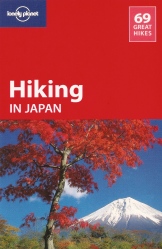
LP cover

Changes: Despite the obvious aesthetic changes which I will cover a little later, I think it’s most prudent to start with the content changes. In line with other guidebook updates, the publishers have kept most of the existing print intact, so those of you looking for new hikes not mentioned in the first edition may be a bit disappointed. However, extra information has been added in the ‘extra hikes’ section (currently renamed as ‘more hikes’). For instance, there’s an alternate trail leading off from Yari-ga-take towards Otensho-dake that wasn’t mentioned in the first edition. This is a good chance to view the Hotaka range from a different perspective. On the Tsurugi-san hike in Shikoku there are a couple of alternative routes that weren’t mentioned before, including a descent down the northern face of Miune. Hokkaido dwellers will be happy to note that Shari-dake has been added to the list of extra hikes. The Kansai section has been completely reworked, and two of the most problematic hikes (Yura-gawa and Kunimi-dake) have been moved from the main section to the ‘more hikes’ section.

The ‘easy-medium-difficult’ rating system from the first edition has been renamed ‘easy-moderate-demanding.’ I’m not sure if it’ll be any easier for newcomers to grasp the physical exertion required for the hikes, but each multi-day hike listed in the new edition now includes expected hiking time, distance, and vertical elevation gains (hooray!). A new section in the front of the book has been added called ‘History and Culture of Hiking’, which includes information about the Hyakumeizan, pilgrimages, and the role of religion in the mountains. Most of this information was scattered through the first edition but has now been consolidated into one easy-to-reference section.

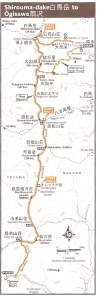
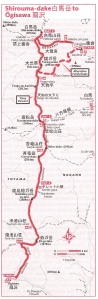
Now let’s move onto the appearance. The green color scheme of the first edition has been replaced by vibrant tones of red. The maps also reflect this new design, and are much easier to read and decipher than the original ones. Rumor has it you’ll be able to pore over your maps under a full moon without a torch!

Old Map

Old Map

New Map

New Map

All of the photographs have been relocated to a section at the very beginning of the guidebook. This is good news for those of you who had to tear out the pictures in the old book that were always placed in annoying locations. Most of the general stuff that appears in every Lonely Planet guidebook (Health and Safety, Getting Around, et al) has been pushed to the very back of the new edition. This is great news for those sharp souls who noticed that the very first hike in the 1st edition didn’t begin until page 112! The first hike now begins on page 61 (phew.)

The verdict: So, now that you’re familiar with what to expect, the million dollar question would have to be whether or not to purchase the new edition. Those of you who don’t have the first edition but are truly interested in getting into the outdoors should definitely consider purchasing the update. If you’ve got the first edition and have done over 90% of the hikes contained within, then I wouldn’t put it too high on your priority list. However, if you’ve been served well by the first edition and have yet to check out some of the hikes, then it might be worth your while to pick up the new book. If you’re not too keen on shelling out the 2700 yen for the book but are still interested in adding it to your collection, just remember that you could always ask one of your friends or family members to buy it for your as a birthday/graduation/holiday present. Or, if you want to get really creative as I did, then you can convince your private student to give it to you in lieu of a lesson payment.

Mt. Mikuma (三熊山)

July 26, 2009

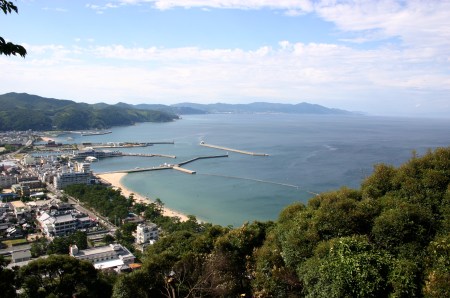
Mt. Mikuma is a small hill overlooking the coastal resort town of Sumoto on Awaji Island. The small elevation change and outstanding panoramic views make it the perfect afternoon stroll after a morning on the beach.

mikuma1

The hike: There’s a tourist information center at the bus terminal if you’d like to get a basic map or inquire about accomodation options. Walk out the main entrance of the terminal and turn right, heading for the large supermarket just in front of you. This is an excellent place to pick up supplies. You can also marvel at the grass parking spaces! Anyway, continue walking past the supermarket on the main road into town. If you want a little more scenic and quieter approach to the beach, then walk a few blocks towards the sea, where you’ll find a wonderful wooden boardwalk. Cross over the bridge and decent to the beach. This is actually one of nicest beaches in the Kansai area (sans Shirahama), but beware that there are no coin lockers here. (There are a few at the bus station if you’d like to save some money). Otherwise, you can pay 1000 yen at any of the shops on the beach and they’ll keep your stuff and let you have a warm shower. If you want to do the hike first, then walk all the way along the beach until reaching a rather large, modern hotel called the Hotel New Awaji. The hiking path starts just beyond the hotel, on a steep paved driveway. Follow the road to the top of the hill, where you’ll see signs pointing towards Mt. Mikuma. Turn left and follow the paved path as it winds its way through a spectacular forest. Despite the fact that it’s a completely concrete path, the beauty of the flora really makes you forget about this unfortunate truth. If you’re walking in sandals, then you might actually appreciate the grip the path has to offer. Continue climbing and turn left at the first major junction you see. Again, there’s a signpost here, so it’s difficult to get lost. After another couple of switchbacks you’ll arrive at the top of the ridge. Turn left again and the castle will come into view directly in front of you. There’s a hidden parking lot for people who are lazy and want to drive up, but I guarantee that you’ll pretty much have the place to yourself during the summer, as the hot and humid weather will keep most in their fancy hotels below. There’s a shop just below the summit that sells shaved ice and soft drinks. Make your way towards the castle, where you’ll be rewarded with stunning views of the beach below. The castle itself is a concrete reproduction built in 1928, but the castle walls date from the 6th century. The castle is free to enter and has outstanding vistas all the way over towards Wakayama city. If you’re keen to do a little more walking, then you can retrace your steps back towards the paved path, where you’ll find a loop trail over to nishi-no-maru (西の丸). There aren’t any views on that side of the mountain, but it looks like a good place to escape if there are any big crowds near the castle (which there could be in autumn.) Anyway, retreat back to the beach and reward yourself with a refreshing swim. In addition, Hotel New Awaji has two amazing hot spring baths that can be yours for a measly 1800 yen (surely the steepest day-use fee for any hot spring in Japan). There’s plenty of free camping on the beach, or you can shell out the big bucks for the hotel. There’s also a hostel-eque place right on the beach that gets very crowded with groups in the summer.

When to go: This hike can easily be done year round, but the best time is probably the summer, where you can combine the hike with a lovely swim on the beach. In addition, it can be easily done in sandals, eliminating the need to carry an extra pair of walking shoes.

Access: From the Hankyu bus terminal in Umeda, take a bus bound for Sumoto bus center (洲本バスセンター). The bus takes 2 hours and costs 2300 yen (one-way). Click here for the schedule. There are also JR buses leaving from the JR highway bus center (also in Umeda) which cost the same price and take about the same amount of time. Alternatively, you can also take a bus from Sannomiya station in Kobe. Click here for the schedule (click on the PDF file on that page).

Level of difficulty: 1 out of 5 (elevation change 133m)

This slideshow requires JavaScript.


Interview with Craig Mclachlan

May 10, 2009

Here is a recent interview I did with Lonely Planet author Craig Mclachlan for Kansai Scene magazine.

Craig

Mt. Fuji (富士山)

April 27, 2009

Mt. Fuji now has a climbing fee for all hikers regardless of trailhead or approach. Be prepared to pay to climb the mountain in 2025 if hiking during the summer season.

Interested in climbing Japan’s tallest mountain?  Our guidebook will show you everything you need to know for a successful climb.

IMG_7352.jpg

Mt. Kurobegoro (黒部五郎岳)

April 21, 2009

This blog post was written back in 2009. For the latest information about this hike (including color photos and maps), please consider purchasing my guidebook to the Japan Alps. 

Mt. Kurobegoro is on the main Kamikochi-Tateyama trekking route, and one of the most unspoilt peaks in the Kita Alps. The huge col below the summit traps snow until late in the year, providing numerous photo ops when the weather is cooperating.

kurobegoro

The hike: Please note that the trail from Utsubo towards the first big junction is upkept and is becoming less and less popular. If you’ve got your own transport, then it’s better to start at Hietsu Tunnel (飛越トンネル), which is just up the road from Utsubo. Anyway, walk on the forest road that continues past the bus stop to its terminus. It’s about 5km or so, and it should take about an hour. Once you reach the end, the trail will branch off towards the left, climbing a somewhat steep spur before flattening out into some marshlands. There’s a water source here, and the mizubasho (skunk cabbage) bloom from early to mid June. Stay on the trail for another 30 minutes or so, and you’ll reach a trail junction, and considerably more foot traffic. This is where the path meets up with the main trail coming from Hietsu tunnel, so turn right and follow the signs to Mt. Teraji (寺地山), which should take another hour or so to reach. Again, the trail is well trodden and easy to follow. The views will start to open up the higher you climb: Mt. Yakushi towers to your left and Mt. Kasa keeps a watchful eye on your right, while Mt. Kurobegoro rises directly in front of you. Continue climbing up for another hour or so, and you’ll find a trail junction on your right, which leads down to Kitanomata Emergency Hut (北ノ俣非難小屋), your home for the night. The triangular hut is small but well kept, with plenty of water flowing out front. If you’ve gotten an early start, then you can consider climbing up and over Mt. Kurobegoro, but keep in mind that you’ve got 4-1/2 to 5 hours of tough hiking before reaching the next hut, so plan accordingly. The next morning, retrace your steps back to the junction, turning right towards Mt. Kitanomata (北ノ俣岳). Soon you’ll rise above the tree line, and if the cloud isn’t in you can see your destination. After an hour or so, you’ll reach a large trail junction, where you’ll finally be on the main ridgeline of the Kita Alps. Turn left if you want to go to Tateyama, or right if Kamikochi is your destination. If you just want to do a quick up-and-back of Mt. Kurobegoro, then leave your pack at the junction. At any rate, it’s a steady 2 hour climb through stunning alpine terrain. Keep your eyes out for ptarmigan and take in the scenery if the weather is good. Unfortunately, when I did this hike in the pouring rain and I couldn’t see a thing. so you bet I’ll be back here to get revenge. Carry on climbing slowly and steadily, and before long you’ll be sitting on top of the target peak. The trail splits in two on the summit, but you can take either fork, since they both meet up again at the bottom. If there’s still a lot of snow, then the left fork is probably a better option. Descend through the spectacular col, and after 90 minutes or so, you’ll arrive at Kurobegoro hut and campground. Set up camp here, or continue along the ridge to Sugoroku if it’s still early in the day. Alternatively. you can turn left at the next trail junction and head north towards Mt. Washiba or Kumo-no-daira. Take your time and enjoy exploring one of the best sections of the Japan Alps.

When to go: This hike can be done from mid-July to early October, when most of the snow is gone. If you’ve got crampons and winter hiking experience, then you can go earlier in the season. Click here for an unbelievable account of a Japanese guy who skied 35km up and over the peak and down to Shin-hotaka hot spring during Golden Week!

Access: Access is really difficult without a car, but it can be done with a little time and patience. From the bus terminal next to Takayama (高山) station, take a bus bound for Nouhi-basu Kamioka Eigyousho (濃飛バス営業所) and get off at that stop. From there, change to the Yama-no-mura bus (山之村バス) bound for Wasafu (和佐府) and get off at Utsubobashi (打保橋). There are only 2 buses a day to Wasafu (only 1 during the winter season), so make sure you time your approach accordingly. If you take the 9:40am bus from Takayama, then the transfer is timed, so you can arrive at the Utsubo trailhead at 12:16pm. Click here to download the bus schedule from Takayama to Kamioka and here to download the schedule for the Yama-no-mura bus.

Level of difficulty: 4 out of 5 (elevation change ~1800m)

Mt. Tomuraushi (トムラウシ)

March 9, 2009

Home of the endangered Japanese pika, Mt. Tomuraushi is a wonderful rocky peak located at roughly the halfway point on the Daisetsuzan trekking route. The scenery and views will certainly make you believe you’ve left Japan.

tomuraushi1

The hike: First of all, I would like to thank Julian for this hike description, as I climbed this peak while doing the full Asahi-dake to Tokachi-dake traverse. From the bus stop, head to the end of the road and the trailhead. After about 5 minutes of hiking, you’ll cross a forest road, where you’ll find the lovely Higashi Daisetsu hut, which looks like a great place to stay. Click here for the website in Japanese. Continue hiking on the trail for about 90 minutes or so, until reaching a trail junction marked 温泉コース分岐 (Onsen kousu bunki). This is where foot traffic will increase signficantly, as the trail to the right leads down to a parking lot. Most people with cars just drive up here rather than hiking from the hot spring, so if you’ve got your own wheels you might consider doing the same (especially if doing this hike as a day trip, which I don’t recommend). Turn left at the junction for a moderate climb up a well-worn path. If it’s raining then the path will become a nasty mixture of water and mud, so bring gaiters if you’ve got them. After about 45 minutes or so, you’ll reach an unmarked junction, which is where the old path joins the new. The old path is closed, so stay towards the left and climb through an area of thick bamboo grass. This grass is trimmed during the summer hiking season, but may not be maintained out of season, so exercise caution. The next hour or so is relatively gentle until dropping steeply to a the ‘Robin’ stream (こまどり沢). Be sure to boil and filter any water from the stream, because it could be contaminated with the echinococcus parasite. Cross the stream and stay on the right bank (following the paint marks on the rocks if the weather is bad). If hiking before August then you’ll have to cross a rather large snowfield before reaching 前トム平 (Mae-tomu-dai), a great place for a break. The trail will start to become quite rocky now, passing through areas of wildflowers before reaching a small pond at トムラウシ公園 (Tomuraushi-koen). Be sure to follow the paint marks, since it’s easy to get lost if the cloud is in. The scenery is spectacular, and you’ll reach a junction in about an hour or so. To the left there is a small campsite with a water source (again, be sure to boil) but no toilet. Turn right for the steep, 20-minute climb to the summit. It should have taken anywhere from 6 to 8 hours to reach the summit, so be sure to bring plenty of supplies and consider breaking this up into a 2-day hike. You can either retrace your steps to the campsite, or consider traversing over to Hisago-numa hut (ヒサゴ沼小屋), which will take another 2 or 3 hours of ridge hiking. Alternatively, you could consider heading all the way back to Tomuraushi Onsen, but that’d be over 30km of hiking in one day! Click here for some nice photos of the route.

When to go: This hike can only been done in the summer, when the bus to the trailhead is running. If you’ve got your own transport, however, you can go a little earlier or later in the season. Alternatively, the peak is on the main Daisetsuzan trekking route, and can be approached from the north via Chuubetsu-dake. Be prepared for a lot of snow if attempting before July.

Access: From Obihiro (帯広) station, take a local train on the JR Nemuro line and get off at Shintoku (新得) station. You can also take a limited express train, but it’ll cost twice the amount. From Shintoku, take a bus bound for Tomuraushi Onsen (トムラウシ温泉) and get off at the final stop. As of 2011, the bus is by reservation only and runs between July 16th and August 14th. Click here for the schedule.

Level of difficulty: 4 out of 5 (elevation change 1176m)

Mt. Shirouma (白馬岳)

February 17, 2009

This blog post was written back in 2009. For the latest information about this hike (including color photos and maps), please consider purchasing my guidebook to the Japan Alps. 

Mt. Shirouma is the highest peak in the Hakuba section of the Kita Alps and on the top of most Japanese hikers ‘to climb’ list. It also happens to be one of the few peaks in Japan with year-round snow fields.

shirouma1

The hike: From the bus stop, the trail starts between the large mountain hut and the toilet. If you don’t have crampons then you can usually buy simple 2-pointers from the hut which should be sufficient (unless climbing early in the season). The trail initially follows a gravel forest road, passing by a gargantuan concrete waterfall – easily the tallest artificial fall in Japan. The road eventually turns into a hiking trail proper, and you’ll reach a pair of huts and campground, just below the start of the Daisekkei (great snow field). Take a break and inquire at the hut about current snow conditions/avalanche risk. The Daisekkei is not to be taken lightly, as a landslide in July 2008 killed two people and rockfalls are very common. Bring a helmet just in case if you’ve got one. Put on your crampons before stepping out into the snowfield and please wear some eye protection if the sun is out. You’ll be hiking in the snow for most of the way, so just follow the crowds/footprints. Overall it’s not too bad of a slog, and you should reach the ridge line in anywhere from 2-1/2 to 4 hours, depending on conditions. There’s a huge hut staring at you at the junction, as well as a modest campground. Turn right and pass another hut, and you’ll be on the summit of Mt. Shirouma in another 10 minutes or so. The views are outstanding if the weather is good (consider yourself very lucky if it is – Hakuba is notorious for cloudy weather in the Alpine backcountry). From the summit, you’ve got 4 options. You can either retrace your steps all the way back to Sarukura, or continue on the same ridge line over to Mt. Yukigura (雪倉岳) or down to Mt. Norikura (乗鞍岳). Alternatively, you can head down the back side of the mountain towards Keyaki-daira (欅平). This trail is not used very much, so I can’t attest for the condition. A better option might be to stay on top overnight, catch the sunrise, and then hike along the ridge over to Mt. Yari (鎗ヶ岳) and down to Yari Hot Spring (鎗温泉). Take a left at the first junction on the other side of Mt. Yari, and you’ll arrive at the hot spring in another hour. This trail actually ends up back at Sarukura, making a great 3-day loop hike.

When to go: This hike can be done from early June to early October, when the buses to Sarukura are running. You could also go earlier if you’ve got crampons and an ice axe. Avalanches are common in the Daisekkei until the end of May, so be careful if hiking in the spring. Click here if you don’t believe me.

Access: From Matsumoto (松本) station, take the JR Ooito line to Hakuba (白馬) station. From there, take a bus bound for Sarukura (猿倉) and get off at the final stop. Click here for the bus schedule. There are also overnight Alpico Group buses from Shinjuku station in Tokyo directly to Hakuba

Live web cam: Click here

Level of difficulty: 5 out of 5 (elevation change 1702m)