Posted tagged ‘hiking’

Mt. Sanage (猿投山)

April 3, 2014

Last updated: Deb 21, 2025

Located on the outskirts of Toyota city in Aichi Prefecture, Mt. Sanage is the local outdoor playground for Nagoya hikers, walkers, and trail runners. The peak features ancient temple buildings and fantastic views of the Minami Alps, The Chuo Alps, Mt. Ena, and Hakusan on clear days.

sana4

The hike: After checking out the shrine, walk up the narrow paved road to the right of the shrine. After 200 meters you’ll see a parking lot on your left, which is designated for hikers who drove. The mountain has no shortage of walkers, and you’ll be sharing the trail with half of Nagoya if coming on a busy holiday weekend. The official trailhead starts at Gomon-sugi (御門杉), which is a 30-minute slog on the boring paved road. I recommend taking another path that is unmarked on the hiking maps. It can be a difficult to find, but keep your eyes peeled on the left side of the road and you’ll see a faint trail with a small wooden signpost with a red arrow painted on it. If you reach the watermill then you’ve gone too far. This path climbs steeply for 5 minutes before reaching a rolling ridge that runs parallel to Mt. Sanage. Even on weekends, very few people use this path, and it’s a great start to the hike through a beautiful hardwood forest. You’ll reach a junction in about 30 minutes or so. Turn right at the junction (there appears to be a trail that runs directly from Sanage shrine to this point, but I can’t confirm for sure). Anyway, you’ll now start a long climb towards the summit of Mt. Sanage. There are signposts pointing to 山頂 or for 東宮. As long as you follow those you’ll be ok. You’ll soon reach a junction with a signpost pointed for Shiro-ga-mine (城ヶ峰山頂). Drop your pack here and turn left for the steep 2-minute climb to the summit, where there’s a fantastic view of Nagoya city and the Suzuka mountains. After admiring the views, retrace your steps and continue the gentle ascent on the ridge. The views will open up every now and again through the trees. Your next landmark will be a paved forest road, which the trail cuts a path directly across (via a steep descent and climb up the other side). Shortly thereafter, you’ll reach a junction where the main trail coming up from Gomon-sugi on your right will join the main path. Here the crowds will increase tenfold. From here the path is marked as Tokai Shizen Hodo (東海自然歩道). The route is incredibly easy to follow and virtually impossible to get lost.  Continue climbing on the wide path towards 東宮, following the signs and the crowds. In a couple of minutes you’ll see a steep spur trail on your right which climbs to an observation point. This is definitely worth the detour for the view of the Minami Alps in good weather. The trail meets up with the main trail after passing by the lookout point. If you want to save a bit of energy then you can simply ignore the spur until it reconnects with the main trail and then backtrack (the lookout point is closer here). You could always hit it on the way back, since you’ve got to take this trail again anyway. After 10 minutes or so, you’ll see a trail on your left, but ignore this and keep following the signs to 東宮. The route will once again arrive at a paved forest road, where you’ll likely to find a few cars parked from very lazy hikers. Enter the stone shrine gate on the other side of the road and continue climbing towards 東宮, which should take about 15 minutes to reach. This is a great place to take a break among the giant cryptomeria trees. From here, the path continues on the ridge for about 20 minutes to the true summit of Mt. Sanage, where you’ll have an amazing view of the Chuo Alps, Mt. Ena, Ontake, and Hakusan if you’re lucky. Most people simply backtrack after reaching the summit, but I recommend continuing on the Tokai Shizen Hodo and looping back to the shrine. To do this, simply continue on the ridge in front of you, following the signs for 雲興寺. After 30 minutes or so, the path will descend to a mountain pass marked at Aka-saru tōge (赤猿峠). Instead of continuing to 雲興寺, look for the path that hooks left. There used to be a signpost here but it’s gone. The trail follows a gentle stream before reaching a dirt forest road with incredible erosion problems due to the influx of 4WD ATV and dirt bikes. Turn left when you reach the road and follow it until you reach a paved road. Again turn left, climbing up for about 15 minutes until reaching the west shrine entrance (西宮). The shrine itself is a very steep 1o-minute climb up some stone stairs. It’s mildly interesting but definitely not a ‘must-see’. Only take the detour if you have the energy. Otherwise, continue climbing on the paved road for a few minutes until reaching a trail on your left. Take this trail and it will connect back with the Tokai Shizen Hodo. Turn right when you reach the main trail and descend back to the junction you saw earlier in the hike (near the lookout point). Turn left when you reach the sign that says 猿投神社 2.8km 55分. The path is easy to follow and descends via some wooden log stairs before passing through a small rest shelter. After this it’ll spit you out at Gomon-sugi. Turn right here and follow the road back to Sanage shrine, being sure not to miss the last bus into town. Hitchhiking is definitely a possibility if you make new friends on the mountain. Most people drive here, so I’m sure they’ll be happy to give you a ride to Toyota station if you explain you came by bus!

When to go: This hike can be done year round, but bring some simple 4-point crampons if going in the winter. The best time to view the Japan Alps are in the late spring and in autumn, when the air quality is good.

Access:  From Nagoya station, take a train on the Meitetsu line and get off at Toyota-shi (豊田市) station. You’ll need to change trains at Chiryu station to the Meitetsu-Mikawa line. Alternatively, you can take the subway to Akaike station and change to the Meitetsu line there. From Toyota-shi station, take a bus from Bus Stop #5 bound for Fujioka Shisho (藤岡支所) and get off at Sanage Jinja Mae (猿投神社前). Click here for the schedule.

Map: Click here

Level of difficulty: 3 out of 5 (elevation change ~500 meters)

Distance: 10km (4 to 6 hours)

This slideshow requires JavaScript.

Mt. Fujiwara (藤原岳)

March 1, 2014

Last updated: Feb 21, 2025

Mt. Fujiwara is a rotund, boulder-dotted peak on the eastern cusp of the Suzuka mountains in northern Mie Prefecture. The rolling, grass-lined plains, unique alpine flora, and unobstructed panoramic views make it a popular year-round destination for serious outdoorsy Nagoyaites.

fujiwara1

The hike: When you exit Nishifujiwara station turn left and follow the paved road until it meets up with route 614. Cross over the small stream and take your second left (ignore the small street just after the creek). If you reach the elementary school then you’ve gone too far. After you turn, follow the road to the terminus and you’ll find a rest house with some restrooms and a parking lot most likely full of cars and hikers. The trail starts to the left of the building. Go under the shrine gate and head into the forest. You’ll soon pass by a shrine on your left and the real climb will begin. The route doesn’t waste any time gaining altitude, and the first third of the mountain is through a rather boring cedar forest. The path, like most big climbs in Japan, is divided into 10 stagepoints (known in Japanese as gōme). After reaching a fence, turn right following the arrow sign and you’ll soon reach a small rocky area known as the 2nd stagepoint (二合目). Take a quick break here if you need to, because the trail does anything but let up. Just past this the trail will veer towards the right, passing through an area with a metal handrail on the right side. There are a couple of nice beech trees in this area, and you can start to get a glimpse of the valley below in the gaps between the trees. Next it’s back into the cedar forest, past the 3rd stagepoint (三合目) and about twenty minutes further on you’ll reach a small plateau at stagepoint #4 (四合目). Luckily you’ll enter a beautiful area of deciduous trees and the contours will let up a bit. Enjoy this while you can as there’s still a lot of climbing left ahead. After a couple of switchbacks the course will veer left, following a ravine past the 5th stagepoint (五合目) before diving back into a cedar forest on the right. Here the angle steepens once again, and you’re faced with a sweat-inducing slog past the 6th (六合目) and 7th (七合目) stagepoints before reaching the crest of the ridge at the 8th stagepoint (八合目). This is a great place for a break because there is still more climbing yet to come. From here you’ll rid yourself of those pesky cedar trees for the remainder of the ascent. Turn left from the 8th stagepoint and you’ll soon see a junction on your right. This is an alternative way off the mountain that is currently (as of March 2014) closed to hikers. There was a lot of damage in a recent landslide and there’s no telling when the trail will be repaired. If it is open, then it’s an alternative way off the mountain and the path will loop back to Nishifujiwara station. Anyway, continue up the long switchbacks past the 9th stagepoint (九合目) and up a little further for about 20 more minutes until you break out of the forest and reach the summit plateau. You’ll find the mountain hut here nestled against a buffered hillside. It should have taken anywhere from 2-1/2 to 3 hours of tough climbing to reach this point, so reward yourself with a nice lunch or refreshing bottle of water that you should have packed with you.  The summit of Mt. Fujiwara is still about 20 minutes away, so turn left and descend away from the hut, following the sign for tenbōdai (展望台) and over two small rises before reaching the base of the final climb towards the tall point. In the green season there are two paths to choose from, but in winter you can pretty much kickstep your own path up the broad, bald knob, but be careful of avalanches, as they do sometimes occur in this area. The summit itself does not have a signpost marking the summit. Instead there’s a sign reading 展望台, so rest assured you are on the high point. After admiring the panoramic views, retrace your steps back to the hut, where a decision will have to be made. If you continue on the trail behind the hut for another half hour, you can reach a rock formation called Tengu-iwa (天狗岩). If the weather is good and you’ve still got energy I recommend the 1-hour round-trip jaunt, as it enters a beautiful grassy plateau with plenty of wildflowers and far-reaching views. After returning to the hut, simply retrace your steps all the way down the mountain, or consider staying the night in the hut to enjoy the stars and the sunset/sunrise (but bring plenty of water, as the hut has none). All in all it makes for a great alternative to the busier area Gozaisho to the west.

When to go: This hike can be done year round, but you’ll need some 6-point crampons or snowshoes if hiking in January or February. The route is popular with hikers year round, and there’s a free emergency hut near the summit that is basically a floor with no supplies. Bring your own gear and plenty of water if you want to stay here (in winter it’s possible to melt snow). Spring and summer are famous for wildflowers while autumn brings the fall colors and immense crowds.

Access: This hike is best accessed from Nagoya, but if you get an early start or have your own transport then it’s possible to do as a day hike from Osaka. From Kintetsu Nagoya station, take an express train on the Kintetsu line bound for Yokkaichi and get off at Kintetsu-Tomida (近鉄富田) station. From here, change to a train on the Sangi Railway (三岐鉄道) bound for Nishifujiwara (西藤原) and get off at Nishifujiwara. Trains are infrequent, so make sure you check the train schedule before departing Nagoya. It takes about 90 minutes including connection times. From Osaka you’ll need to change trains 3 times and it’ll take around 3-1/2 hours to reach Nishifujiwara.

Map: Click here

Live web cam: Click here

Level of difficulty: 3 out of 5 (elevation change ~1000 meters)

Total round-trip distance: 9km (5 to 7 hours)

This slideshow requires JavaScript.

Mt. Haruna-fuji (榛名富士山)

November 24, 2013

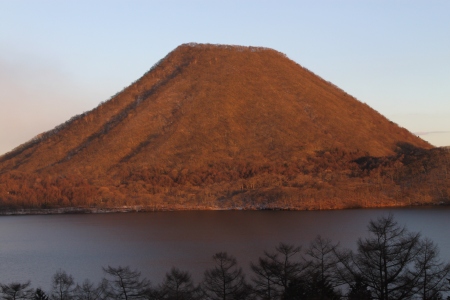
Just as the name implies, Haruna-fuji is a miniature version of Mt. Fuji, with views of the real Fuji from the summit on clear days. Although the top has been wrecked by the addition on a gondola and a TV antenna, the hike through the wonderful bamboo-grass lined deciduous forests is highly recommended.

030

The hike: From the bus stop, be on the lookout for the visitor’s center, a long, low rectilinear building that has basic information about the mountain. To the left of the visitor’s center is Haruna Lodge, a good place to grab some lunchtime noodles. The trailhead starts just to the right of the visitor’s center, across the paved road. Look for the sign that says 榛名富士登山口. If you got off the stop in front of the gondola, then walk on the paved road to your left (towards the lake), and you’ll find the trailhead on your right. The route is incredibly easy to follow, and if you’ve gone during the week, you’ll likely have the place to yourself. Though the maps say to allow 1 hour to reach the top, if you’re quick and don’t take any breaks, then you can make it in about 40 minutes. The trail is lined with bamboo-grass and verdant foliage. The lack of cedar trees is will be refreshing to those of you used to hiking around the rest of Kanto. The views really open up once you hit the summit plateau, but unfortunately you’ll be staring right at the large building housing the machinery for the gondola. There’s a restroom and vending machine here. Walk past the gondola and turn left, climbing the wooden steps towards Haruna shrine, which sits on the true summit of the mountain. You’ll have wonderful views from here, even if you have to share it with heel-toting tourists who took the easy way up. From the summit, head down the path just to the left of the shrine.  The path is marked as Yusuge Motoyu (ゆうすげ・元湯. The route is incredibly steep, so be careful during the cooler months when there is ice and snow on the path. Despite the gradient, the trail is easy to follow, and it will spit you out behind Hotel Yuusuge in about 30 minutes or so. If you’re based at this hotel, then it’s a great place to end. If you’re heading back to Tokyo, then you can loop back around to where you started (or to the bus stop to Takasaki) by turning left when you hit pavement and turning left again. Descend to the lake and follow it clockwise. The trail follows the edge of the lake before skirting the edge of a small side vent emerging from Haruna’s western flank. All in all it should take about 3 hours to complete the entire loop, depending on how many breaks you have taken. You can also combine this hike with Mt. Eboshi if you’re looking for a bit more exercise. 

When to go: This hike can be done year round, but you’ll need some 6-point crampons if hiking in January or February. Try to go on a sunny day with clean air and good visibility, as the views are superb. If you visit in mid-December, then you can see the lakeside illumination and fireworks. This is the only time of year where the gondola runs at night. It’s a cheeky way to get to the summit, but it’s really beautiful if you can stand the arctic temperatures. Head up the gondola just before sunset and watch the lights come on from the summit. The night view of Kanto is eye-popping as well.

Access: From Tokyo, take a train to Shibukawa (渋川), and transfer to a bus bound for either Ikaho hot spring (伊香保温泉) or Ikaho-Harunaguchi (伊香保榛名口) and get off at Ikaho Bus Terminal. From here, you can catch a bus bound for Haruna-ko Onsen Yuusuge (榛名湖温泉ゆうすげ). Get off at either in front of the Ropeway (ロップウェイ前) or Lojji Mae (ロッヂ), the next stop.  The buses are poorly-timed, so double-check both schedules before you set off, or consider breaking up the trip by staying at the hot spring. Click here for the bus from Shibukawa, and here for the bus that runs between Lake Haruna and Ikaho hot spring. Alternatively, if you’re staying in the area for a few days, then you can simply just stay at the Kokumin-shukusha (recommended), or the more expensive Hotel Yuusuge, which is more convenient for the hike. Either place will pick you up from the bus stop if you’ve taken the bus from Takasaki (see Mt. Kamon hike for a description of that bus route). From the Kokumin-shukusha, you’ll need to walk clockwise around half of the lake to reach the trailhead.

Map: Click here

Live web cam: Click here

Level of difficulty: 3 out of 5 (elevation change ~300 meters)

Distance: 3.5km (2 to 3 hours)

This slideshow requires JavaScript.

Mt. Kurikoma (栗駒山)

November 8, 2013

Last updated: Feb 17, 2025

Mt. Kurikoma is an active volcano straddling the border of Iwate and Akita Prefectures in northeastern Honshu. The views of Mt. Chokai, the spectacular volcanic scenery, and the soothing hot springs make it a great place for a weekend getaway.

IMG_8426

The hike: When you get off the bus, walk a few meters to the hot spring river that runs between the red-roofed hotel and the outdoor bath (露天風呂). Believe it or not, the path actually runs right by this steaming water source. As you walk up the path, you’ll see a small shrine on your right, across the small steam. Since this is an active volcano, it might be a good idea to pay your respects to the mountain gods before commencing the hike. Follow the concrete path past the stream and into the forest. You’ll soon find a path on your right. Ignore this and continue on the concrete trail, climbing to a small series of rock formations. If the weather is good then you can climb these rocks for a good view of the hot spring hotel.  Soon after, you’ll reach another junction with a trail heading off to the left. Ignore this spur trail and continue on, past a small hut and the ruins of an old bathhouse.  After a short climb, you’ll drop down to a meadow and reach yet another junction. Turn left here and follow the wooden boardwalk across a scenic, grassy area of the volcano. At the next junction, you’ll see a huge wooden signboard with a giant map of the mountain. Turn right here and climb a short distance to Taikadai (苔花台), where you’ll find a trail heading off to the left. Ignore this path, as you’ll use this route on the descent, creating a really nice loop hike. Continue straight on, being careful not to stray into the hot spring river running along the left side of the trail. Although tempting, the area is full of poisonous gases, so stay on the path. The route runs parallel to the river, climbing higher and higher towards the summit plateau before flattening out and reaching a beautiful lime-colored caldera lake named Showako (昭和湖). Just before the lake, the trail will split to the left. You can take either trail, since they meet up a short distance later at the shores of the lake. Here you’ll find a toilet hut on your right, which is well worth checking out for the foot pump flushing mechanism. Take a break on the benches in front of the lake, as the steepest part of the climb awaits. On the left side of the lake, the stair-infested trail once again darts back into the forest, increasing in steepness the higher you climb. Hang in there because the views awaiting you are well worth the sweat-inducing effort. It should take about 45 minutes of steady hoofing to reach the ridgeline at Tengu Daira (天狗平), where the panoramic views will start to emerge. You should see all of the mountains of southern Tohoku rising out in front of you. On a clear day, you can see Mt. Chokai as well. Turn left once you reach this lookout point, and you will reach the high point in about 15 minutes or so. Besides the giantic signpost, you’ll find a small shrine which makes a great backdrop for photos. There is a flat area just before the summit which would make an incredible place for a bivy (you just need to bring enough water and pack out your fecal waste). Sunrise from the summit on a clear day may very well be one of your highlights in Japan if you can time it correctly. Anyway, to complete the loop, take the trail from the top marked for Ubunuma (産沼). The path is easy to follow and lined with a plethora of wildflowers in bloom. When you reach the small pond, you’ll find a path on your right leading to 笊森. This route was only recently reopened after being damaged in the 2008 Iwate earthquake. Ignore this path and follow the signs towards Sukawa Onsen (須川温泉). The trail meanders through the forest before crossing a small stream, followed by a bigger river. This river can be tricky to ford when the river is swollen due to heavy rain or snowmelt, so take care. There’s a signpost here marking the way back to Taikadai (苔花台). Just before you reach that point, you’ll drop down to yet another river that needs to be crossed. Just after crossing, you’l reach the junction. Turn right here and retrace your steps back to the next junction. Instead of turning left here, keep heading straight through a scenic marshland comparable to what you would find at Oze National Park. At your next junction, you can take your pick of trails, as both lead back to the starting point. I headed left, following the easy-to-follow path until it reached the back of the hot spring hotel. From there, navigate your way through the hot spring river maze to the bus stop. Be sure to allow enough time to have a bath at the hot spring there. The outdoor bath (露天風呂) costs 650 yen and is worth every penny.

When to go: This hike can be done from early May  to early November, when the road to the trailhead is open. The mountain is famous for fall colors, so expect crowds if you go in October. Bring light crampons if you’re hiking anytime before July. The bus only runs from June to October so plan accordingly if coming by public transport.

Access: From Tokyo, take a Shinkansen train bound for Hachinohe or Morioka and get off at Ichinoseki (一ノ関). Not all trains stop at this station, so double-check before boarding. From there, take a bus from bus stop #9 bound for Sukawa Onsen (須川温泉) and get off at the final stop. Please note that there are only two buses per day, (leaving at 9am and 2:30pm) making it tricky to do as a day hike. The bus only runs from early June 1 to Oct 31.  You can either stay at a hotel near Ishinoseki station, or stay at Kurikoma Sansō (highly recommended) at the trailhead. This hotel has an incredible outdoor bath with views of Mt. Chokai. Click here for the bus schedule.

Map: You can pick up a free full-color map from the tourist information center at Ishinoseki station. The office is directly in front of Bus stop #9 (the bus stop you’ll use to get to the trailhead)

Level of difficulty: 2 out of 5 (elevation change ~500m)

Distance: 〜9km (3-1/2 to 5 hours)

This slideshow requires JavaScript.

Takedao Tunnel Hike (武田尾)

October 27, 2013

Last updated: December 14, 2025

Officially known at Mukogawa Gorge (武庫川渓谷), this is a gentle, family-oriented afternoon stroll along the old, abandoned  JR Fukuchiyama Line railway tracks. There are several dark, creepy tunnels to pass through, so a headlamp or flashlight is imperative.

IMG_0233

The hike: When you exit the train at Namaze station, go out the ticket gate, turn right,  and head down the main road (with a Co-op Mini supermarket on your left) through the small tunnel. After the tunnel the road curves towards the right and meets a busy main road. Turn left, staying on the left shoulder of the really busy road on the narrow sidewalk. Head straight toward a big tunnel, but instead of going through the road tunnel, head through the pedestrian-only tunnel on your left. This tunnel will spit you out into the main tunnel shortly, so head left and walk through the noisy and busy tunnel. After the tunnel, follow the sidewalk along a huge transparent wall that separates you from the busy road. Follow this main road for about 10 minutes until reaching a large freeway overpass. Walk under the huge expressway overpass and take your first right. There’s a crosswalk here but no traffic light, so hopefully a car will stop and let you cross. Otherwise it might be a bit like playing the old video game Frogger.  Cross the street and head toward the left for a short distance and then take your first right down  a paved road that has some curvy switchbacks. There are no signposts so it’s very easy to get lost, but make sure you are descending towards the river. At the end of the paved road turn left and follow the dirt road that will eventually turn into a proper hiking trail.  The path follows the left bank of the river most of the way, and if you look down you can still see the wooden railway ties in place, but the rails have been removed. Also, keep your eyes peeled on the left side of the path and you can see old railway signs from time to time. Anyway, you’ll soon come to a metal lookout point on your right. Climb the metal stairs and take in the scenery. From here the trail continues upstream for about 15 minutes until reaching the entrance for the first tunnel. This is a good warm-up of what to expect for most of the way, and if you let your eyes adjust to the dark, then a flashlight is not necessary in this first tunnel. After the first tunnel, the trail becomes a bit wild in the summer, with lots of overgrown foliage and the rhythmic pattern of half-buried wooden railroad ties. The river scenery on your right is nice, but to be honest would be a hundred times nicer if the river weren’t so polluted. There’s a factory upstream that is dumping some questionable waste into the river. Even if you could get down to the river bank, I would not swim here. Anyway, soon you’ll reach the second tunnel, which is  one of the longest and scariest on the entire route. Due to the bend in the tunnel, a flashlight is absolutely necessary. If you suffer from claustrophobia then perhaps this is one hike to miss. If you’ve brought your kids then they’ll have a blast running through the tunnels playing hide and seek. Be careful of water dripping from the ceiling of the aging tunnels, as it can get muddy in places. After coming out of the the tunnel, you’ll soon pass through a really short tunnel that is only about 5 meters long. There are benches at some of the tunnel entrances if you feel the need for a break. Otherwise, just keep walking on the flat trail admiring the river scenery. The next tunnel will come in about 20 minutes or so, and ends at the base of a stunning railroad bridge that has been renovated.   Immediately after crossing the bridge you’ll duck into another tunnel before popping out and following the right bank of the river (with the river on your left). Here the scenery resembles more of a walk in the park than a mountain stroll, and in the spring the cherry blossoms are a site to behold. You’ll soon reach your first signpost of the day, pointing towards Takedao (武田尾), which is still 1.6km away. After 5 minutes you’ll pass a lion carving on your right with a stone stairwell that leads to a forest filled with cherry blossoms. Feel free to explore it if you’ve got extra time. Otherwise, continue straight on through a short tunnel that is still completely made of brick. Just past the tunnel you’ll see a trail on your left that leads to a plaza and offers access to the river bank (again, don’t let your kids play in the filthy water). Soon after, you’ll pass through a final tunnel made of brick before reaching the end of the hike. Cross the bridge and you’ll see a new restaurant right in front of you. Turn right and then left, following the main road (past an ice cream shop that may or may not be open) for about 15 minutes to Takedao station(武田尾) on your right. If you’re keen for a hot spring bath, then instead of going to the station, continue walking along the river for another 15 minutes or so, and you’ll reach Takedao Onsen  which usually allows day trippers access to their baths. The entire facility was rebuilt after experiencing a major flood.

All in all is a 2 to 3 hour hike depending on how many breaks you take.

When to go: This hike can easily be done year round. Make sure you bring a flashlight or headlamp, because two of the tunnels are impossible to traverse without one. If you’re there on a weekend you could rely on other groups, but during the week do not expect much other foot traffic. There is a very cool art event every September which uses some of the tunnels near Takedao station as a canvas for a giant art and music project. It’s highly recommended, and can be combined with a hike of the tunnels if you time it correctly. Search for Takedao Art Tunnel Event on Facebook and check out these photos from the 2013 event.

Access: From Osaka station, take train on the JR Fukuchiyama Line bound for Shin-sanda (新三田) and get off at Namaze (生瀬) station. A local train takes about 40 minutes, so if you want to save time, then take a rapid (kaisoku) train to either Kawanishi-Ikeda (川西池田) or Takarazuka (宝塚) stations, and change to the local train there. The return train is just two stops further north from Namaze, so take a local train all the way back to Osaka or again change to a rapid at Takrazuka or Kawanishi-Ikeda if you’re pressed for time.

Level of difficulty: 1 out of 5 (elevation change 〜100m)

Distance: 7km ( 2 to 3 hours)

This slideshow requires JavaScript.

Oirase Stream (奥入瀬渓流)

October 23, 2013

Last updated: Feb. 14, 2025

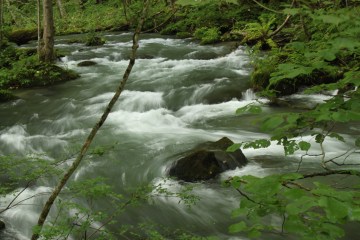
Oirase stream is one of the most popular places in Japan to view the autumn foliage. The flat 14km walk along the entire gorge is filled with soothing rapids and a couple of majestic waterfalls. The only downside is the paved road, which runs the entire length of the walk.

oirase1

The hike: The trail starts from just in front of the Oirase Field Museum. You should see a big signpost for  奥入瀬湧水館.  The trail starts just to the left of this signpost. Your first target on the long walk will be Ishigedo (石ヶ戸), about 4.6km away on a well-marked path. The trail soon reaches a paved road, where you should turn right and walk towards  Deai-bashi. Before crossing the metal bridge over the river, you’ll see the path dive back into the forest on your left. About 2km in, you’ll reach a small hut that houses a public toilet. Use the facilities now, because the next toilet isn’t until Ishigedo. The path alternates between the beautiful forest and the ugly paved road. This is one hike where you really need to worry about being hit by a car or tour bus! At the 4km mark you’ll reach a paved road. Cross the road and duck back into the forest, following the wonderful rapids of the swiftly moving stream. Eventually you’ll reach Ishigedo, which is marked by a toilet hut and small restaurant. It should take about 90 minutes from Yakeyama to this point. This is where the majority of people start the hike, so be prepared for a large increase in numbers of tourists. If you’re short of time then you can consider starting from here and skipping the section from Yakeyama, but the first part is a nice warm-up and you’ll appreciate the lack of people.

The next signposted landmark is Kumoi falls, which should take about 45 minutes or so to reach. The trail passes through some areas of photogenic swift-moving rapids before passing by some rock formations known as Makadoiwa (馬門岩). There’s a bus stop here if you’re feeling lazy or the legs are starting to give out. Soon after passing by the rocks, you’ll cross over the stream on the concrete bridge and follow the right bank of the river for a while. (up to this time you will have been on the left bank the entire time)  You’ll pass through another area of rapids (signposted as 飛金の流れ) before reaching a small waterfall marked 千筋の滝, which is little more than a trickle. Soon you’ll cross over the road and be back on the left bank of the stream, arriving at Kumoi falls after about 100 meters. Take the path on the left that crosses the main road and leads up to the falls. It’s definitely worth the short side trip, as this is the biggest waterfall in the entire gorge. After sufficient photos snapped, retrace your steps back to the main trail and turn left, where you’ll soon reach another waterfall named 白布の滝. This is a nice waterfall on the other side of the river on your right that drops straight off a cliff. After passing through another area of rapids, you’ll see your first signposts indicating the distance to Tamadare falls.

After passing by the bus stop for Kumoi no nagare, you’ll reach a public toilet at Tamadare falls. The waterfall itself is on the opposite side of the road and is nothing more than an unimpressive trickle, so don’t waste your time climbing up to the main road to see it. Stay on the main path and you’ll pass by another trickle of a waterfall (白絹の滝) before reaching Shiraito no taki (白糸の滝), which is very impressive but unfortunately on the other side of the river. Soon after you’ll reach Furou falls (不老の滝), which is also nice but kind of difficult to see through the trees on the right bank of the stream. After passing by more rapids, you’ll reach another unimpressive trickle of a fall called 姉妹の滝, before crossing over the river on a wooden bridge. A few minutes after crossing, you’ll see a signpost for 九段の滝, which is accessible via a spur trail on your right. This waterfall is really nice since you can get relatively close to it. Retreat back to the main route and turn right.  After crossing over the river again, you’ll reach the largest and most popular waterfall in the entire park (Choshi falls).

The waterfall is actually reminiscent of a concrete fall, but I’ve been told that it is completely natural. Climb the stairs just to the left of the fall and continue walking upstream. The next part of the route is closed, which means you’ll have to walk on the main road for a little while. On the right side of the road, you’ll see a signpost for 五両の滝, accessible via a small trail that dives into the forest on your right. After checking out the fall, retrace your steps and continue on the main road for a short time until reaching the continuation of the trail on your right. From here to the end you’ll stay in the forest, where you’ll soon pass by a concrete dam! This is used for hydroelectric power and flood control, and the water just behind the dam is incredibly clear and beautiful. From here it’s a straight shot to the main road, where you should turn right and cross over the concrete bridge and arrive at the bus station and ferry terminal of Nenokuchi (子の口). There’s a restaurant here that serves tasty food on the 2nd floor, with a souvenir shop below. You can either catch a bus out to Aomori, Hachinohe, or to Lake Towada. A more scenic option for those heading to the lake is to take the sightseeing boat, which takes 50 minutes (1400 yen) to reach Yasumiya, the main tourist village of the lake. The boat is great because you can see scenery that you would otherwise miss.

When to go:  As this is an extremely popular walk, aim to go on weekdays between early June and late September. Oirase is one of the most popular places in Japan for autumn leaves, so avoid the peak season in October at all costs (unless you want to share the the trail with hundreds of other people). Winter is also an option if you’ve got snowshoes.

Access: From either Aomori or Hachinohe stations, take a JR bus bound for Lake Towada and get off at Oirase Field Museum (奥入瀬渓流館) bus stop. The bus from Hachinohe takes about an hour and a half and here is the schedule. Another option would be to base yourself at Lake Towada (staying at Lake Towada Backpackers) and take a bus from Lake Towada (40 minutes, 1210 yen) to Keiryūkan (渓流館).  Click here for the bus schedule

Level of difficulty: 1 out of 5 (elevation change ~100m)

Distance: 14km ( 4 to 5 hours)

This slideshow requires JavaScript.

Mt. Apoi (アポイ岳)

September 1, 2013

Mt. Apoi is a treasure trove of alpine flowers and unique geological phenomena. The panoramic views in sunny weather make the effort to get there all worthwhile.

IMG_4576

The hike:  The trailhead starts just to the right of Mt. Apoi Geo Park Visitor’s Center. The center itself is a good place to look around if you’ve got some extra time, as the bi-lingual displays are very informative. Anyway, take the gravel road that leads up to the trailhead. Follow the signs that say アポイ岳 and you should be ok. Just after crossing a concrete bridge, the road will turn into the trail proper, and you’ll soon reach your first trail marker for the 1st stagepoint (一合目). There are 9 stagepoints between here and the summit, and they’re a good way to pace yourself. The trail climbs gently for a while until reaching the second stagepoint (二合目). Halfway between the stagepoints you’ll come across a cylindrical metal canister hanging from a tree on the right side of the trail. This is a bell you can ring to scare away bears (and any other wildlife). Be warned: the bell is extremely loud and wouldn’t sound out of place in a Japanese temple. Just past the second stagepoint, you’ll find an area of downed trees. I’m not sure what brought those trees down, but it must’ve been a powerful storm. Soon after, the trail will cross a small stream. Take a break on the benches here, because the real climb is about to begin. From here to the 5th stagepoint (五合目) it’s a steady, somewhat steep climb. At the 5th stagepoint, you’ll find an emergency hut, as well as your first views of the target peak. Just down from the hut, you’ll find an interesting tent that has been set up as a makeshift toilet. You’re required to pack out your poop in order not to damage the delicate ecosystem. Take a peek inside the tent to check out the set-up. From here to the summit, the trail leaves the forest and enters the alpine zone, with lots of unique flowers and creeping pine. It’s hard to believe that you’re only 500 meters above sea level, but that’s what makes Mt. Apoi so intriguing. In sunny weather the lack of shade can be brutal, so wear a hat and don’t forget your sunscreen. The trail climbs steeply from the emergency hut, passing through some rock formations that are home to poisonous pit vipers, so be careful where you tread. Just beyond the 7th stagepoint (七合目), you’ll reach the ridgeline, where the views will really start to open up. Just in front of you, along the knife edge ridge, lies the peak of Mt. Apoi. To the left of that are more peaks in the Hidaka mountains. If the weather is really clear, then you can see as far as the Daisetsuzan mountains. Behind you, you can trace the coastline back towards Tomakomai. Continue climbing on the rocky, undulating ridge until reaching a junction. Take the left fork marked 山頂へ. (Ignore the right fork, as you’ll use this trail on the return). From here to the top it is a relentless climb with wonderful views. Take it snow and steady and don’t forget to look back to check your progress (and to get those wonderful ocean views). Eventually you’ll reach a birch forest that marks the summit of Mt. Apoi. That’s right, you re-enter the tree line at the top of the peak. There are no views to speak of on the summit, but if you follow the trail towards Mt. Yoshida (吉田岳) for a few minutes you’ll see some views between the trees. If you’re fast and don’t take many breaks, you can reach the summit in only 2 hours. Most people take 2-1/2 to 3 hours however. After sufficient rest, instead of heading back down the knife edge ridge, take the trail that is marked 幌満登山口. The path follows the ridge for about 20 minutes until reaching a junction with an English signboard explaining about the Horoman Flower Fields. Turn right here, on the trail marked アポイ公園登山口. The trail is narrow and loops through the forest back to the main ridge trail you took earlier. Once you reach the main trail again, head straight and back the way you came, all the way to the trailhead.

When to go: This hike can be done year round, but be prepared for some snow in winter. The alpine flowers hit their peak in June, and mid-summer can be hot on the peak (especially on sunny days). Stay on the trail unless you want to be infested with ticks, who make their home in the dense undergrowth of the forest. The mountain is a also magnet for fog rolling in off the cool waters of the Pacific Ocean, so consider yourself lucky if you get views.

Access: From Tomakomai (苫小牧) station, take a local train on the JR Hidaka Line (日高線) bound for Samani (様似) and get off at the final stop. The train takes nearly 3-1/2 hours, so make sure you check the train schedule before setting off. The 8am train will get you to Samani at 11:16am. From there, change to a JR bus bound for either Hiroo (広尾) or Misaki Shogakko (岬小学校) and get off at Apoi Tozanguchi (アポイ登山口). Click here for the bus schedule. Another option would be to book accommodation at Apoi-Sanso (アポイ山荘). They will pick you up from Samani station if you call ahead. Apoi-Sanso is a great place to stay, with a relaxing hot-spring bath and tasty food. There’s also a campground near the trailhead for budget-conscious mountaineers.

Level of difficulty: 3 out of 5 (elevation change 810m)

Distance: 9.5km (4 to 7 hours round-trip)

This slideshow requires JavaScript.


Washigamine (鷲ヶ峰)/Yashima marsh (八島湿原)

June 16, 2013

Last updated: Feb 19, 2025

photos and text by Alastair Bourne

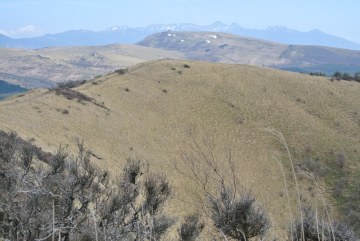
Washigamine (eagle mountain) and Yashima (eight island) marsh offer a short but scenic hike through a national park straddling Suwa and Shimo-Suwa in the center of Nagano Prefecture.

washi4

The hike: With panoramic 360-degree views, little-known Washigamine probably deserves similar recognition to its more famous neighbors, Kirigamine and Kurumayama. Unusual for a place with such spectacular views, the trail to the summit is an easy ascent that should present no difficulties to moderately-experienced climbers or hikers. To start the hike, go through the tunnel under the road at the far end of the car park at Yashima marsh. Instead of heading straight to the marsh take a sharp left with the deer fence and the road immediately to your left. Head up the rocky slope through the trees and after about five minutes you will come to a flat area with a signpost pointing up towards Washigamine (鷲ヶ峰). Follow the sign, remembering to close the gate of the deer fence as you head up the well-marked path. Don’t forget to turn around and enjoy the view as you ascend. On a clear day you won’t have to climb far before taking in fantastic views of Mt. Tateshina, the Yatsugatake range and Mt. Fuji. Within minutes the tourists, car park and Venus Line road seem far behind you. Continue heading up the steady slope, taking care not to slip on the gravel and loose rocks until arriving at a plateau after about 25 minutes. Here the well-marked trail bears to the right. Walk along the ridge line for a couple of minutes and take a short rest at the first peak to enjoy the magnificent views of Yatsugatake. The trail then heads to the left, with steep grassy slopes on both sides. Follow the path for another 10 minutes to the summit of Washigamine. In summer, the route can be obstructed by thick vegetation, but there is only one way to go and no danger of getting lost. From the Washigamine summit you can once again enjoy the view of the mountains described earlier as well as spectacular vistas of Utsukushigahara, the South Alps, Yarigatake and the North Alps, Lake Suwa and parts of the Matsumoto valley. From here, intrepid explorers can continue onto Wada pass (和田峠). However, with the best of the views behind you, a circuit of Yashima marsh is perhaps a better option. Return along the same path until you reach the flat area with the signposted junction. Here, you should head straight down the slope instead of returning to the car park. After about 100 meters you will find yourself on the path that encircles the marsh, which contains a number of stunningly beautiful mirror-like ponds. The center of the marsh is out of bounds, but you can enjoy the views from the boardwalk and path that encircle the area. You can spend 45 minutes following the path around until you return to the car park, or head off towards Kirigamine or Kurumayama on one of the many well signposted paths that crisscross the area. Flora fans can enjoy the small alpine flowers throughout the area, while fauna fans may be lucky enough to catch sight of a fox or deer or unlucky enough to come across a bear in some of the areas off the beaten track.

When to go: The area is theoretically accessible all year round as the winter gates for the Venus Line are located just after Yashima car park. However, I don’t recommend going in winter when the area is covered in deep snow and you run the risk of starting an avalanche on the steep, treeless slopes of Washigamine. In June, the yellow nikkokisuge (day lilly) plant blooms across the area, which is filled with cars and buses carrying crowds yielding big, expensive-looking cameras. Car parks fill up from early in the morning, and all but the most determined botanists are unlikely to want to put up with the crowds or traffic. If you’re relying on the bus, then aim to go in July or August.

Access: It takes about 40 minutes by one of the infrequent buses from Kami-Suwa (上諏訪) station on the JR Chuo line to Yashima car park (八島湿原). The bus only runs from July 13 to August 25th (weekends only for the most part) and will set you back 1200 yen one-way. Click here for the bus schedule. Outside of these dates, you’ll need to take a bus that runs between Kamisuwa and Chino stations and get off at Kirigamine Interchange (霧ヶ峰インターチェンジ). From there, you’ll have to walk for about an hour, or you can try your luck hitching. Click here for that bus schedule. There are no buses in the winter, but if you have your own car, you can drive to Yashima car park via route 194 (aka the Venus Line). In fact, the Yashigamine Hotel at the trailhead is open all year.

Map: Click here

Live web cam: Click here

Level of difficulty: 2 out of 5 (elevation change ~200 meters)

Distance: It’s a 4-km round trip from Yashima to the summit of Washigamine. The circuit around Yashima marsh is another 2-3 km. The entire hike should take no more than three hours at even the most gentle of paces.

This slideshow requires JavaScript.

Mt. Kama-ga-take (鎌ヶ岳)

May 14, 2013

Last updated: Feb 21, 2025

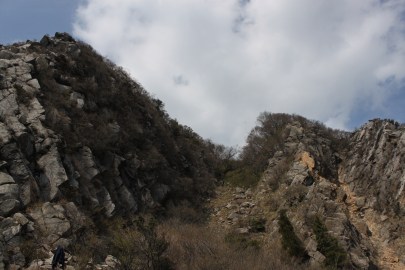
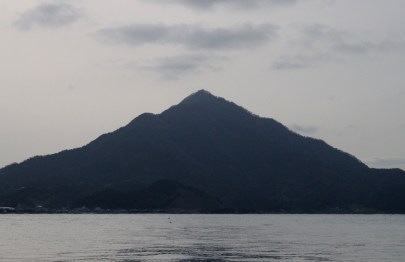
Mt. Kama is one of the hidden jewels of the Suzuka mountain range in eastern Mie Prefecture. The spear-like peak is a thrilling rock scramble with outstanding panoramic views of Ise bay and the rest of the mountains of Mie and Shiga Prefectures.

kama1

Note: If you don’t fancy taking the gondola, then there are several hiking trails to choose from. The most popular route is the Nakamichi (中道), but you’ll need to walk up the paved road for about an hour before reaching the trailhead. The Uramichi (裏道) route starts just past the gondola entrance and it’s a pleasant (and less crowded) climb. The summit of Mt. Gozaisho is an eyesore, with a ski resort, restaurants, and lots of concrete. It’s better to spend your energy getting towards Mt. Kama, which is why I recommend the gondola. In addition, there are outstanding views of Mt. Kama from the gondola: look out the left side of the carriage at the pyramidal peak on the ride up.

The hike: When exiting the gondola, head upstairs and enjoy the views from Fujimi-daira. On an exceptionally clear day, you can see the top of Mt. Fuji sticking up from behind the mountains of Aichi Prefecture. From here, take the concrete steps leading off the lookout point. The path will wrap around and pass by a restaurant (and the chairlift entrance). Climb the ski field just to the right of the chairlift for about 10 minutes and you’ll reach the high point of Mt. Gozaisho. From here, head left on the paved road, following the signs to Buhei-tōge (武平峠).  After several minutes you’ll see a signposted path on the right side of the paved path with a warning sign in Japanese telling people it is dangerous (危険). The first part of the route is on slippery sandstone with a couple of low branches hanging across the path (watch your head please). After that, the route drops steeply through an area of large rocks and boulders. At times it feels as if you are traversing the Hō-ō ridge of the Minami Alps with all of the sand stone present. It should take about 30 to 45 minutes to reach Buhei-tōge, where you’ll want to take a break before starting the big climb. There are paths dropping off the ridge to both the left and right. The left path will take you back down to Yunoyama onsen, while the right path drops into Shiga Prefecture. The trail to the summit of Mt. Kama is straight ahead, and it’s a no-nonsense ascent of 300 vertical meters through more sandstone and large boulders. It’ll take about an hour to reach the summit, where you’ll have jaw-dropping panoramic views. The final 50 meters to the peak is tricky, with slippery rock and poor footholds. You’ll probably find yourself scrambling on all fours. However, there is a chain here to help you up the pebbly trail. You’ll know you’re just below the summit when you reach a blue signpost that says Kamagatake (Universal). Turn left here for the steep scramble. From the top, there’s a path that drops down on the left, but ignore this and continue on the ridge, past a rusty shrine and to a rock clearing. Don’t be tempted to keep traversing on the knife-edge ridge. The real path drops down on your left. It’s a steep 10-minute descent to Dake-tōge (岳峠), where you’ll find a path on your left marked Nagaishidani (長石谷). Take this trail as it descends through a beautiful rocky, dry riverbed. The path can be difficult to pick up, so look for the red paint marks on the rocks and the red tape on the trees. As long as you stay close to the bed you’ll be fine. The gully will eventually turn into a stream with running water, which will grow larger the further you descend. The route crosses this river about a dozen times. The crossings aren’t well-marked, but a good rule of thumb is to stick to whichever side of the river is widest. After about an hour a tributary will come in from the left, and you can find a large waterfall here. There is a signpost on the path (on the right bank of the river) that says Inuhoshi-ōtaki (犬星大滝). If you want to see the waterfall, then cross the stream on your left and you’ll find it about 50 meters up the tributary. It makes a wonderful place for a break. Retrace your steps to the trail and continue downstream. The waterfalls grow in size a bit from this point and the river crossings become a bit trickier, so take your time and make sure to look for the paint marks. There are also a couple of waste-deep pools that look great for a dip (as long as the leeches aren’t out). You’re next big landmark will (unfortunately) be a big concrete dam. You know you’re getting close when the cedar trees start showing up. When you reach the dam, head to the left and take the path that drops very steeply towards the bottom of the dam. This path will meet up with another path (this is the path that drops directly from the summit) and the route will drop back past a couple of more concrete dams before reaching a flat area where you’ll need to cross the river. From here it’s a short walk to the paved road, Turn right and follow the road for about 45 minutes to the bus stop just below the gondola. If it’s a weekend then you can try your luck hitching. Otherwise, wait for the bus that’ll take you back to Yunoyama station.

When to go: This hike can be done from late March to early December. May is the best time for flowers. Avoid the peak from June to August, as the Suzuka mountains are covered with blood-sucking leeches. Winter is for experts only.

Access:  Although it’s very far from Osaka, it can be done as a day trip if you’re prepared for a 5-hour round trip train ride. From Kintetsu-Namba station, take a Limited Express train bound for Nagoya and get off at Yokkaichi station, where you can transfer to the Yunoyama line. Some trains don’t stop at Yokkaichi, so you’ll need to transfer to a different Limited Express train at Tsu. From Yokkaichi, take the Yunoyama line and get off at Yunoyama Onsen station. From the station, take a bus to Yunoyama onsen. The buses are infrequent, so if you’ve got some people with you, it’ll be faster to share a taxi to the ropeway (a one-way taxi is about 1300 yen). From Nagoya, there are some direct trains to Yunoyama onsen, and there are direct buses as well, which will drop you off just below the gondola entrance. Click here for the Nagoya-Yunoyama bus schedule and here for the bus from Yunoyama station to the gondola.

Level of difficulty: 4 out of 5 (elevation change ~500 meters)

Distance: 7.5km (3-1/2 to 7 hours, depending on whether you use the gondola or not)

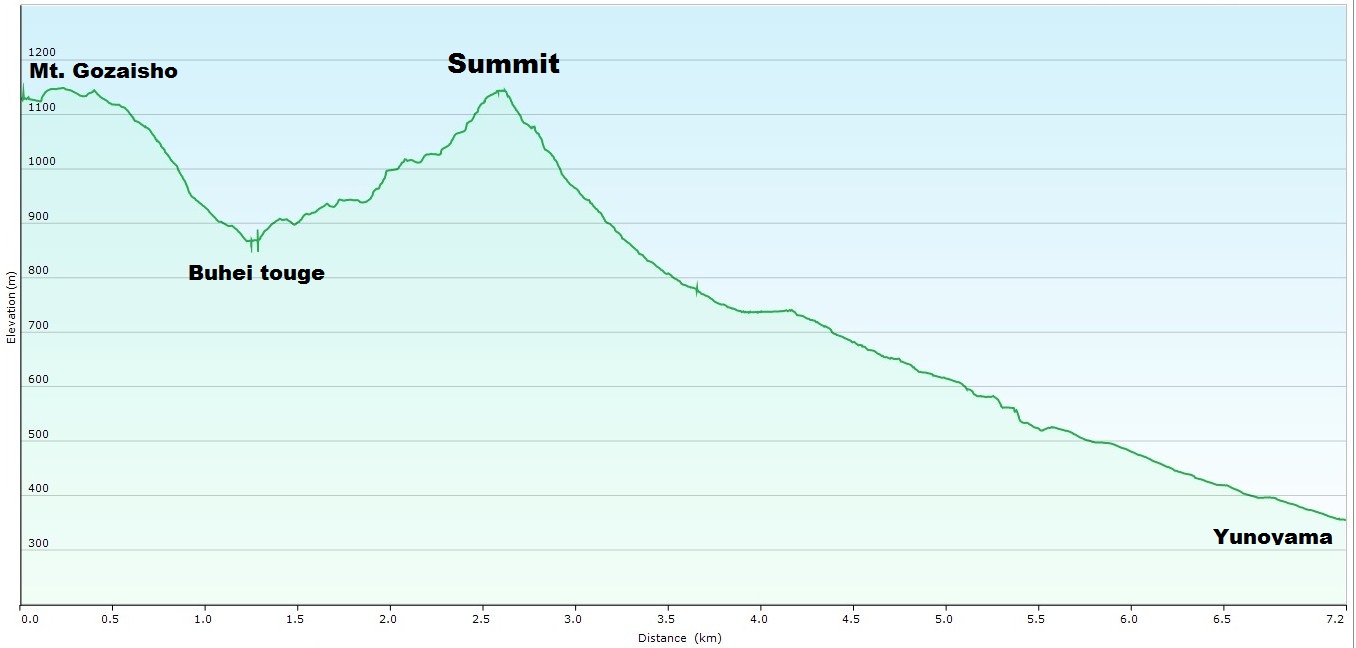
Vertical elevation chart:

 kama - vertical

This slideshow requires JavaScript.

Mt. Aoba (青葉山)

April 9, 2013

Mt. Aoba, also known by the nickname of Wakasa-fuji, is a twin-peaked volcanic cone rising proudly from Wakasa bay in northern Kyoto Prefecture. The hike is along an exhilarating ridge with outstanding views of the Sea of Japan, as well as the Japan Alps if you’re especially lucky with the weather.

aoba14

The hike: Climb the stone stairs leading to Matsuno temple. When you reach the main temple building (distinguished by the double-pitched roof), turn right, looking for the covered bridge that connects the main building with an adjacent structure. Cross under the bridge and you’ll find a signpost and trailhead behind. Climb the stairs and enter the bamboo forest, following the signs that say 青葉山・山頂まで 1.8km. The path is a gentle, steady climb for a few minutes until flattening out and crossing through a broken shrine gate. Here you’ll pass through a small clearing of bamboo grass before re-entering the forest, where the real climb begins. The path wastes no time in gaining altitude, with generous amounts of switchbacks in place to ensure the climbing is not too steep. Ropes and ladders can be found in the steepest places, and it should take a hour or so of steady climbing to reach the ridge just below the summit of the west peak (西峰). When you reach the ridge, you’ll see the remnants of an old stone temple building directly in front of you. Turn right and follow the windy ridge (watching out for the steep drops to your left towards the sea). After about 5 minutes you’ll reach a small emergency hut that marks the summit. If you look behind the small shrine, you’ll see an enormous rock formation with a handrail attached about 3/4 of the way up. Head behind the shrine and towards the right, where you’ll find a ladder and ropes that will assist in the near vertical climb to the top. The true summit has amazing views of  Uchiura bay directly below. On the right hand side of the peninsula you can see Takahama Nuclear Power plant. It’s unbelievable that such a structure was built in this beautiful bay, but that’s the reality of Japan. After admiring the views, retrace your steps back to the emergency hut and continue along the ridge (in the opposite way in which you climbed). The ridge between the west and east peaks is exciting: after descending steeply to the saddle, you’ll work your way through an area of metal ladders with amazing views of the valley below. It should take about 40 minutes to reach the summit of the east peak (東峰), which is marked by a shrine building. Just to the left of the shrine is a set of steps that descends to a flat area with a lot of benches. Be careful going down the stairs, as they are incredibly slippery (my butt is still sore from taking a tumble). The rest area makes a great place to relax for lunch, and at the far end there’s a rock formation that is chained off to keep people from entering. The views from this rock are nice if you climb over the chain (just don’t get too close to the edge). From here, the path heads towards the left (just before the rock formation). The trail is marked as 展望台まで 1.1km. It’s a very straightforward trail, winding its way through a beautiful forest on a series of wooden steps. Be sure to encourage those hikers you pass : the ascent from here really is tougher than the other approach (in terms of distance and vertical elevation gain, that is). In about 10 minutes you’ll come to a large rock formation. You can either skirt around it to the left or head up and over it. It’s worth climbing the rock for the views. After that, the path flattens out a little before climbing a small rise and descending steeply down the other side. Your next landmark will be another wooden shrine with a small clearing. There are a couple of benches here, but no real views to speak of. The real lookout tower is another couple of minutes down the trail, and there you’ll have outstanding views of Wakasa Bay and Tsuruga city. If you’re really lucky with the weather and visibility then you can also see Hakusan and the Japan Alps from here. After this, a bit of the beauty of the peak is lost, as you’ll pass by a couple of television antenna before entering a cedar forest and a junction, where a decision will have to be made. If you’ve driven to the mountain, then take the right fork marked for 高野 (Takano). If not, then stay on the ridge and follow the signs to Nakayamadera (中山寺), where you can grab a taxi or hitchhike to the nearest train station. I took the trail to Takano, and it’s easy to follow until reaching the village. From there, it’s a long walk on concrete roads back to Matsuno temple. There are no signposts, so it’s best to ask the locals about the best place to go. You could also try your luck hitching. The entire hike should take about 3 or 4 hours, depending on your speed and how many breaks you take.

When to go: This hike can be done year round, but you’ll want to be prepared for snow and ice during the colder months of January and February. The route is exposed in places, with ladders and ropes, so try to avoid wet conditons if you can.

Access:  Although very tricky to access, it can be done as a day hike from Osaka if you get an early start. The best (and cheapest) way is to take a highway bus from Hankyu bus terminal in Umeda to Higashi-Maizuru (東舞鶴) station. From there, change to a train on the JR Obama line and get off at Matsuno-odera (松尾寺) station. The train only takes 7 minutes, but the trains are few and far between. The bus takes about 2 hours, depending on traffic. There are also buses from Sannomiya in Kobe and from Kyoto station. Click here for the bus schedule) You can also access Higashi-Maizuru by train from Kyoto (90 minutes by limited express train). From Matsuno-odera station it’s a short taxi ride (or a 1 hour walk) to the trailhead.

Map: Click here , here, and here.

Level of difficulty: 4 out of 5 (elevation change ~400 meters)

Distance: 5km (3-1/2 to 5 hours)

This slideshow requires JavaScript.